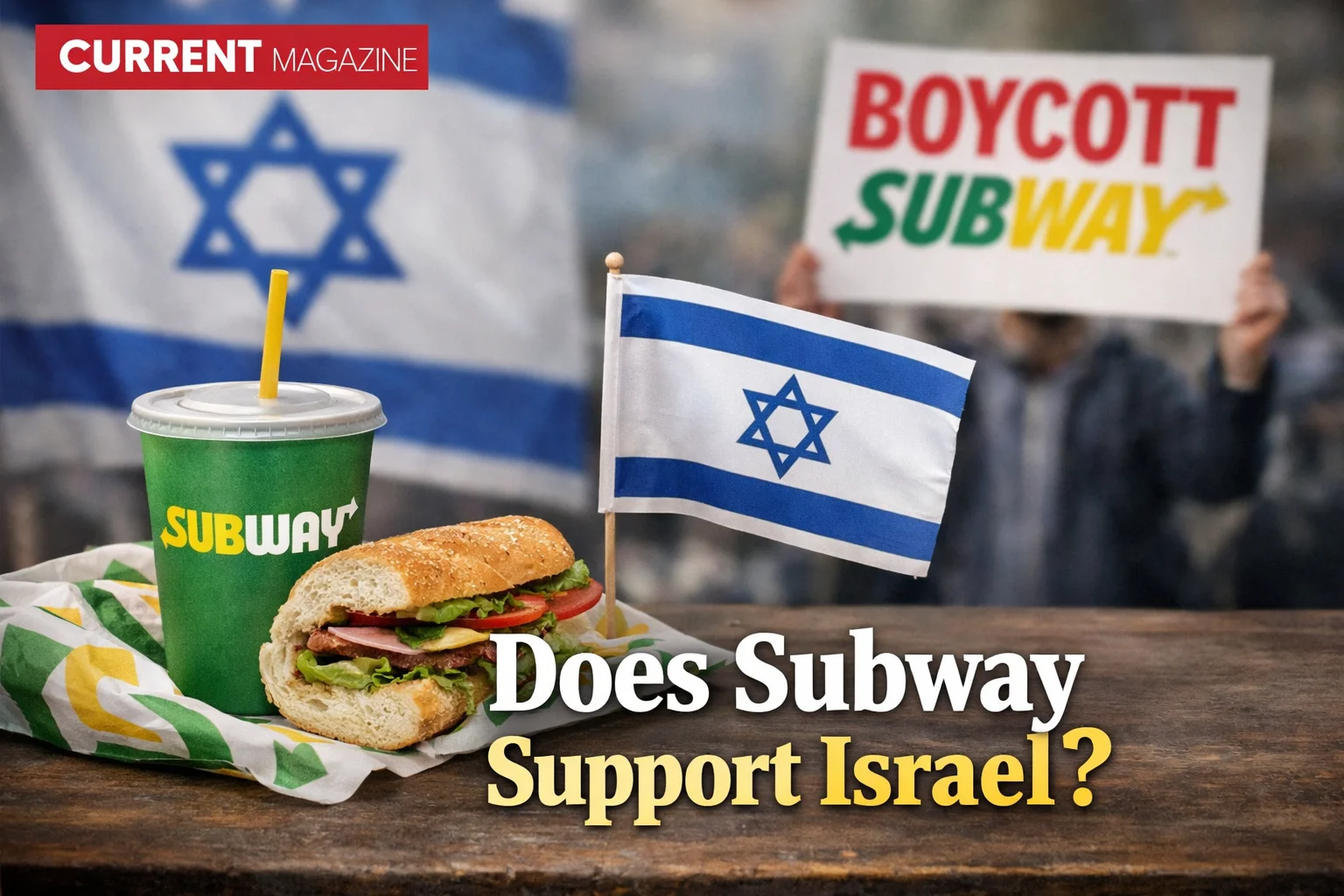
When people search “does Subway support Israel?”, they’re looking for clear information about the fast-food chain’s political stance, business relationships, and involvement in the Israeli-Palestinian conflict. In recent years, especially following the escalation of tensions in Gaza and the West Bank, consumers worldwide have become increasingly interested in understanding which companies support Israel, either through direct financial contributions, franchise operations in Israeli settlements, or public statements. In this comprehensive article, we’ll examine Subway’s actual position, the boycott movements targeting the brand, franchise operations in Israel and Palestinian territories, and what the facts really show about Subway’s relationship with Israel.
Understanding the Question: Why People Ask “Does Subway Support Israel?”
Before diving into the specifics about Subway, it’s important to understand why consumers are asking this question and what it means in the broader context of corporate responsibility and consumer activism.
The BDS Movement
The Boycott, Divestment, and Sanctions (BDS) movement, launched in 2005 by Palestinian civil society organizations, calls for economic and political pressure on Israel until it meets three demands:
- Ending the occupation of Palestinian territories
- Granting full equality to Palestinian citizens of Israel
- Respecting the right of return for Palestinian refugees
The BDS movement encourages consumers to boycott companies that:
- Operate in Israeli settlements in the occupied Palestinian territories
- Provide services to the Israeli military or settlements
- Directly support the Israeli government or military operations
- Have significant business operations that benefit from the occupation
Consumer Activism and Ethical Consumption
Modern consumers increasingly want their purchasing decisions to align with their values. People ask “does Subway support Israel?” because they want to know:
- Where their money goes when they buy a sandwich
- Whether their purchase indirectly supports policies they disagree with
- If a company takes political stances on the Israeli-Palestinian conflict
- Whether the company has business operations in contested territories
The Complexity of Corporate Positions
Understanding a company’s position on Israel is often complicated because:
- Many companies don’t make explicit political statements
- Franchise operations may be independently owned
- Business relationships can be indirect
- Companies may operate in both Israel and Palestinian territories
- Corporate statements may be vague or avoid the issue entirely
Subway’s Operations in Israel and Palestinian Territories
To answer whether Subway supports Israel, we need to examine the company’s actual business presence in the region.
Subway Franchises in Israel
Historical Presence: Subway has operated franchise locations in Israel for many years. These restaurants operate under franchise agreements, meaning they are owned and operated by local franchisees rather than directly by Subway corporate headquarters.
Current Status: As of recent reports, Subway maintains multiple franchise locations throughout Israel, including:
- Tel Aviv
- Jerusalem
- Haifa
- Other major Israeli cities
What This Means: The presence of Subway franchises in Israel means:
- Local Israeli franchisees pay fees to Subway corporate
- The parent company receives royalties and franchise fees from Israeli operations
- Subway’s brand and business model are available in the Israeli market
- Israeli consumers have access to Subway restaurants
Operations in Israeli Settlements
The Critical Distinction: A crucial question is whether Subway operates in Israeli settlements in the occupied Palestinian territories (West Bank, East Jerusalem, Golan Heights). Operating in settlements is viewed very differently from operating within Israel’s internationally recognized borders.
Settlement Operations: Reports have indicated that Subway has had franchise locations in Israeli settlements, which are considered illegal under international law by most countries and the United Nations. Operating in settlements is one of the key criteria used by BDS and similar movements to determine if a company supports the occupation.
Why This Matters:
- Settlements are built on land that Palestinians claim for a future state
- Operating in settlements is seen as legitimizing and profiting from the occupation
- International law considers settlements illegal (though Israel disputes this)
- Companies operating in settlements face greater scrutiny and boycott calls
Operations in Palestinian Territories
West Bank and Gaza: The question of whether Subway operates in Palestinian-controlled areas is also relevant. As of current information:
- There have been limited or no Subway operations in Palestinian Authority-controlled areas of the West Bank
- There are no Subway locations in Gaza
- Palestinian access to Subway is primarily through locations in Israel or settlements
The Imbalance: This creates an imbalance where:
- Israeli consumers (including settlers) have access to Subway
- Palestinian consumers have limited or no access in their own territories
- The economic benefit flows primarily to Israeli franchisees and Subway corporate
Subway’s Official Statements and Corporate Position
Understanding what Subway has officially said (or not said) about Israel and Palestine is important.
Public Statements
Limited Public Comment: Subway, like many international corporations, has generally avoided making explicit political statements about the Israeli-Palestinian conflict. The company has not:
- Issued public statements supporting Israel’s government or policies
- Made donations to Israeli political causes (that are publicly known)
- Taken out advertisements supporting either side of the conflict
- Made official corporate statements on the occupation or Palestinian rights
Standard Corporate Approach: Subway’s approach has been typical of many multinational corporations:
- Focus on business operations rather than politics
- Allow franchise operations in various markets without political commentary
- Avoid statements that might alienate customers on either side
- Maintain that local franchises are independent businesses
Franchise Model Considerations
How Franchising Works: It’s important to understand that Subway operates on a franchise model:
- Individual franchisees own and operate restaurants
- Franchisees pay initial fees and ongoing royalties to Subway corporate
- Franchisees make local business decisions
- Subway corporate provides brand, systems, and support
Implications: This means that:
- Decisions to operate in specific locations may be made by franchisees
- Subway corporate benefits financially from all franchise locations
- The company could choose to restrict where franchises can operate
- Allowing operations in settlements is still a corporate decision, even if franchisees operate them
Corporate Responsibility
The Debate: There’s ongoing debate about corporate responsibility:
- Some argue companies should be neutral and operate anywhere legally permitted
- Others contend that operating in occupied territories is inherently taking a political stance
- Consumer activists argue that companies should consider human rights in business decisions
- Corporations often claim they don’t mix business with politics
The Boycott Movement Against Subway
Several organizations and movements have called for boycotts of Subway based on its operations in Israel and settlements.
BDS Movement Position
Inclusion on BDS Lists: Subway has appeared on various BDS target lists and consumer boycott campaigns because of:
- Operations in Israeli settlements
- Franchise presence throughout Israel
- Perceived financial support through royalties and fees
BDS Reasoning: The BDS movement targets Subway because:
- The company profits from operations in settlements
- Franchise fees from Israeli locations flow to U.S. headquarters
- Operating in settlements helps normalize the occupation
- The company has not withdrawn from contested territories
Regional Boycotts
Middle East and Muslim-Majority Countries: In various Middle Eastern and Muslim-majority countries:
- Consumer groups have called for Subway boycotts
- Social media campaigns have targeted the brand
- Some communities have seen reduced Subway patronage
- Alternative sandwich chains have been promoted
Success and Impact: The impact of these boycotts has been mixed:
- Some Subway locations in Muslim-majority countries have closed
- Other locations continue to operate
- The company hasn’t publicly attributed closures to boycotts
- Measuring boycott effectiveness is difficult
Western Consumer Activism
Growing Awareness: In Western countries, particularly in Europe and North America:
- Pro-Palestinian activists have organized Subway boycotts
- University campuses have seen campaigns against Subway
- Social media has spread information about Subway’s Israel connections
- Some consumers have stopped patronizing Subway for ethical reasons
Counter-Movements: There have also been counter-movements:
- Pro-Israel groups encouraging support for Subway
- Arguments that boycotts unfairly target one side
- Debates about the effectiveness and ethics of boycotts
Comparing Subway to Other Fast-Food Chains
To provide context, it’s useful to compare Subway’s position to other major fast-food chains.
McDonald’s
Israel Operations:
- McDonald’s has extensive operations throughout Israel
- Has locations in Israeli settlements
- Israeli franchise operations are significant
- Has faced similar boycott calls
Recent Developments:
- McDonald’s Israel made news for providing free meals to Israeli soldiers
- This led to increased boycott calls globally
- The company faced backlash in Muslim-majority countries
- McDonald’s corporate distanced itself from the Israeli franchise’s actions
Burger King
Israel Operations:
- Operates in Israel through franchise agreements
- Has faced boycott calls similar to Subway
- Maintains operations despite activism
Starbucks
Complex History:
- Starbucks has faced boycott calls related to Israel
- Former CEO Howard Schultz is outspokenly pro-Israel
- Company has denied making corporate donations to Israel
- Closed Israeli operations in 2003 (officially due to business reasons)
- Continues to face boycotts based on perceived support
KFC and Pizza Hut (Yum! Brands)
Operations:
- Both operate in Israel through franchises
- Have appeared on BDS target lists
- Continue operations despite boycott calls
Companies That Have Withdrawn
Notable Examples:
- Some companies have ceased operations in Israeli settlements specifically
- Airbnb briefly banned listings in settlements (later reversed under pressure)
- Ben & Jerry’s stopped sales in occupied territories in 2021 (led to significant controversy)
The Subway Difference: Unlike some companies that have modified their operations, Subway has:
- Continued operations without major changes
- Not publicly announced any policy regarding settlements
- Maintained a low-profile approach to the controversy
The Arguments: Both Perspectives
To fully understand the question “does Subway support Israel?”, we should consider arguments from different perspectives.
Arguments That Subway Supports Israel
Pro-Boycott Perspective:
- Financial Flows: Subway corporate receives franchise fees and royalties from Israeli operations, meaning money flows from Israel to the American parent company.
- Settlement Operations: Operating in settlements is seen as direct support for the occupation and colonization of Palestinian land.
- Normalization: Subway’s presence in Israel and settlements helps normalize the occupation by treating it as ordinary business.
- Lack of Differentiation: Subway hasn’t distinguished between operating in Israel proper versus settlements, suggesting acceptance of the occupation.
- Economic Benefit: Israeli consumers and the Israeli economy benefit from Subway’s presence, while Palestinians have limited access.
- No Palestinian Operations: The absence of operations in Palestinian territories shows an imbalance.
- Silence as Complicity: Subway’s refusal to take a stance is seen as implicit support for the status quo.
Arguments That Subway Doesn’t Support Israel (Or Is Neutral)
Alternative Perspective:
- Franchise Independence: Subway doesn’t directly operate restaurants in Israel; independent franchisees do.
- Business Not Politics: Subway is a business operating legally in multiple countries, not a political organization.
- No Political Donations: Subway hasn’t made corporate political donations to Israeli causes or government.
- Global Operations: Subway operates in nearly 100 countries with various political situations, without making political judgments.
- No Public Stance: The company hasn’t made pro-Israel statements or advertisements.
- Legal Operations: Subway operates where legally permitted by local and international franchise agreements.
- Market-Driven: Decisions to operate are based on market opportunity, not political support.
The Nuanced Reality
The truth is complex:
- Subway’s presence in Israel, including settlements, provides financial benefit to the company
- This can be characterized as economic support, even if not political support
- The franchise model creates some distance but doesn’t eliminate corporate responsibility
- Operating in settlements is qualitatively different from operating in Israel proper
- Consumer interpretation of “support” varies based on their values and perspective
What “Support” Means: Defining the Terms
The question “does Subway support Israel?” requires clarifying what “support” means.
Types of Support
1. Financial Support:
- Does Subway give money directly to Israel’s government? No publicly available evidence
- Does Subway profit from Israeli operations? Yes, through franchise fees
- Do these profits constitute “support”? Debatable
2. Political Support:
- Has Subway made pro-Israel political statements? No
- Has Subway lobbied for pro-Israel policies? No public evidence
- Has Subway corporate donated to pro-Israel political causes? No public evidence
3. Economic Support:
- Does Subway’s presence benefit the Israeli economy? Yes
- Does this benefit extend to settlements? Yes, if operating there
- Is economic activity inherently political support? This is debated
4. Moral/Ethical Support:
- Does operating in settlements constitute endorsement? Pro-boycott groups say yes
- Is business presence a moral statement? Depends on perspective
The Spectrum of Corporate Involvement
Companies can relate to Israel in various ways:
High Support:
- Direct donations to Israeli government or military
- Public statements supporting Israeli policies
- CEO or corporate advocacy for Israel
- Special programs benefiting Israeli military
- Subway doesn’t appear to do these
Medium Support:
- Operating in settlements
- Extensive operations throughout Israel
- Contracts with Israeli government
- Subway appears to fit here through settlement and general operations
Neutral/Minimal:
- Operating only in internationally recognized Israel (not settlements)
- Treating Israel like any other market
- No special relationships or statements
Opposition:
- Refusing to operate in Israel or settlements
- Making pro-Palestinian statements
- Supporting BDS movement
- Subway clearly doesn’t do these
The Impact of Consumer Choices
For those considering whether to patronize Subway based on this issue, it’s worth understanding the impact of consumer choices.
How Boycotts Work
Economic Pressure:
- Reduced revenue may cause companies to reconsider operations
- Widespread boycotts can impact stock prices and brand value
- Companies may change policies to avoid controversy
Awareness Raising:
- Boycotts bring attention to issues
- Discussions about boycotts educate consumers
- Media coverage amplifies the message
Limitations:
- Individual boycott impact is small
- Companies rarely attribute business changes to boycotts
- Boycott movements must be sustained and widespread to work
Alternative Actions
Beyond Boycotting:
- Direct Advocacy: Contact Subway directly to express concerns
- Shareholder Activism: If you own stock, raise issues at shareholder meetings
- Social Media: Share information to raise awareness
- Support Alternatives: Patronize companies with policies you agree with
- Political Action: Support policies that pressure companies on human rights
- Education: Learn more and have informed conversations
The Personal Decision
Factors to Consider:
- How much weight do you give to franchise operations vs. direct corporate action?
- What role does consumer activism play in your values?
- Are you comfortable with the nuances and complexities?
- What impact do you hope to achieve?
- Are there other issues also influencing your consumer choices?
No Universal Answer: Different people will reach different conclusions based on:
- Their understanding of the conflict
- Their values regarding corporate responsibility
- The weight they assign to different forms of “support”
- Their belief in the effectiveness of boycotts
Subway’s Response to Boycott Pressure
How has Subway responded to boycott calls and criticism?
Official Responses
Limited Public Comment: Subway has generally not issued detailed public responses to boycott campaigns. When addressed, the company has:
- Emphasized that franchises are independently owned
- Noted that they operate in many countries globally
- Avoided taking explicit political stances
- Maintained focus on their products and service
Strategy of Silence: This “say nothing” approach:
- Avoids alienating either side of a polarized issue
- Prevents giving more attention to boycott campaigns
- Maintains plausible deniability about political positions
- Is common among corporations facing similar pressure
Behind-the-Scenes Actions
No Major Policy Changes: Unlike some companies, Subway hasn’t:
- Announced withdrawal from settlements
- Made statements about human rights concerns
- Changed franchise policies regarding contested territories
- Made significant operational changes in response to pressure
Business as Usual: Subway appears to have maintained its approach:
- Continuing operations where profitable
- Allowing franchises to operate based on business considerations
- Not making the Israeli-Palestinian conflict a factor in corporate decision-making
The Broader Context: Corporate Responsibility and Occupied Territories
Subway’s situation is part of a larger conversation about corporate responsibility.
International Law and Business
UN Guiding Principles: The UN Guiding Principles on Business and Human Rights state that:
- Companies should respect human rights wherever they operate
- Businesses should avoid causing or contributing to human rights abuses
- Companies should address adverse human rights impacts
Occupation and Business: Operating in occupied territories raises questions:
- Are companies complicit in violations of international law?
- Do businesses have a duty to consider the legal status of territories?
- Should profit override human rights considerations?
The Settlement Debate
Legal Status:
- Israeli settlements in the West Bank are considered illegal by most of the international community
- The UN Security Council has condemned settlements
- Israel disputes this characterization
- The legal status creates ethical dilemmas for businesses
Business Implications: Companies operating in settlements face:
- Boycott campaigns and reputational risk
- Questions about complicity in international law violations
- Pressure from human rights organizations
- Potential legal liability in some jurisdictions
Evolving Standards
Changing Expectations:
- Consumers increasingly expect corporate social responsibility
- Human rights are becoming part of business decisions
- Companies face more scrutiny about where and how they operate
- Neutrality is increasingly seen as insufficient
Corporate Responses: Different companies are responding differently:
- Some are withdrawing from controversial operations
- Others maintain they should operate everywhere legally possible
- Many are silent and continue business as usual
- A few actively defend their presence
Factual Summary: What We Know for Certain
Let’s summarize the verifiable facts about Subway and Israel:
Confirmed Facts
✓ Subway operates franchise locations in Israel – This is documented and not disputed.
✓ Subway has operated in Israeli settlements – Reports indicate Subway locations have existed in settlements in the occupied Palestinian territories.
✓ Subway receives financial benefit from Israeli operations – Through franchise fees and royalties, Subway corporate profits from Israeli franchises.
✓ Subway has not made major public statements on the Israeli-Palestinian conflict – The company has maintained a low profile on the political aspects.
✓ Subway appears on BDS target lists – Various pro-Palestinian organizations include Subway in boycott campaigns.
✓ Subway has not withdrawn from Israel or settlements – Unlike some companies, Subway hasn’t changed its operations in response to boycott pressure.
What We Don’t Know for Certain
? The exact current number and location of all Subway franchises in Israel and settlements – Complete, up-to-date data isn’t publicly available.
? Whether Subway has made any private efforts to address human rights concerns – Internal company discussions or policies aren’t public.
? The specific terms of franchise agreements regarding settlements – These business contracts are confidential.
? The actual financial impact of boycott campaigns on Subway – Companies don’t typically disclose this information.
? Subway’s internal corporate discussions or positions on the conflict – Private company deliberations remain unknown.
Making an Informed Decision
If you’re trying to decide whether to patronize Subway based on this issue, here’s a framework:
Questions to Ask Yourself
- What constitutes “support” in my view?
- Is economic presence enough?
- Do I require active political statements?
- Where do I draw the line?
- How important is this issue to me?
- Is it a primary concern or one of many?
- Am I willing to change my consumer habits?
- What sacrifices am I willing to make?
- What do I hope to achieve?
- Aligning my spending with my values?
- Contributing to economic pressure for change?
- Raising awareness among others?
- What are my alternative options?
- Are there sandwich chains I consider more ethical?
- Am I researching all my purchases this carefully?
- Is consistency possible across all purchasing?
- How do I weigh complexity and nuance?
- Does the franchise model matter to me?
- How much do I consider different types of “support”?
- Am I comfortable with ambiguity?
Potential Conclusions
You might decide to boycott Subway if:
- You view operations in settlements as unacceptable
- Economic benefit equals support in your view
- You want to participate in BDS or similar movements
- You believe consumer pressure can create change
- Aligning purchases with values is important to you
You might decide not to boycott Subway if:
- You view the franchise model as creating meaningful distance
- You don’t hold corporations responsible for geopolitical conflicts
- You think Subway’s presence is not meaningfully “support”
- You question the effectiveness of boycotts
- You have other priorities in your consumer choices
You might decide to take other action if:
- You want to express concern without complete boycott
- You prefer advocacy or education over boycotting
- You want to support alternatives rather than focus on opposition
10 Frequently Asked Questions About Subway and Israel
1. Does Subway directly donate money to the Israeli government or military? There is no publicly available evidence that Subway corporate makes direct financial donations to the Israeli government, military, or political causes. The company’s connection to Israel is through franchise operations, where Subway receives fees and royalties from franchisees operating restaurants in Israel. While this creates a financial relationship, it’s different from making political donations or direct contributions to government entities.
2. Does Subway operate in Israeli settlements in the occupied Palestinian territories? Reports have indicated that Subway has had franchise locations in Israeli settlements in the occupied West Bank and East Jerusalem, which are considered illegal under international law by most countries and the United Nations. Operating in settlements is one of the primary reasons pro-Palestinian activists and the BDS movement target Subway for boycotts, as it’s seen as profiting from and legitimizing the occupation of Palestinian land.
3. Why is Subway on BDS boycott lists? Subway appears on BDS (Boycott, Divestment, and Sanctions) target lists primarily because of its operations in Israeli settlements and its general franchise presence throughout Israel. The BDS movement targets companies that operate in occupied territories, provide services to settlements, or otherwise profit from what they characterize as Israel’s occupation of Palestinian land. Subway’s franchise operations in these areas make it a target for economic pressure campaigns.
4. Has Subway made any official statements about the Israeli-Palestinian conflict? No, Subway has generally avoided making explicit public statements about the Israeli-Palestinian conflict. Like many multinational corporations, Subway has maintained a policy of not commenting on geopolitical issues, focusing instead on its business operations. The company has not publicly taken a pro-Israel or pro-Palestine stance, though critics argue that operating in settlements constitutes an implicit position regardless of public statements.
5. Are Subway franchises in Israel owned by the corporate headquarters or independent franchisees? Subway restaurants in Israel, like most Subway locations worldwide, are owned and operated by independent franchisees rather than by Subway corporate headquarters. However, franchisees pay initial fees and ongoing royalties to Subway’s parent company, meaning the corporation does benefit financially from Israeli operations. While franchisees make local operational decisions, Subway corporate sets policies about where franchises can operate and profits from all franchise locations.
6. Does Subway operate any locations in Palestinian-controlled areas of the West Bank or Gaza? There is no evidence of Subway operating franchise locations in Palestinian Authority-controlled areas of the West Bank or in Gaza. Subway’s presence in the region is primarily in Israel and Israeli settlements, creating an imbalance where Israeli consumers have access to the brand while Palestinians in their own territories generally do not. This asymmetry is one reason critics view Subway’s operations as favoring one side of the conflict.
7. How does Subway compare to other fast-food chains regarding operations in Israel? Most major international fast-food chains, including McDonald’s, Burger King, KFC, and Pizza Hut, also operate in Israel through franchise agreements and face similar boycott campaigns. Like Subway, these companies generally maintain operations despite activism, haven’t made major political statements, and benefit financially from Israeli franchises. However, some companies have faced specific controversies (like McDonald’s Israel providing free meals to soldiers) that distinguish their situations. The fast-food industry generally takes a “business as usual” approach to operating in Israel.
8. Have boycotts had any impact on Subway’s operations in Israel or elsewhere? The measurable impact of boycotts on Subway is difficult to assess because companies rarely publicly attribute business changes to boycott campaigns. While there have been organized boycott efforts in various countries, particularly in Muslim-majority nations and among pro-Palestinian activists globally, Subway has not announced any operational changes in Israel or settlements in response to these campaigns. Some individual locations may have been affected, but Subway hasn’t made the kind of high-profile changes that would indicate widespread boycott success.
9. If I buy a Subway sandwich in the United States, does my money support Israel? Indirectly and minimally, yes. When you purchase from any Subway location, a portion goes to the franchisee and a portion goes to Subway corporate as royalties. Subway corporate also receives royalties from Israeli franchises. So in a general sense, supporting Subway corporate through purchases anywhere means supporting a company that profits from Israeli operations, including potentially from settlements. However, the connection is indirect and represents a very small fraction of any individual purchase. Whether this constitutes meaningful “support for Israel” depends on your definition and perspective.
10. What’s the difference between Subway operating in Israel versus operating in Israeli settlements? This is a crucial distinction. Operating in Israel within its internationally recognized pre-1967 borders is generally viewed differently from operating in settlements in occupied Palestinian territories. Most countries recognize Israel’s right to exist within certain borders, even if they disagree with some policies. However, settlements in the West Bank, East Jerusalem, and Golan Heights are built on land captured in the 1967 war and are considered illegal under international law by most countries and the UN. Operating in settlements is seen as more controversial because it’s viewed as profiting from and legitimizing the occupation of disputed territory, whereas operating in Israel proper is treated more like business in any other country.