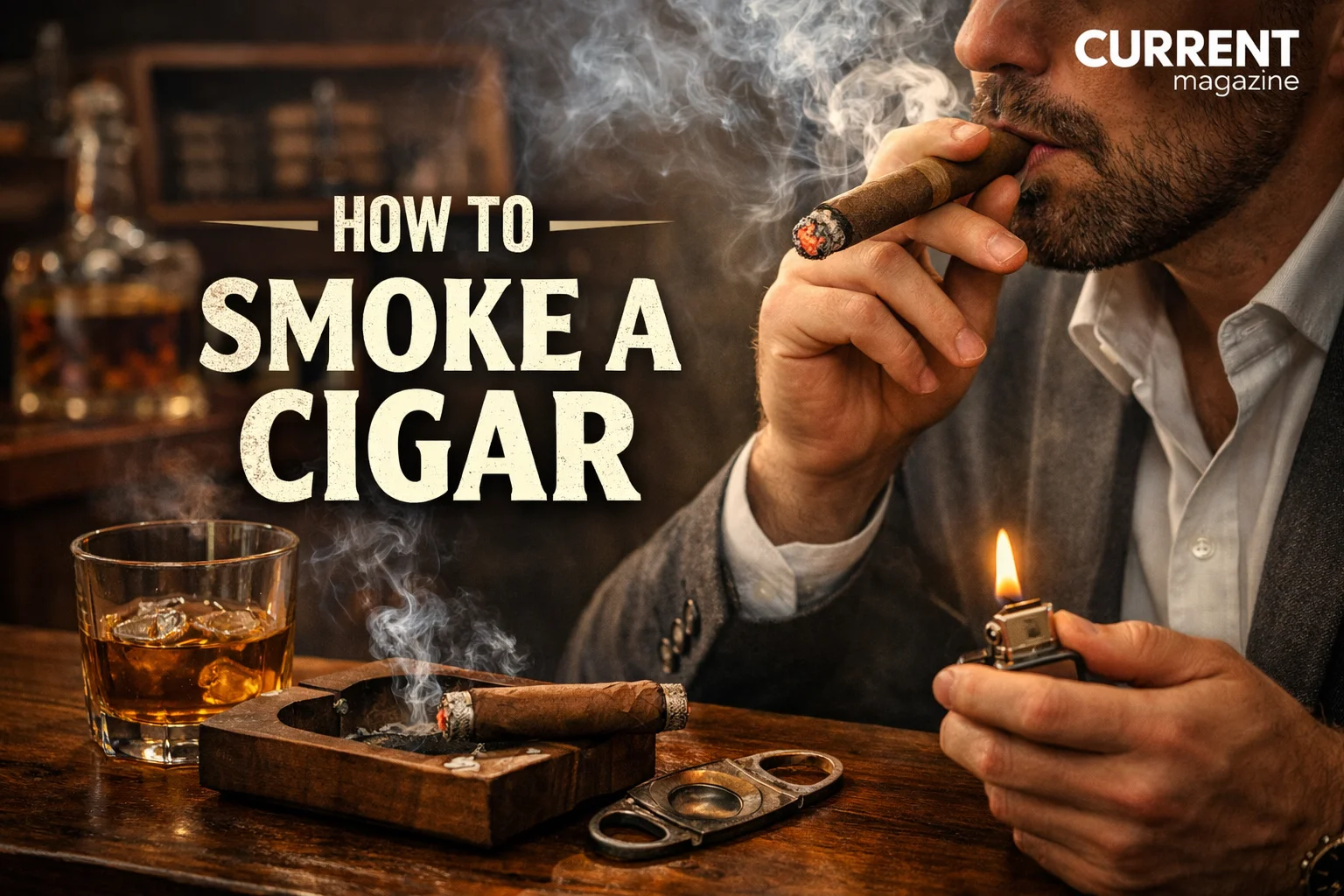
Learning how to smoke a cigar properly enhances your enjoyment and helps you appreciate the craftsmanship, flavors, and tradition that make cigar smoking a unique experience. Unlike cigarettes, cigars are meant to be savored slowly, never inhaled, and enjoyed as a relaxing ritual rather than a quick nicotine fix. Whether you’re trying your first cigar at a celebration, exploring a new hobby, or simply curious about proper cigar etiquette, understanding the right techniques makes all the difference. This comprehensive guide will walk you through selecting, cutting, lighting, and smoking a cigar the right way, along with important tips about flavors, etiquette, and health considerations.
Understanding Cigars: The Basics
Before lighting up, it helps to understand what makes cigars different from other tobacco products.
A cigar consists of three main parts: the filler (the tobacco inside), the binder (tobacco leaf that holds the filler together), and the wrapper (the outer leaf that you see and touch). Premium cigars use whole tobacco leaves for all three components, while cheaper cigars may use scraps or short-filler tobacco.
Cigars are not meant to be inhaled. This is the most important distinction from cigarettes. Cigar smoke is stronger and more alkaline than cigarette smoke, and inhaling it can cause coughing, nausea, and dizziness. You draw the smoke into your mouth, taste it, and exhale—the flavor and aroma are experienced in your mouth and nose, not your lungs.
Smoking a cigar takes time. A small cigar might take 30-45 minutes to smoke properly, while a large premium cigar can take 60-90 minutes or even longer. Cigars are about relaxation and taking your time, not rushing through.
Cigars come in many sizes and shapes, each with different smoking characteristics. Common sizes include Robusto (about 5 inches long), Churchill (about 7 inches), Corona (5.5-6 inches), and Torpedo (pyramid-shaped with a pointed end). Larger cigars generally provide a cooler, longer smoke.
Wrapper color indicates flavor profile. Lighter wrappers (Claro, Natural) tend to be milder and sweeter. Medium wrappers (Colorado) offer balanced flavor. Darker wrappers (Maduro, Oscuro) are typically fuller-bodied with richer, sometimes sweeter characteristics.
Choosing Your First Cigar
Selecting the right cigar as a beginner sets you up for a positive experience.
Start mild. Your first cigar should be on the milder side since you’re not used to cigar tobacco’s strength. Full-bodied cigars can be overwhelming for beginners, potentially causing nicotine sickness (dizziness, nausea, sweating). Look for cigars labeled “mild” or “Connecticut” (referring to Connecticut Shade wrapper, which is typically milder).
Choose a medium size. A Robusto or Corona is ideal for beginners—large enough to smoke properly but not so large that it becomes a two-hour commitment. Avoid very small cigars (cigarette-sized) as they tend to smoke hot and harsh.
Buy from a reputable source. Visit a dedicated cigar shop or tobacconist rather than buying from a convenience store or gas station. Staff at cigar shops can provide recommendations based on your preferences and experience level. They also store cigars properly in humidors, ensuring quality.
Don’t judge by price alone. While expensive cigars are often excellent, many affordable cigars ($5-10) are perfectly good for beginners. You don’t need to spend $30 on your first cigar—save premium cigars for when you can better appreciate subtle differences.
Ask for recommendations. Tell the tobacconist you’re a beginner looking for something mild and approachable. Good beginner-friendly brands often include Macanudo, Montecristo (lighter varieties), Arturo Fuente, and Ashton Connecticut.
Consider the occasion. If you’re smoking with friends who have more experience, ask what they’d recommend. If it’s for a special event, you might want something slightly more premium, but still mild if you’re new to cigars.
Storing Your Cigar Before Smoking
Proper storage affects how well your cigar smokes.
Cigars need to be kept at about 70% humidity and 70°F temperature (known as the “70/70 rule”). This keeps the tobacco supple and prevents it from drying out or becoming too moist.
If you buy a cigar to smoke immediately (within a few hours), storage isn’t critical. The cigar shop’s humidor has already maintained proper conditions.
For storage beyond a day, you’ll need a humidor—a special box that maintains humidity. Small travel humidors or even a sealed plastic bag with a humidity pack (like Boveda packs) work for just a few cigars.
Don’t store cigars in the refrigerator or freezer. This dries them out and can ruin the tobacco. Room temperature in a humidor is ideal.
Avoid leaving cigars in your car, especially in hot weather. Heat and fluctuating temperatures damage tobacco and can cause wrapper damage.
If you buy a cigar and plan to smoke it within a few hours, you can keep it in the cellophane wrapper it came in (if it has one) or a plastic zipper bag to maintain some humidity.
Cutting Your Cigar Properly
The first step in smoking a cigar is cutting it correctly. The “cap” (the closed end you put in your mouth) needs to be cut to create an opening for drawing smoke.
Types of Cuts
Straight cut is the most common and easiest for beginners. You cut straight across the cap, removing just enough to open the cigar. Cut just above where the cap meets the body—usually about 1/16 to 1/8 inch from the end. Don’t cut too much or the wrapper will unravel.
V-cut creates a wedge-shaped notch in the cap. This concentrates smoke slightly and some people find it provides better draw, but it requires a special V-cutter.
Punch cut uses a circular punch tool to remove a small plug from the cap center. This creates a smaller opening and can reduce the chance of tobacco bits in your mouth, though it may restrict the draw slightly on larger cigars.
How to Make a Straight Cut
Hold the cigar firmly in one hand. Identify where the cap ends—you’ll see a seam where it’s glued on. Place your cutter (a sharp cigar cutter, not scissors or a knife) just above this seam. Apply quick, firm pressure to cut cleanly through. A clean, decisive cut prevents crushing or tearing the wrapper.
Test the draw by taking a gentle puff before lighting. You should feel slight resistance but air should flow through fairly easily. If it’s too tight (very hard to draw), you can cut a tiny bit more. If it feels too loose (no resistance), you cut too much—you’ll just have to smoke it carefully.
Cutting Tools
Invest in a proper guillotine cutter (either single or double blade). Double-blade cutters provide the cleanest cut. These cost anywhere from $10 for a basic one to $100+ for luxury cutters, but a $15-20 cutter works perfectly well.
Avoid using your teeth, fingernails, pocket knives, or scissors. These create ragged cuts that can cause the wrapper to unravel and make the cigar difficult to smoke.
Lighting Your Cigar the Right Way
Lighting a cigar properly ensures even burning and good flavor from the start.
Best Lighting Tools
Butane torch lighters are ideal. They produce a clean, odorless flame that won’t affect tobacco flavor. Cedar spills (thin strips of cedar) are traditional and provide excellent flavor-neutral lighting. Wooden matches work well—let the sulfur burn off completely before bringing the flame to your cigar (about 2-3 seconds after striking).
Avoid regular cigarette lighters (the fuel can flavor the tobacco), candles (wax flavors transfer), or anything that produces chemical odors.
The Lighting Process
Step 1: Toast the foot. Hold the cigar at a 45-degree angle about 1-2 inches above the flame (don’t let the flame touch the tobacco directly). Slowly rotate the cigar while holding it near the flame. You’re heating the tobacco evenly, not burning it. You’ll see the edges start to glow and char slightly. This takes 15-30 seconds.
Step 2: Take gentle puffs. Once the foot is toasted, place the cigar in your mouth. Hold the lighter flame near (but not touching) the foot. Take slow, gentle puffs while rotating the cigar. Don’t inhale—just draw smoke into your mouth and immediately exhale. The puffing action draws the flame into the tobacco, lighting it from the inside.
Step 3: Check for even lighting. After a few puffs, pull the cigar away from your mouth and examine the lit end. It should be glowing evenly across the entire surface. If one side isn’t lit, direct the flame to that area while taking a few more gentle puffs.
Step 4: Blow on the foot gently. Once you think it’s fully lit, blow gently on the foot (like blowing out a candle, but softer). This makes the ember glow brightly and shows you if the entire surface is evenly lit. If you see dark spots, apply flame to those areas while puffing.
Take your time lighting—rushing creates uneven burning that affects flavor throughout the smoke.
How to Actually Smoke the Cigar
Now comes the enjoyable part—smoking and tasting your cigar.
The Basic Technique
Take slow, gentle puffs. Draw the smoke into your mouth with a slow, steady pull—about once every 30-60 seconds. Don’t puff rapidly or constantly. Let the smoke sit in your mouth for a moment, experience the flavors, then exhale slowly through your mouth and nose.
Never inhale cigar smoke. This bears repeating because it’s crucial. Cigar smoke is meant to be tasted in your mouth, not drawn into your lungs. Inhaling can make you sick, especially as a beginner.
Let the cigar rest between puffs. A well-made cigar will stay lit for several minutes between puffs. Constantly puffing causes the cigar to burn hot, which creates harsh, bitter flavors and can make you lightheaded. Aim for one puff every 30-60 seconds.
Retrohale occasionally (optional). This advanced technique involves taking smoke into your mouth, closing your mouth, and gently exhaling through your nose. This allows you to smell the flavors more intensely. Try it sparingly—too much retrohaling can be irritating.
Holding Your Cigar
Hold the cigar between your thumb and forefinger, or between your first and second fingers—whichever feels comfortable. There’s no “wrong” way to hold a cigar. Avoid clenching it between your teeth for extended periods as this can damage the cap and make the wrapper soggy.
Ashing Your Cigar
Let ash build up to about an inch before gently tapping or rolling it off in an ashtray. Some people let ash build even longer—a long ash is often a sign of quality construction. Don’t aggressively flick your ash like you might with a cigarette. Gently roll the cigar against the ashtray edge and the ash will fall off naturally.
A good cigar produces light gray, firm ash that holds together. If your ash is dark, flaky, or falls off very easily, it might indicate quality issues or that you’re smoking too fast.
Setting Down Your Cigar
Cigars are designed to rest in an ashtray without going out. Place it in the ashtray groove and it will sit safely. Don’t stub out a cigar and relight it later—once a cigar goes out, relighting it usually produces unpleasant flavors. If it goes out accidentally within 10-15 minutes, you can relight it by blowing through it gently first to clear stale smoke, then relighting as you did initially.
Tasting and Enjoying the Flavors
Cigar smoking is about flavor appreciation, similar to wine or whiskey tasting.
What You Might Taste
Cigars offer incredibly complex flavors. Common tasting notes include: earthy (soil, leather, wood), spicy (pepper, cinnamon, nutmeg), sweet (cocoa, caramel, honey, cream), nutty (almond, cashew, walnut), coffee or espresso, cedar or wood, floral notes, grassy or herbal, and fruity (subtle dried fruit).
You won’t taste all of these in one cigar. Each cigar has its own flavor profile, and flavors change as you smoke through different parts of the cigar.
Flavor Progression
Cigars are divided into thirds—the first third, second third, and final third. Flavors often change as you progress. The first third might be mild and creamy, the second third might develop more spice or complexity, and the final third can be the richest (though also strongest).
Pairing with Drinks
Many people enjoy cigars with beverages that complement the flavors:
Coffee (especially espresso) pairs wonderfully with cigars in the morning or afternoon. The bitter coffee notes complement tobacco beautifully.
Whiskey, bourbon, or rum are classic cigar pairings. The warmth and complexity of aged spirits match well with richer cigars.
Beer (especially porters, stouts, or IPAs) can work well. Lighter beers pair with milder cigars, while darker beers match fuller-bodied cigars.
Red wine pairs nicely with medium to full-bodied cigars.
Non-alcoholic options like sparkling water, cola, or sweet tea also work if you prefer not to drink alcohol.
Avoid very strong or sweet drinks that overpower the cigar’s subtle flavors.
How Long to Smoke and When to Stop
Knowing when to finish a cigar is important for enjoyment.
Smoke slowly. A typical Robusto should last 45-60 minutes. If you’re finishing faster than that, you’re probably smoking too fast. Slow down and take longer breaks between puffs.
Stop when flavors turn harsh or bitter. As you approach the final inch or so, the cigar becomes hotter and flavors intensify—often becoming harsh or bitter. This is your signal to stop. Most people stop smoking when there’s about 1-2 inches remaining.
You don’t need to smoke to the very end. There’s no prize for finishing completely, and the last portion often tastes unpleasant. Stop when you’re no longer enjoying it.
Never stub out a cigar like a cigarette. Simply place it in the ashtray and let it go out on its own. Stubbing creates an unpleasant smell. A cigar left alone will extinguish itself within a few minutes.
Common Beginner Mistakes to Avoid
Learning from common errors helps you enjoy your first experiences more.
Smoking too fast is the most common mistake. This causes harsh flavors, excessive heat, and can make you lightheaded or nauseous from too much nicotine too quickly. Slow down—cigars are about relaxation.
Inhaling the smoke will make you cough, feel sick, and miss the entire point of cigar smoking. Keep smoke in your mouth only.
Cutting too much off the cap causes the wrapper to unravel. Cut just above where the cap meets the body—less is more.
Using poor-quality lighters that impart chemical flavors ruins the tobacco taste. Invest in a simple butane torch lighter.
Smoking on an empty stomach increases the likelihood of nicotine sickness. Have a meal or substantial snack before smoking, especially if it’s a larger or stronger cigar.
Relighting repeatedly usually indicates you’re not puffing often enough to keep it lit, or you’re trying to smoke a dried-out cigar.
Expecting cigarette-like effects. Cigars aren’t about quick nicotine hits. They’re about savoring flavors and relaxing over an extended period.
Cigar Etiquette and Social Considerations
Understanding basic cigar etiquette makes social smoking more enjoyable.
Be considerate of non-smokers. Cigar smoke is strong and lingers. Don’t smoke in enclosed spaces where non-smokers are present. Ask permission before lighting up, even outdoors, if you’re with others who don’t smoke.
Don’t wave your cigar around while talking. This is both pretentious and potentially dangerous. Keep it near the ashtray when gesturing.
Remove the band or not—your choice. Cigar bands (the decorative paper ring) can be removed or left on. Some people remove them, others leave them. If you remove it, wait until the cigar has been lit for a few minutes—the heat will loosen the glue and it’ll come off more easily without tearing the wrapper.
Don’t smoke someone else’s cigar without permission. Cigars are personal and can be expensive.
Offer to share if you have multiple cigars and are smoking with friends. Cigar smoking is often a social activity.
Dispose of ash and butts properly. Don’t leave cigar remnants lying around. Use proper ashtrays and dispose of the remains considerately.
At cigar lounges, follow the establishment’s rules, be respectful of other patrons, and tip appropriately if staff provides service like cutting or lighting your cigar.
Health Considerations and Risks
It’s important to understand the health implications of cigar smoking.
Cigars are not a safe tobacco alternative. While cigar smoke typically isn’t inhaled into the lungs like cigarette smoke, cigar smoking still carries significant health risks including cancers of the mouth, throat, esophagus, and larynx, as well as gum disease and tooth loss.
Occasional cigar smoking (a few times a year) carries less risk than daily cigarette smoking, but there is no safe level of tobacco use. Any tobacco use increases health risks.
Nicotine is addictive. Even without inhaling, nicotine absorbs through the mouth’s mucous membranes. Regular cigar smoking can lead to nicotine addiction.
Secondhand cigar smoke contains many of the same harmful chemicals as cigarette smoke and poses risks to people around you.
Be aware of nicotine effects. Especially as a beginner, you may experience dizziness, nausea, increased heart rate, or sweating from the nicotine. If you feel unwell, put the cigar down immediately, drink water, and eat something. These symptoms usually pass within 20-30 minutes.
Don’t combine with other tobacco or nicotine products, which multiplies health risks and increases the chance of nicotine sickness.
If you experience any concerning symptoms during or after smoking a cigar, seek medical attention.
Expanding Your Cigar Knowledge
Once you’ve mastered the basics, you might want to explore further.
Try different cigar types gradually. After starting with mild cigars, slowly work your way toward medium-bodied options, then eventually fuller-bodied cigars if desired. This helps you understand your preferences.
Learn about cigar origins. Cigars from different countries (Dominican Republic, Nicaragua, Honduras, Cuba, etc.) have distinct characteristics. Cuban cigars are famous but illegal in the US—and many excellent non-Cuban cigars exist.
Understand construction quality. Well-made cigars burn evenly, have consistent draw, and produce firm ash. Poorly made cigars tunnel (burn unevenly), have tight or loose draws, and frustrate smokers.
Join a cigar community online or at local cigar lounges. Experienced smokers can offer recommendations and insights.
Keep a smoking journal noting which cigars you tried, what you liked or disliked, and what flavors you detected. This helps you identify your preferences.
Attend cigar events like samplings or pairing dinners to learn more about the craft and culture.
10 Frequently Asked Questions About Smoking Cigars
- Do you inhale cigar smoke like cigarettes?
No, you should never inhale cigar smoke into your lungs. This is the fundamental difference between cigar and cigarette smoking. Cigar smoke is more alkaline and stronger than cigarette smoke, making inhaling extremely harsh and likely to cause coughing, nausea, and dizziness. Instead, draw the smoke into your mouth, let it sit there for a moment to taste the flavors, then exhale through your mouth and nose. The experience is about tasting and smelling the tobacco, not absorbing smoke into your lungs. Nicotine is still absorbed through the mouth’s mucous membranes, so you’ll experience nicotine effects without inhaling.
- How long does it take to smoke a cigar?
The smoking time varies significantly based on the cigar’s size and how quickly you smoke. A small cigar (Petit Corona) might take 20-30 minutes, a medium Robusto typically takes 45-60 minutes, and a large Churchill or Double Corona can take 90 minutes to two hours. These are approximate times when smoking at a proper pace—taking slow puffs about once per minute with rests in between. If you’re finishing much faster, you’re likely smoking too quickly, which causes harsh flavors and can make you feel sick from nicotine overload. Cigars are meant to be savored slowly over an extended period, not rushed.
- How much of the cigar should I smoke before stopping?
Most cigar smokers stop when there’s about 1-2 inches of cigar remaining, though some stop with more left and others smoke closer to the end. As you approach the final portion, the cigar becomes hotter and flavors often turn harsh, bitter, or unpleasant—this is your signal to stop. There’s absolutely no requirement to smoke a cigar to the very end, and the last inch usually doesn’t taste good anyway. Stop whenever you stop enjoying the flavors or when it becomes uncomfortable. Simply set it down in an ashtray and let it extinguish naturally—don’t stub it out like a cigarette, as this creates an awful smell.
- What’s the best cigar for a complete beginner?
Beginners should start with a mild to medium-bodied cigar in a comfortable size like a Robusto or Corona. Good beginner-friendly options include Macanudo Café (very mild and smooth), Arturo Fuente Hemingway (mild to medium with excellent construction), Ashton Classic or Connecticut (smooth and approachable), Montecristo White (mild with creamy flavors), or Romeo y Julieta Reserva Real (Connecticut wrapper, smooth and mild). Avoid full-bodied or strong cigars for your first experience, as they can be overwhelming and make you feel sick. Look for cigars with Connecticut Shade wrappers (lighter-colored) which are typically milder. Ask staff at a cigar shop for their beginner recommendations—they can guide you based on your preferences and budget.
- Why do I feel dizzy or nauseous when smoking a cigar?
Dizziness, nausea, sweating, or lightheadedness during cigar smoking usually indicates nicotine sickness—you’re getting too much nicotine too quickly. This commonly happens when beginners smoke too fast, choose a cigar that’s too strong, smoke on an empty stomach, or accidentally inhale some smoke. To prevent this: eat a substantial meal before smoking, choose milder cigars when starting out, smoke very slowly (one puff per minute), never inhale, and consider a smaller cigar for your first experiences. If you start feeling unwell, immediately put down the cigar, drink water or a sugary beverage, eat something, and sit quietly. Symptoms typically pass within 20-30 minutes. Some people are more sensitive to nicotine than others.
- Can I save a partially smoked cigar and finish it later?
While technically possible, it’s generally not recommended. Once a cigar goes out, stale smoke settles in the tobacco, and relighting produces harsh, unpleasant flavors that bear little resemblance to the original taste. If your cigar accidentally goes out after just a few minutes, you can relight it by first blowing through it gently to clear out stale smoke, then relighting as you did initially—the flavor will be somewhat affected but might still be acceptable. However, if a cigar has been out for more than 15-20 minutes, or you intentionally stopped smoking partway through, it’s best to start fresh with a new cigar rather than trying to save and relight the old one. Cigars are meant to be smoked in one session.
- What do I pair with a cigar—coffee, whiskey, or something else?
Many beverages pair well with cigars depending on personal preference and the time of day. Coffee (especially espresso or strong black coffee) is excellent with morning or afternoon cigars—the bitter coffee notes complement tobacco beautifully. Whiskey, bourbon, scotch, or rum are classic pairings that match the complexity of cigars, with the warmth and richness of aged spirits enhancing tobacco flavors. Red wine pairs nicely with medium to full-bodied cigars. Beer works too—porters and stouts with richer cigars, while lighter beers suit milder cigars. Non-alcoholic options include sparkling water (cleanses the palate between puffs), cola (the sweetness can complement cigars), or sweet tea. The key is choosing a beverage that complements rather than overpowers the cigar’s flavors. Avoid extremely sweet or strongly flavored drinks that mask subtle tobacco notes.
- Is cigar smoking safer than cigarette smoking?
No tobacco product is safe, though the risks differ between cigarettes and cigars. Cigar smokers typically don’t inhale smoke into their lungs like cigarette smokers, which reduces the risk of lung cancer and emphysema. However, cigar smoking carries significant risks including cancers of the mouth, throat, larynx, and esophagus, as well as heart disease, gum disease, and tooth loss. Nicotine from cigars is addictive even without inhaling. Occasional cigar smoking (a few times per year) carries less risk than daily cigarette smoking, but there is no safe level of tobacco use. If you’re a non-smoker, the healthiest choice is not to start smoking cigars. If you do choose to smoke cigars, occasional use (special occasions only) presents less risk than regular use, though risk is never zero.
- Do I need any special equipment to start smoking cigars?
You need very little equipment to begin. At minimum, you need: a quality cigar cutter (a basic guillotine cutter costs $10-20), and a butane torch lighter or wooden matches ($5-15 for a basic torch lighter). That’s truly all that’s required to start. Everything else is optional: a humidor for storing multiple cigars long-term (unnecessary if you’re just trying cigars occasionally), an ashtray (any ashtray works, though cigar-specific ones have convenient grooves), a cigar case for transporting cigars, or fancier accessories like luxury cutters, cigar punches, or V-cutters. Many cigar shops will cut and light your cigar for you if you’re smoking there. For someone just exploring cigars, a simple cutter and lighter plus the cigars themselves is all you need to invest initially.
- How should I properly put out a cigar when I’m done?
Never stub out a cigar like you would a cigarette—this creates an extremely unpleasant smell. Instead, simply place the cigar in an ashtray and leave it alone. A cigar will naturally extinguish itself within a few minutes when you stop puffing on it. The ember will gradually go out without any intervention needed. If you’re at home, you can leave the cigar in an outdoor ashtray or dispose of it once it’s completely cold. Some people gently roll the lit end against the ashtray to knock off any remaining ash before leaving it to go out naturally. Avoid grinding or crushing the cigar—this releases concentrated smoke and oils that smell terrible. At cigar lounges or social settings, follow the venue’s disposal practices, which usually involve designated ashtrays or receptacles for finished cigars.