Want to know if your brake pads are wearing out? Learn how to check brake pads yourself with this easy-to-follow guide. We’ll show you the simple steps to inspect your brake pads at home and know when it’s time to replace them.
Why Checking Your Brake Pads Matters
Your brake pads are one of the most important safety parts of your car. They help you stop quickly and safely. Over time, brake pads wear down from constant use. Checking them regularly ensures your brakes work properly and keeps you safe on the road.
Most people don’t think about their brake pads until something goes wrong. But checking them is quick and easy. You can do it yourself without special tools or expensive equipment.
What Are Brake Pads?
Brake pads are small metal and rubber pieces attached to your wheels. When you press the brake pedal, these pads push against a metal disc called a rotor. This friction stops your car. As you brake, the rubber material slowly wears away.
Most cars have four brake pads—two on the front wheels and two on the back wheels. Front brake pads wear out faster because the front of your car does most of the braking work.
How Often Should You Check Your Brake Pads?
A good rule is to check your brake pads every month. You should also check them if you notice any warning signs like:
- Strange noises when braking
- Your car takes longer to stop
- The brake pedal feels soft or squishy
- A warning light on your dashboard
Many experts recommend replacing brake pads every 25,000 to 70,000 miles. But this depends on your driving habits and car type.
Method 1: Visual Inspection Through the Wheel
This is the easiest way to check brake pads. You don’t need to remove the wheel.
What You Need:
- A flashlight
- Possibly a wrench (to remove the wheel if needed)
Steps:
- Park your car safely – Find a flat, safe place to park. Turn off the engine and engage the parking brake.
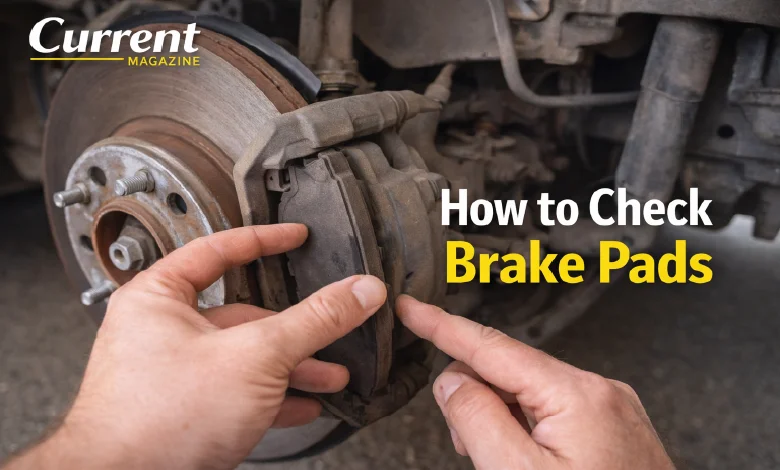
- Look through the wheel spokes – Crouch down and look at the wheel. Between the spokes, you’ll see a metal rotor (the shiny disc). Behind or beside it, you’ll see the brake pads.
- Check the pad thickness – The brake pad material should be thick and obvious. It looks like a block of darker material next to the rotor.
- Measure if possible – Healthy brake pads are usually at least 1/4 inch thick. If they’re thinner than this, it’s time to replace them soon.
- Check both sides – Look at the wheels on both sides of your car. Compare the thickness.
- Do this for all wheels – Don’t forget the back wheels. Get down and look at each wheel.
What to Look For:
- Brake pads should look thick and dark
- There should be plenty of rubber material visible
- If you see metal showing through, your pads are dangerously worn
Method 2: Remove the Wheel for a Better Look
If you want a closer look, you can remove the wheel. This takes a bit longer but gives you more information.
What You Need:
- Jack and jack stand
- Wrench or socket set
- Flashlight
Steps:
- Loosen the lug nuts – Before you jack up the car, loosen the nuts that hold the wheel on. Don’t remove them completely yet.
- Raise the car safely – Use a jack to lift the car. Always use jack stands to support the car. Never work under a car held up by just a jack.
- Remove the wheel completely – Now remove the lug nuts all the way and take off the wheel.
- Examine the brake pad closely – You can now see the brake pad clearly. Look for the thickness of the friction material (the dark part).
- Check the rotor – While you’re here, look at the rotor behind the pad. It should be smooth. If it has deep grooves or is shiny and thin, it might need replacement too.
- Put everything back – Replace the wheel and tighten the lug nuts. Lower the car gently.
Signs Your Brake Pads Need Replacement Soon
Don’t wait for a breakdown. Replace your brake pads if you notice:
Squeaking or Squealing Sounds – Many brake pads have a small metal tab that makes noise when pads are thin. This warns you before your brakes fail completely.
Grinding Sounds – This means the pad material is completely gone and metal is rubbing on metal. This is dangerous and damages your rotor too. Get this fixed right away.
Brake Pedal Feels Different – If your brake pedal goes to the floor or feels mushy, your pads might be worn out.
Long Stopping Distance – If it takes longer to stop than before, worn brake pads could be the reason.
Brake Warning Light – Most modern cars have a dashboard light that comes on when brake pads are low. Don’t ignore this.
Visible Wear – If pads look thin when you inspect them, replace them soon.
How Much Do Brake Pads Cost?
The cost varies depending on your car and pad quality:
- Budget pads – $100 to $200 per axle
- Mid-range pads – $200 to $400 per axle
- Premium pads – $400 to $600+ per axle
An axle means both wheels on one side (front or back). So replacing all four pads usually costs $200 to $1,200 depending on your vehicle and pad type.
Should You Replace Pads Yourself?
Some people replace their own brake pads if they have tools and experience. However, brakes are critical for safety. If you’re not confident, take your car to a professional mechanic. The labor cost is usually $100 to $300 per axle.
Tips to Make Your Brake Pads Last Longer
- Avoid heavy braking – Smooth, gentle braking uses less pad material. Aggressive driving wears pads faster.
- Don’t coast downhill – Use low gear to slow down. This uses engine braking instead of the brake pedal.
- Maintain distance – Follow other cars from a safe distance. This means you brake less suddenly.
- Check regularly – Catch problems early before they become expensive.
- Listen to your car – Pay attention to new sounds. They often warn you of problems.
10 FAQs About Checking and Replacing Brake Pads
- How long do brake pads last?
Brake pads usually last between 25,000 and 70,000 miles. This depends on how often you brake, your driving style, and road conditions. City driving with frequent stops wears pads faster than highway driving. - Can I check brake pads without removing the wheel?
Yes! You can look through the wheel spokes with a flashlight. This gives you a quick idea of pad thickness without any work. For a detailed inspection, removing the wheel helps you see better. - What thickness should brake pads be?
Good brake pads should be at least 1/4 inch thick. When they get below 1/8 inch, it’s time to replace them soon. Some cars have sensors that alert you at around 2mm thickness. - Is a squeaking noise always brake pads?
Not always, but squeaking is a common sign of thin brake pads. Some pads are designed to squeak as a warning. However, squeaking can also come from other parts. If you’re unsure, have a mechanic check. - Can I drive with worn brake pads?
Worn brake pads are dangerous. Your brakes might fail, and you could have an accident. Don’t drive long distances with very worn pads. Replace them as soon as possible. - Do front and back brake pads wear at the same rate?
No. Front brake pads usually wear out faster because the front of the car does most of the braking. Back pads might last 50,000 to 100,000 miles while front pads last 25,000 to 50,000 miles. - What is brake dust on wheels?
Brake dust is a dark powder that builds up on your wheels. It comes from tiny pieces of brake pads wearing away. It’s normal but can be cleaned off. Excessive brake dust might mean your pads are wearing too fast. - Do I need to replace both front brake pads at the same time?
Yes. Always replace both brake pads on the same axle together. Replacing just one side causes uneven braking and damage to your brakes. - How do I know if my rotor needs replacement?
Look for deep grooves, cracks, or a shiny, thin appearance. If the rotor is damaged, have a mechanic replace it. Damaged rotors reduce braking power and are unsafe. - What should I do if my brake pads are worn out?
Schedule a brake pad replacement appointment with a mechanic. If you hear grinding sounds or your brakes feel wrong, get it done immediately. Worn brakes are a serious safety issue.
Final Thoughts
Checking your brake pads is simple and takes just a few minutes. Regular inspections help you catch problems early and keep your car safe. Listen to warning sounds, watch for brake light warnings, and look at your pads monthly. When it’s time to replace them, don’t delay. Safe brakes mean a safe car.