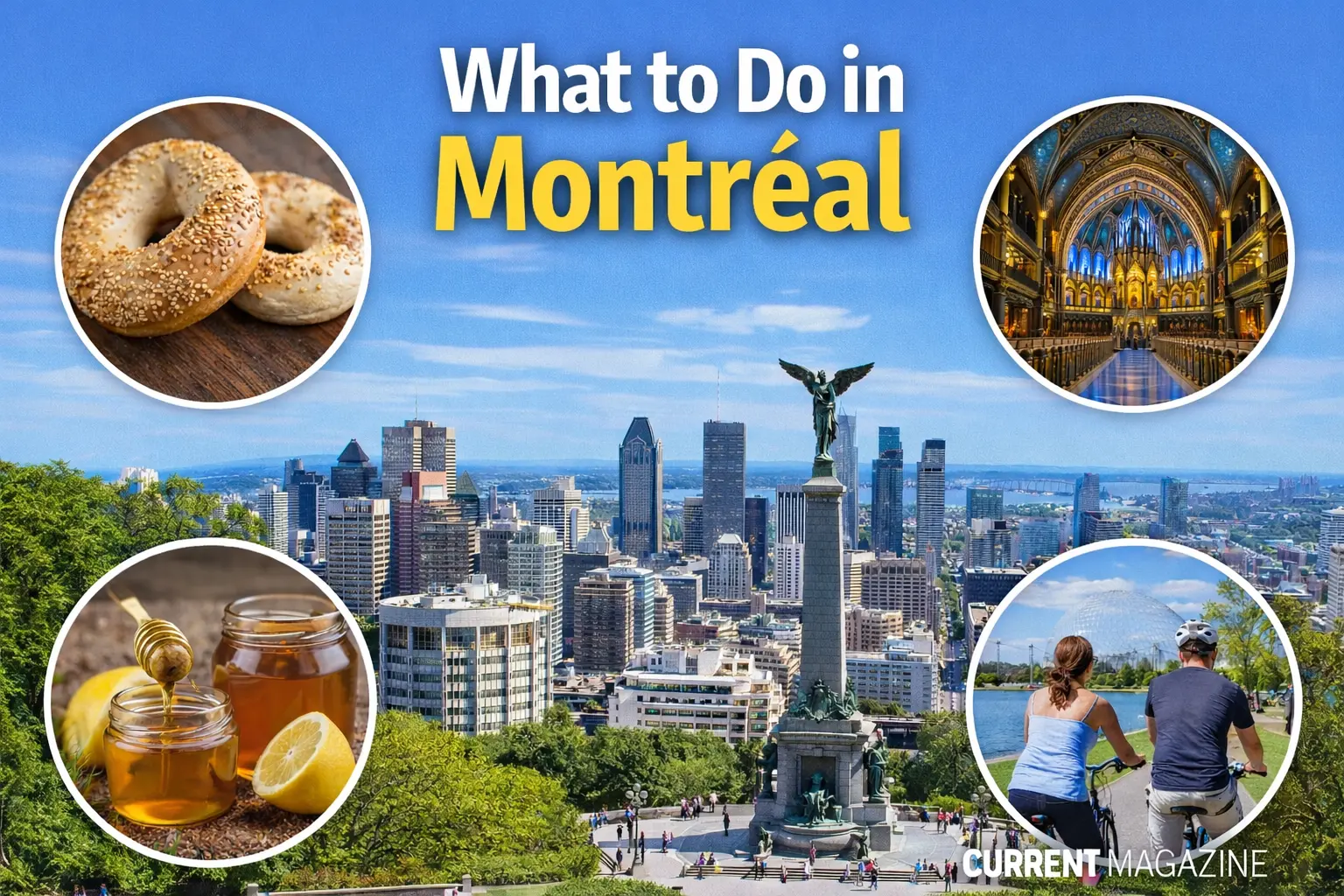
Montreal is a city that feels like a slice of Europe dropped into North America. With cobblestone streets, stunning architecture, world-class food, and a unique blend of French and English cultures, Montreal offers experiences you won’t find anywhere else in Canada. Whether you’re visiting for a weekend or a week, this guide covers everything you need to know about what to do in Montreal.
Why Visit Montreal?
Montreal is Canada’s second-largest city, but it feels more like a collection of charming neighborhoods than one massive metropolis. The city speaks both French and English, has over 6 million visitors at the Old Port alone each year, and offers a fascinating mix of:
- European charm with North American energy
- Historic sites dating back to the 1600s
- World-famous food scene (bagels, poutine, and smoked meat!)
- Vibrant festivals and nightlife
- Beautiful parks and outdoor spaces
- Excellent museums and cultural attractions
- Underground city for winter exploration
Top Things to Do in Montreal
1. Explore Old Montreal (Vieux-Montréal)
Old Montreal is where your visit should begin. This historic neighborhood dates back to 1611 and features beautiful 18th and 19th-century limestone buildings with cobblestone streets that transport you back in time.
What to see here:
- Narrow, winding streets perfect for wandering
- Horse-drawn carriages clip-clopping past historic buildings
- Charming boutiques and cafes
- Street performers and artists
- The waterfront boardwalk
- Stunning European-style architecture
Why go: Old Montreal is the heart of the city’s history. It’s the most touristy area, yes, but it’s touristy for good reason – it’s absolutely beautiful and packed with must-see attractions.
Getting there: Take the Orange Line metro to Place-d’Armes or Champ-de-Mars stations.
2. Visit Notre-Dame Basilica
This is arguably Montreal’s most stunning attraction. While the outside looks relatively plain, the interior will take your breath away.
What makes it special:
- Incredibly ornate Gothic Revival architecture
- Hand-painted ceiling in brilliant blues, golds, and reds
- Beautiful stained glass windows
- Massive pipe organ with 7,000 pipes
- Rich wood carvings throughout
The Aura Experience: Time your visit for the Aura light and sound show, an immersive experience that uses projection mapping and music to transform the basilica into a magical spectacle. It’s especially stunning in the evening.
Cost: There’s an admission fee (around $15-20), but it includes a guided tour explaining the basilica’s history and design.
3. Walk Around Mount Royal Park
Mount Royal is Montreal’s most famous park, designed by Frederick Law Olmsted – the same landscape architect who created New York’s Central Park.
Activities:
- Hike to the summit for panoramic city views
- Picnic on the grassy slopes
- Visit Beaver Lake for paddleboating or ice skating (depending on season)
- Explore the trails through the forest
- Watch the tam-tam drum circle on Sundays in summer
- Cross-country skiing and snowshoeing in winter
Best viewpoint: The Kondiaronk Belvedere offers the iconic Montreal skyline view you’ve seen in photos. It’s worth the climb!
Local tip: Locals affectionately call it “the mountain,” even though it’s technically a hill.
4. Experience the Old Port (Vieux-Port)
The Old Port is one of Canada’s most popular tourist attractions, welcoming over 6 million visitors annually.
What to do:
- Walk or bike along the waterfront promenade
- Ride the Grande Roue (Montreal’s observation wheel) for incredible views
- Watch the fountain shows at Bonsecours Basin
- Relax at Clock Tower Beach in summer
- Ice skating on the outdoor rink in winter
- Take a boat cruise on the St. Lawrence River
- Visit the Montreal Science Centre
Seasonal activities: The Old Port transforms with the seasons, offering completely different experiences in summer (beaches and boats) versus winter (ice skating and warming huts).
5. Eat Montreal’s Famous Foods
Montreal’s food scene is legendary. The city has three iconic foods you absolutely must try:
Montreal Bagels: The city is divided between two legendary bagel shops:
- St-Viateur Bagel: Open 24/7, larger shop, easier to watch bakers at work
- Fairmount Bagel: Opened in 1919, slightly different recipe
Montreal bagels are smaller, denser, and sweeter than New York bagels. They’re hand-rolled, boiled in honey water, and baked in wood-fired ovens. Get them fresh and warm – they’re incredible.
Montreal Smoked Meat: Not pastrami, not corned beef – smoked meat is its own thing. Beef brisket is cured with spices, smoked, steamed, and hand-sliced to order.
Where to try it:
- Schwartz’s Deli: The most famous, opened in 1928, often has lines out the door
- Main Deli: Locals’ favorite, less touristy
- Lester’s Deli: Family-run since 1951
- Reuben’s Deli: Many locals claim this has the best
Order it “medium” – the perfect balance of lean and fatty meat. It comes on rye bread with yellow mustard.
Poutine: Quebec’s gift to the world: fresh-cut fries topped with cheese curds and hot gravy.
Best spots:
- La Banquise: Open 24 hours with over 30 poutine variations
- Chez Claudette: Classic, no-frills poutine
- Frite Alors: Chain with consistently good quality
The key to good poutine: The cheese curds must be fresh and squeaky, the fries must be crispy, and the gravy should be light.
6. Visit the Biodome, Botanical Gardens, and Insectarium
These three attractions (plus the Planetarium) are part of Espace Pour la Vie in the city’s east end – a perfect family destination.
The Biodome:
- Recreates five ecosystems under one roof
- See penguins in the sub-Antarctic environment
- Walk through a tropical rainforest with parrots
- Experience different climates without leaving the building
Jardin Botanique (Botanical Gardens):
- One of the world’s largest botanical gardens
- Features themed gardens including Japanese and Chinese gardens
- Hosts spectacular light shows in certain seasons
- Beautiful pagodas and architecture
The Insectarium:
- Focuses on insects and butterflies
- Interactive exhibits
- Great for kids who love creepy-crawlies
7. Explore Parc Jean-Drapeau
Located on two islands in the St. Lawrence River, this massive park offers year-round activities.
Summer attractions:
- Jean-Doré Beach – a real sandy beach in the city
- La Ronde amusement park – Six Flags-operated rides
- Canoeing and paddleboarding
- Cycling on scenic trails
- The Biosphère environmental museum in its iconic geodesic dome
- Public art installations throughout
- Floralies Gardens
Winter activities:
- Ice skating on outdoor rinks
- Snowshoeing through peaceful trails
- Tobogganing on hills
- Winter hiking
Getting there: Take the Yellow metro line to Jean-Drapeau station – it’s only 5 minutes from downtown.
8. Walk Down Saint-Laurent Boulevard (The Main)
Boulevard Saint-Laurent, known simply as “The Main,” is Montreal’s legendary cultural melting pot.
What you’ll find:
- Ethnic restaurants from around the world
- Vintage clothing shops
- Art galleries and quirky boutiques
- Trendy bars and nightclubs
- Historic buildings
- Street art and murals
Neighborhoods along The Main:
- Chinatown: Asian restaurants and shops
- The Plateau: Hipster cafes and vintage stores
- Mile End: Trendy neighborhood with the best bagels
9. Discover the Underground City (RÉSO)
Montreal’s famous Underground City is a network of tunnels connecting metro stations, shopping centers, hotels, offices, and more.
Facts:
- Spans over 32 kilometers (20 miles)
- Connects 10 metro stations
- Access to 1,700 boutiques and 200 restaurants
- About 500,000 people use it daily
Why visit: It’s a lifesaver during Montreal’s brutal winters when temperatures drop to -20°C (-4°F) or colder. You can shop, eat, and explore without ever going outside.
Important tip: The signage isn’t always clear and it’s easy to get lost. Consider joining a guided tour if you want to understand the layout, or just embrace getting lost as part of the adventure.
10. Visit Jean-Talon Market
This is one of the largest open-air public markets in North America and a favorite among locals.
What to find:
- Fresh local produce from Quebec farms
- Artisanal cheeses
- Quebec maple syrup products
- Fresh-baked bread and pastries
- Flowers and plants
- Specialty foods and spices
When to go: The market is busiest and best on weekend mornings when locals do their grocery shopping. It’s particularly stunning in fall when harvest season is at its peak.
Food stalls: Many vendors offer prepared foods – grab lunch here and eat while people-watching.
11. Explore the Plateau and Mile End Neighborhoods
These adjacent neighborhoods are where Montreal’s creative soul lives.
The Plateau:
- Colorful row houses with iconic outdoor staircases
- Trendy cafes and brunch spots
- Independent bookstores
- Street art everywhere
- Beautiful tree-lined streets perfect for strolling
Mile End:
- Once called “the trendiest neighborhood in the world”
- Home to both famous bagel shops (St-Viateur and Fairmount)
- Vintage stores and art galleries
- Multicultural restaurants
- Leonard Cohen’s old neighborhood
12. Relax at Bota Bota Spa
This unique floating spa is docked in the Old Port.
What makes it special:
- Built on an actual boat
- Offers rooftop hot tubs with river views
- Multiple saunas and steam rooms
- Relaxation areas
- Spa treatments available
- Open year-round (stunning in winter!)
Perfect for: A relaxing break from sightseeing, especially after walking all day.
13. Visit Museums
Montreal has excellent museums covering art, history, and culture.
Montreal Museum of Fine Arts:
- Largest art museum in Canada
- Spread across five pavilions
- Features paintings, sculptures, decorative arts
- Special exhibitions rotate throughout the year
- Free admission on the first Sunday of each month
Pointe-à-Callière Museum:
- Built over actual archaeological ruins
- Learn about Montreal’s founding and history
- Underground crypt tours
- Interactive exhibits
McCord Museum:
- Focuses on Canadian history and culture
- Indigenous artifacts
- Historical photographs of Montreal
14. Experience Montreal’s Festivals
Montreal hosts world-class festivals throughout the year:
Summer festivals:
- Montreal International Jazz Festival (late June-early July): The world’s largest jazz festival with free outdoor concerts
- Just for Laughs (July): Massive comedy festival attracting top comedians
- Osheaga (July/August): Multi-day music festival
- Montreal Fireworks Festival: International fireworks competition
Winter festivals:
- Igloofest (January-February): Electronic music festival in the Old Port
- Montreal en Lumière (February-March): Winter lights festival with over 500,000 visitors, featuring food, light installations, and outdoor activities
15. See Street Art and Murals
Montreal is covered in incredible street art and murals.
Where to find the best murals:
- Boulevard Saint-Laurent
- The Plateau neighborhood
- Mile End
- Gay Village area
- Downtown alleys
Famous murals:
- The Leonard Cohen mural (corner of Crescent and de Maisonneuve)
- Giant portraits along Saint-Laurent
- Colorful alley art in the Plateau
What to Do in Montreal by Season
Spring (April-May)
- Watch the city come alive as flowers bloom
- Visit outdoor markets as they reopen
- Enjoy terrace dining without summer crowds
- Bike along the Lachine Canal
- Mild weather perfect for walking tours
Summer (June-August)
- Beach time at Jean-Doré Beach
- Attend major festivals (Jazz, Just for Laughs, Osheaga)
- Outdoor dining on terraces everywhere
- Tam-tam drum circles on Mount Royal Sundays
- Boat cruises on the St. Lawrence River
- Picnics in parks
Fall (September-November)
- Experience stunning fall foliage in parks
- Visit markets for harvest produce
- Enjoy comfortable walking weather
- Watch seasonal changes on Mount Royal
- Lower hotel rates after summer rush
Winter (December-March)
- Ice skating at outdoor rinks
- Explore the Underground City to stay warm
- Experience winter festivals (Igloofest, Montreal en Lumière)
- Warm up with comfort food (poutine!)
- Visit world-class museums
- Snowshoeing in Mount Royal Park
- See the city covered in beautiful snow
Practical Tips for Visiting Montreal
Language
Montreal is officially French-speaking, but most people in tourist areas speak English. Learning a few French phrases is appreciated:
- “Bonjour” (Hello)
- “Merci” (Thank you)
- “S’il vous plaît” (Please)
- “Parlez-vous anglais?” (Do you speak English?)
Getting Around
Metro: The best way to get around. Buy an OPUS card for easy refills. Biking: Montreal has excellent bike paths and the BIXI bike-share system Walking: Many neighborhoods are very walkable Driving: NOT recommended – parking is expensive and difficult, especially in Old Montreal
Money
- Canada uses Canadian dollars (CAD)
- Credit cards widely accepted
- Tipping: 15-20% at restaurants (before taxes)
- Many iconic food spots prefer cash
When to Visit
Best overall: September-October (beautiful fall weather, fewer crowds) Best for festivals: Summer (June-August) Best for budget travelers: Winter (cheaper hotels, but very cold) Most crowded: July-August during festival season
Safety
Montreal is very safe for tourists. Use common sense in any big city:
- Watch your belongings in crowded areas
- Be aware of your surroundings at night
- The metro is safe even late at night
What to Pack
Summer:
- Light clothing and comfortable walking shoes
- Sunscreen and sunglasses
- Light jacket for air-conditioned spaces
Winter:
- Heavy winter coat
- Warm boots with good traction
- Hat, scarf, and gloves
- Multiple layers
Where to Stay in Montreal
Old Montreal: Most touristy but convenient for attractions, beautiful historic hotels
Downtown: Central location, near the Underground City, good metro connections
The Plateau: More local experience, hip neighborhood with cafes
Mile End: Trendy area, great restaurants, authentic Montreal vibe
Gay Village: Vibrant nightlife, colorful streets, welcoming atmosphere
Montreal Food Etiquette
- At bagel shops: No tipping expected
- At delis: Order at the counter, pay first, wait for your number
- At restaurants: 15-20% tip is expected
- Poutine spots: Often casual with minimal service
- Many iconic spots are cash-only or cash-preferred
Day Trip Ideas from Montreal
If you have extra time:
Quebec City (2.5 hours): Beautiful old city, more European than Montreal Mont-Tremblant (1.5 hours): Ski resort in winter, hiking and lakes in summer Ottawa (2 hours): Canada’s capital city Laurentian Mountains: Nature, lakes, and outdoor activities
The Bottom Line
Montreal offers an incredible mix of experiences you won’t find anywhere else in North America. Start with the must-dos: explore Old Montreal, visit Notre-Dame Basilica, eat your way through the food scene (bagels, smoked meat, poutine!), walk up Mount Royal for the views, and wander through charming neighborhoods like the Plateau and Mile End.
The city works year-round – summer brings festivals and outdoor fun, while winter offers its own magic with lights festivals and cozy indoor activities. Montreal’s unique French-Canadian culture, European charm, world-class food, and friendly locals make it one of Canada’s most enchanting cities.
Whether you’re here for a weekend or a week, Montreal will surprise and delight you at every turn. Bon voyage!
10 Frequently Asked Questions About Visiting Montreal
1. Do I need to speak French to visit Montreal?
No, you don’t need to speak French to visit Montreal. Most people in tourist areas, restaurants, and shops speak English fluently, and menus are typically in both languages. However, learning basic French phrases like “Bonjour” (hello) and “Merci” (thank you) is appreciated by locals and enhances your experience. In Old Montreal, Downtown, and major tourist areas, you’ll have no problem getting by in English only.
2. What are the three must-try foods in Montreal?
The three iconic Montreal foods are bagels, smoked meat, and poutine. Montreal bagels are smaller, denser, and sweeter than New York bagels – try them at St-Viateur or Fairmount Bagel. Montreal smoked meat is beef brisket that’s cured, smoked, and steamed – get it at Schwartz’s Deli or Main Deli on rye bread with mustard. Poutine is fresh-cut fries topped with cheese curds and gravy – La Banquise serves it 24 hours a day with over 30 variations.
3. How many days do I need in Montreal?
You need at least 2-3 days to see Montreal’s main attractions. A long weekend (3-4 days) is ideal for experiencing Old Montreal, Mount Royal Park, the food scene, and some neighborhoods. With 5-7 days, you can explore more thoroughly, visit museums, take day trips, and really experience the local culture. If you’re visiting during a major festival, add an extra day to enjoy it.
4. Is Montreal expensive for tourists?
Montreal is moderately priced compared to other major North American cities. It’s cheaper than Toronto, Vancouver, or New York, but more expensive than many U.S. cities. Budget travelers can eat well for $30-50 CAD per day, mid-range tourists should budget $100-150 CAD, and luxury travelers $200+ CAD. Hotels range from $100-300+ CAD per night. Many attractions are free or inexpensive, and the food scene offers great value, especially at delis and bagel shops.
5. What’s the best way to get around Montreal?
The Montreal metro (subway) is the best way to get around – it’s clean, safe, efficient, and affordable. Buy an OPUS card that you can reload for easy access. The city is also very walkable, especially neighborhoods like Old Montreal, the Plateau, and Mile End. The BIXI bike-share system is excellent for exploring. Avoid driving – parking is expensive and difficult, especially in Old Montreal. Taxis and Uber are available but unnecessary for most tourist areas.
6. Is Montreal safe for tourists?
Yes, Montreal is very safe for tourists. It consistently ranks as one of the safest major cities in North America. Use normal big-city common sense: watch your belongings in crowded tourist areas, be aware of your surroundings at night, and stick to well-lit areas. The metro is safe even late at night. Pickpocketing is rare but possible in very crowded areas like festivals. Overall, violent crime against tourists is extremely rare.
7. When is the best time to visit Montreal?
The best time to visit Montreal is September through October, when you get beautiful fall weather, stunning foliage, fewer crowds than summer, and reasonable hotel prices. Summer (June-August) is perfect for festivals and outdoor activities but is crowded and more expensive. Spring (April-May) offers mild weather and fewer tourists. Winter (December-March) is very cold (-20°C/-4°F or colder) but offers winter festivals, lower prices, and a magical snowy atmosphere if you dress warmly.
8. Can I visit Montreal in winter?
Absolutely! Montreal doesn’t shut down in winter – locals embrace it. Winter highlights include the Montreal en Lumière festival, Igloofest electronic music festival, ice skating on outdoor rinks, exploring the 32-kilometer Underground City to stay warm, visiting world-class museums, enjoying hearty comfort food, and experiencing the city covered in beautiful snow. Just dress very warmly in layers – you’ll need a heavy winter coat, warm boots, hat, gloves, and scarf. Temperatures regularly drop to -20°C (-4°F) or colder.
9. Where should I stay in Montreal for my first visit?
For first-time visitors, Old Montreal offers the most convenient location near major attractions, with beautiful historic hotels and easy walking access to the waterfront. However, it’s the most touristy and expensive area. Downtown is more central with excellent metro connections and access to the Underground City. The Plateau or Mile End offer more authentic local experiences with great restaurants and cafes, though they’re further from major tourist sites. Choose based on whether you prioritize convenience (Old Montreal/Downtown) or local atmosphere (Plateau/Mile End).
10. Is the Underground City worth visiting?
The Underground City (RÉSO) is interesting but not a traditional tourist attraction – it’s primarily a practical way for locals to navigate the city during brutal winters. The 32-kilometer network connects metro stations, shopping centers, hotels, and offices, allowing you to shop and eat without going outside. It’s worth exploring if you’re visiting in winter or enjoy unique urban experiences, but the signage is confusing and it’s easy to get lost. Don’t expect a beautiful underground mall – it’s more utilitarian. Consider a guided tour if you want to understand the layout, or just embrace getting lost as part of the adventure.