
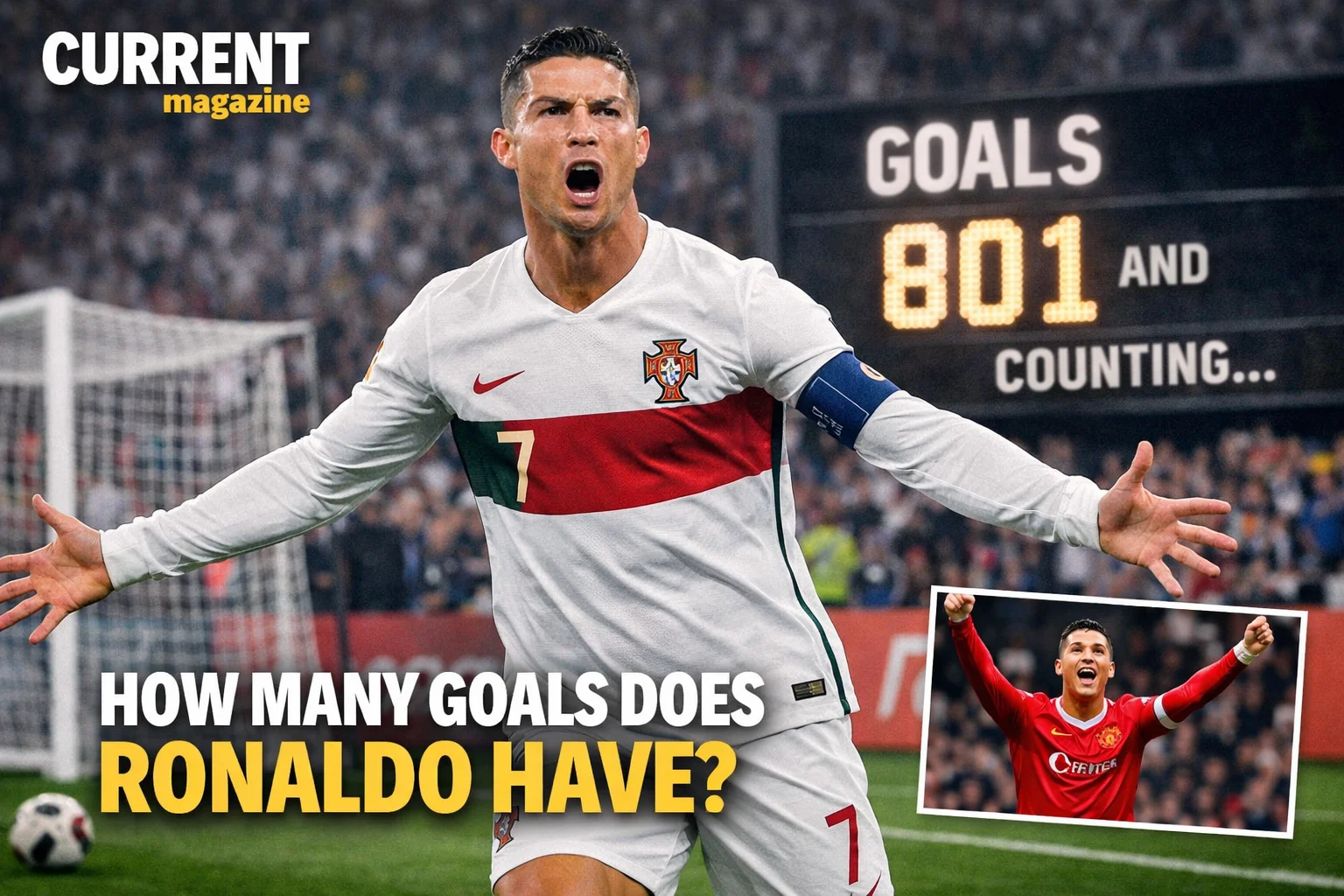
When people search for “how many goals does Ronaldo have”, they’re asking about one of the most impressive statistical achievements in football history. Cristiano Ronaldo, widely regarded as one of the greatest footballers of all time, has spent over two decades scoring goals at an absolutely phenomenal rate for club and country. His goal-scoring record is truly staggering, with numbers that continue to climb even as he plays in the twilight of his legendary career. In this comprehensive article, we’ll explore Ronaldo’s complete goal-scoring record across all competitions, break down his achievements by club and country, examine his most remarkable scoring feats, and put his numbers in historical context to truly appreciate the magnitude of what this Portuguese superstar has accomplished.
Understanding Ronaldo’s Complete Goal Tally
As of early 2025, Cristiano Ronaldo has scored over 900 official career goals across all competitions for both club and country. This extraordinary number represents more than two decades of sustained excellence at the highest levels of football. To truly understand how many goals Ronaldo has, we need to break down his career into different phases, examining his time at each club and his prolific international career with Portugal.
Ronaldo’s journey to becoming football’s most prolific scorer began at Sporting Lisbon in Portugal, where he first caught the world’s attention as a teenager. From there, he moved to Manchester United in 2003, where he transformed from a tricky winger into a goal-scoring phenomenon. His time at Real Madrid from 2009 to 2018 saw him reach unprecedented heights, becoming the club’s all-time leading scorer and winning four Champions League titles. A subsequent move to Juventus added to his incredible tally before he returned to Manchester United for a second spell. Currently playing for Al-Nassr in Saudi Arabia, Ronaldo continues to add to his remarkable goal count.
The exact number of goals Ronaldo has scored depends on which statistics you include. Official records count goals in competitive matches for clubs and national teams, but some sources also include friendly matches, testimonials, and other unofficial games. For the purposes of accuracy and consistency, most reputable sources focus on official competitive goals, which include league matches, domestic cup competitions, continental competitions like the Champions League, and official international matches including World Cup and European Championship games.
Ronaldo’s Club Career Goals Breakdown
Sporting Lisbon (2002-2003)
At Sporting Lisbon, where it all began, the young Ronaldo scored only a handful of goals as he was still developing his game and playing primarily as a traditional winger rather than the goal-scoring machine he would become. His time in Portugal was brief but important, as it showcased enough talent to attract Manchester United’s attention.
Key Statistics:
- Total goals: 5 goals
- Appearances: 31 matches
- Role: Traditional winger focusing on dribbling and creativity
- Notable achievement: Caught the attention of Sir Alex Ferguson
Manchester United – First Stint (2003-2009)
Ronaldo’s first stint at Manchester United from 2003 to 2009 saw him score approximately 118 goals in all competitions. During these six seasons, we witnessed his transformation from an exciting but sometimes frustrating winger who preferred tricks to end product, into one of the world’s most deadly finishers. Under Sir Alex Ferguson’s guidance, Ronaldo developed the physical strength, positioning sense, and ruthless mentality that would define his later career.
Key Achievements:
- Total goals: 118 goals in 292 appearances
- Premier League titles: 3 (2006-07, 2007-08, 2008-09)
- Champions League: 1 (2007-08)
- Ballon d’Or: 2008
- Evolution: From winger to complete forward
His final seasons at United saw him scoring over 40 goals per campaign, winning the Ballon d’Or in 2008, and leading the club to Champions League glory. The 2007-08 season was particularly special, as Ronaldo scored 42 goals in all competitions and won both the Premier League and Champions League, establishing himself as the world’s best player.
Real Madrid (2009-2018)
The Real Madrid chapter of Ronaldo’s career is where the goal-scoring numbers become truly astronomical. From 2009 to 2018, Ronaldo scored an incredible 450 goals in just 438 appearances for Los Blancos, making him the club’s all-time leading scorer. This period represents the absolute peak of his powers, as he regularly scored 50 or more goals per season across all competitions.
Record-Breaking Numbers:
- Total goals: 450 goals in 438 appearances
- Goals per game ratio: 1.03 (more than a goal per game)
- La Liga goals: 311 goals
- Champions League goals: 105 goals for Real Madrid alone
- Hat-tricks: 44 hat-tricks
- 50+ goal seasons: 6 consecutive seasons
Major Trophies:
- Champions League: 4 titles (2014, 2016, 2017, 2018)
- La Liga: 2 titles (2011-12, 2016-17)
- Copa del Rey: 2 titles
- Ballon d’Or awards: 4 (2013, 2014, 2016, 2017)
His rivalry with Lionel Messi during these years pushed both players to achieve scoring numbers that seemed impossible, with Ronaldo breaking record after record in La Liga and the Champions League. At Real Madrid, Ronaldo won four Champions League titles and became the competition’s all-time leading scorer, a record he still holds today. His ability to perform in the biggest matches, particularly in the knockout stages of the Champions League, became legendary.
Season after season, he delivered crucial goals when they mattered most, cementing his reputation as the ultimate big-game player. The 2013-14 season saw him score 51 goals in all competitions and finally win “La Decima” – Real Madrid’s 10th European Cup. The following years brought even more Champions League success, with Ronaldo scoring in multiple finals and semi-finals.
Juventus (2018-2021)
Ronaldo’s move to Juventus in 2018 for a then-record fee for a player over thirty years old raised questions about whether he could maintain his scoring rate in the notoriously defensive Italian league. He answered emphatically, scoring 101 goals in 134 appearances over three seasons in Turin.
Serie A Performance:
- Total goals: 101 goals in 134 appearances
- Serie A titles: 2 (2018-19, 2019-20)
- Goals per season average: 33.6 goals
- Adaptation: Successfully adjusted to Italian football’s defensive tactics
While these numbers represented a slight decrease from his Madrid peak, they were still exceptional for Serie A and demonstrated his ability to adapt to different leagues and maintain elite performance well into his thirties. He became the first player in history to win league titles in England, Spain, and Italy, while also maintaining impressive goal-scoring numbers in each country.
Manchester United – Second Stint (2021-2023)
When Ronaldo returned to Manchester United in 2021, the excitement was palpable, but the second stint didn’t match the glory of the first. Over two seasons, he scored 27 goals in 54 appearances across all competitions.
Return Statistics:
- Total goals: 27 goals in 54 appearances
- Premier League goals: 18 goals
- Champions League goals: 6 goals
- Notable moments: Hat-trick against Tottenham, crucial Champions League goals
While he remained a potent goal-scorer and had moments of brilliance, the team’s overall struggles and changing football landscape meant this chapter was more challenging than his previous United spell. Nevertheless, he showed flashes of his old magic, including a hat-trick against Tottenham and important Champions League performances.
Al-Nassr (2023-Present)
Ronaldo’s current chapter at Al-Nassr in Saudi Arabia began in January 2023 and has seen him continue his remarkable scoring run. Despite playing in a league that doesn’t receive the same global attention as Europe’s top divisions, Ronaldo has maintained impressive numbers, scoring prolifically in the Saudi Pro League.
Saudi Arabia Performance:
- Goals: 60+ goals and counting
- League performance: Regular 20+ goal seasons
- Impact: Elevated the profile of Saudi Arabian football globally
- Consistency: Continues scoring at an elite rate approaching 40 years old
While some debate whether these goals should carry the same weight as his European exploits, they nonetheless add to his already staggering career total and demonstrate that even approaching forty years of age, his goal-scoring instincts remain sharp.
Ronaldo’s International Goals for Portugal
Beyond his club achievements, Ronaldo’s record for Portugal is equally remarkable and perhaps even more significant given the smaller number of matches available at international level. As of early 2025, Ronaldo has scored over 130 goals for Portugal, making him not only his country’s all-time leading scorer but also the highest-scoring player in international football history among all nations.
International Career Overview
Ronaldo made his Portugal debut as an eighteen-year-old in 2003 and scored his first international goal the following year. For the next two decades, he has been the centerpiece of Portugal’s national team, carrying the hopes of an entire nation on his shoulders through multiple World Cups and European Championships.
International Milestones:
- Total goals: 130+ goals
- Appearances: 200+ matches
- Major tournaments: 5 World Cups, 5 European Championships
- Record: All-time leading international goalscorer (men’s football)
- Tournaments won: Euro 2016, UEFA Nations League 2019
European Championship Success
One of Ronaldo’s most important international goals came in the 2016 European Championship, although ironically he didn’t score in the final itself due to an early injury. However, his goals throughout that tournament helped Portugal reach the final, and his leadership from the sideline helped inspire his teammates to their first major tournament victory.
Euro Championships Performance:
- Euro 2004: Reached final, scored 2 goals
- Euro 2012: Semi-finals, scored 3 goals including crucial strikes
- Euro 2016: Champions, scored 3 goals plus assists
- Euro 2020: Golden Boot winner with 5 goals despite early elimination
- Euro 2024: Participated at age 39
Four years before the 2016 triumph, he had scored crucial goals to help Portugal reach the semi-finals of Euro 2012, and in 2021, he won the Golden Boot at Euro 2020 despite Portugal’s early elimination, becoming the all-time leading scorer in European Championship history.
World Cup Journey
The World Cup has been the one trophy that has eluded Ronaldo despite his best efforts. He has scored at five different World Cups from 2006 to 2022, a feat matched by very few players in history.
World Cup Goals:
- 2006 Germany: 1 goal
- 2010 South Africa: 1 goal
- 2014 Brazil: 1 goal
- 2018 Russia: 4 goals (including famous hat-trick vs Spain)
- 2022 Qatar: 1 goal (became first player to score in 5 World Cups)
- Total World Cup goals: 8 goals
His performances in these tournaments have produced memorable moments, including a hat-trick against Spain in 2018 that is widely regarded as one of the greatest individual World Cup performances ever. That match saw him score a stunning free-kick in the dying moments to secure a 3-3 draw against one of the tournament favorites. While he hasn’t won the tournament, his World Cup goal tally adds significantly to his overall international numbers.
Longevity and Dedication
Ronaldo’s longevity at international level is particularly impressive when you consider that many elite players retire from international football in their early thirties to focus on their club careers and preserve their bodies. Ronaldo has shown no such inclination, continuing to represent Portugal well into his late thirties and stating his desire to play at the 2026 World Cup, which would be his sixth.
International Dedication:
- Career span: 2003-present (20+ years)
- Consistency: Never retired from international duty
- Leadership: Captain for over a decade
- Inspiration: Elevated Portugal from good team to champions
- Future ambitions: Targeting 2026 World Cup at age 41
This dedication to his country has allowed him to accumulate goal numbers that may never be matched at international level. His commitment has inspired a generation of Portuguese players and given the nation a sense of pride and achievement in international competitions.
Record-Breaking Achievements and Milestones
Throughout his career, Ronaldo has broken numerous goal-scoring records, many of which seemed unbreakable before he came along.
Champions League Records
Ronaldo’s Champions League achievements are unparalleled and represent some of his most significant accomplishments.
Champions League Supremacy:
- All-time leading scorer: 140+ goals
- Most goals in knockout stages: 67 goals
- Most hat-tricks: 8 hat-tricks
- Most goals in a single season: 17 goals (2013-14)
- Scored in three finals: 2008, 2014, 2017
- Only player to score in 11 consecutive matches
His Champions League scoring includes everything from group stage goals to final winners, with a particular ability to score in knockout matches when the pressure is highest. He has scored against virtually every major European club, demonstrating his ability to perform against the best defenses in the world consistently.
Club Records
Beyond the Champions League, Ronaldo holds numerous club records that showcase his incredible consistency.
Real Madrid Legacy:
- All-time leading scorer: 450 goals (surpassing Raúl’s 323)
- Most La Liga hat-tricks: 34 hat-tricks
- Most goals in a La Liga season: 48 goals (2014-15)
- Fastest to 200 La Liga goals: 178 matches
- Most goals in El Clásico: 18 goals vs Barcelona
Multiple League Success:
- Only player to score 50+ goals in six consecutive seasons
- Top scorer in Premier League, La Liga, and Serie A
- League titles in England, Spain, and Italy
- 100+ goals in three different leagues
International Records
Ronaldo’s achievement of becoming the highest-scoring men’s international footballer of all time is monumental.
International Supremacy:
- All-time leading scorer: 130+ goals (surpassing Ali Daei’s 109)
- Most goals in European Championships: 14 goals
- First player to score in 5 World Cups
- Most international hat-tricks: 10+ hat-tricks
- 200+ appearances for Portugal
He surpassed Iran’s Ali Daei, whose record of 109 goals had stood as a seemingly unreachable mark. Ronaldo didn’t just break this record, he has extended it significantly, making it even more difficult for future players to match. The fact that he achieved this while playing for a relatively small footballing nation like Portugal, rather than a powerhouse with easier qualifying matches, makes it even more impressive.
Calendar Year Records
Ronaldo has scored over 50 goals in a calendar year on multiple occasions, a feat that very few players in history have achieved even once.
Annual Scoring Records:
- 2013: 69 goals (record for club and country combined)
- 2012: 63 goals
- 2011: 60 goals
- 2014: 61 goals
- 2015: 57 goals
His best calendar year saw him score an astonishing 69 goals in 2013 for club and country, a number that seemed impossible before he achieved it. These kinds of seasonal goal tallies demonstrate not just his quality but his incredible durability and consistency throughout long campaigns.
Unique Achievements
The Portuguese superstar has also achieved several unique and fascinating records.
Remarkable Feats:
- Scored in every minute of a football match across his career
- 60+ career hat-tricks (including 4 and 5 goal performances)
- Perfect hat-tricks: Goals with right foot, left foot, and head in same game
- Oldest player to score 30+ goals in a season (multiple times)
- 100+ goals for three different clubs
Statistical analysis has shown that he has scored in the first minute, in the final minute, and in every minute in between across his thousands of matches. This demonstrates his constant threat regardless of game situation, time remaining, or scoreline.
Breaking Down Ronaldo’s Goals by Type
Understanding how Ronaldo scores his goals provides insight into his completeness as a striker. Unlike some goal-scorers who rely primarily on one method, Ronaldo has demonstrated the ability to score in virtually every way imaginable.
Heading Ability
Ronaldo is famous for his heading ability despite not being exceptionally tall by footballer standards at six feet two inches. His incredible leap, timing, and technique in the air have resulted in hundreds of headed goals throughout his career.
Heading Statistics:
- Total headed goals: 140+ goals
- Average leap height: 30+ inches (78cm)
- Famous headers: 2008 Champions League final, numerous El Clásico goals
- Peak jump: Higher than NBA players at same height
- Technique: Perfect timing and positioning
His vertical jump has been measured at over 30 inches, giving him the ability to out-jump much taller defenders. Some of his most iconic goals have come from headers, including crucial Champions League strikes where he seems to hang in the air impossibly long before powering the ball into the net. His header in the 2008 Champions League final against Chelsea and his incredible leap against Sampdoria for Juventus are perfect examples of his aerial prowess.
Two-Footed Finishing
His left foot, despite being naturally right-footed, is almost as deadly as his stronger foot. Ronaldo has scored hundreds of goals with his left foot, demonstrating the countless hours of practice he has dedicated to becoming truly two-footed.
Foot Preference:
- Right foot goals: 60% of total
- Left foot goals: 25% of total
- Headers: 15% of total
- Ambidextrous threat: Equally dangerous on either foot
- Training dedication: Practiced weak foot extensively
This versatility makes him almost impossible to defend because he can finish equally well on either side. Defenders cannot show him onto his weaker foot because he essentially doesn’t have one. This two-footed ability has allowed him to score from any position in the attacking third.
Free Kicks
Free kicks have been another significant source of goals throughout Ronaldo’s career, particularly during his Manchester United and early Real Madrid days.
Free-Kick Record:
- Total free-kick goals: 60+ goals
- Iconic technique: Wide stance, minimal backlift, knuckleball effect
- Famous strikes: Portsmouth (2008), Spain (2018), Arsenal (2009)
- Peak years: 2008-2014
- Recent decline: Conversion rate decreased but still capable
His technique of standing with legs wide apart before striking the ball with minimal backlift to generate dip and power became iconic and was widely imitated around the world. While his free-kick conversion rate has decreased in recent years, he has still scored dozens of spectacular goals from set pieces throughout his career, including the crucial free-kick against Spain in the 2018 World Cup.
Penalties
Penalties have been a consistent source of goals for Ronaldo, as he has been the primary penalty taker for every team he has played for since becoming a star.
Penalty Record:
- Total penalties scored: 160+ goals
- Conversion rate: 84-85%
- Technique: Power and placement combined
- Pressure situations: Champions League finals, decisive league matches
- Mental strength: Rarely misses crucial penalties
His conversion rate from the spot is excellent, and he has scored crucial penalties in high-pressure situations including Champions League finals and decisive league matches. While some critics attempt to diminish his goal tally by pointing to penalties, the mental strength required to take and convert penalties in crucial moments is itself a valuable skill that separates great players from good ones.
Open Play Goals
Ronaldo’s goals from open play showcase his movement, positioning, and finishing ability in the most varied situations.
Open Play Variety:
- Tap-ins from intelligent positioning: 200+ goals
- One-on-one finishes: 150+ goals
- Cutting in from wings: 100+ goals
- Late runs into the box: Countless goals
- Counter-attack goals: Numerous breakaway strikes
Whether arriving late in the box to convert crosses, making runs in behind defenses to finish one-on-one chances, or cutting in from the wings to shoot from distance, his variety of open play goals demonstrates complete attacking skills. His ability to read the game, anticipate where the ball will arrive, and position himself perfectly has resulted in countless tap-ins that only look simple because of his intelligent movement.
Long-Range Goals
Long-range goals have also featured throughout Ronaldo’s career, particularly during his younger years when his shooting power was at its absolute peak.
Distance Shooting:
- Total long-range goals: 80+ goals from outside the box
- Longest goal: 40+ yards
- Trademark technique: Knuckleball with minimal spin
- Famous examples: Porto (2009), Arsenal (2009), Portsmouth (2008)
- Power: Shot speed measured at 130+ km/h
He has scored numerous goals from outside the penalty area, many of them spectacular strikes that have become viral sensations. His 40-yard strike against Porto in the Champions League and his famous free-kick against Portsmouth are examples of his long-range ability. While he has become more selective with his long-range efforts as his career has progressed, preferring higher percentage chances, he remains capable of producing moments of magic from distance.
Comparing Ronaldo’s Goal Record to Other Greats
To truly appreciate how many goals Ronaldo has scored, it helps to compare his numbers to other legendary goal-scorers throughout football history.
Ronaldo vs. Lionel Messi
The most obvious comparison is with his great rival Lionel Messi, whose career has paralleled Ronaldo’s in remarkable ways.
Head-to-Head Comparison:
- Total career goals: Both 800+ (Ronaldo slightly ahead in total)
- Club goals: Messi ahead in pure club totals
- International goals: Ronaldo significantly ahead (130+ vs 106+)
- Champions League: Ronaldo ahead (140+ vs 129+)
- Playing style: Different approaches to goal-scoring
- Longevity: Both playing at elite level into late 30s
While Messi’s goal total is also over 800 career goals, the two have traded records back and forth throughout their careers, with their rivalry pushing both to achieve numbers that seemed impossible. Ronaldo has the edge in international goals and Champions League goals, while Messi has scored more in domestic league play. Their competition has elevated both players and created the greatest individual rivalry in sports history.
Comparing Different Eras
What makes Ronaldo’s goal total particularly impressive is the variety of leagues and competitions in which he has scored.
Multi-League Success:
- Premier League: 100+ goals across two stints
- La Liga: 311 goals
- Serie A: 81 goals
- Saudi Pro League: 60+ goals
- Adaptability: Succeeded in every league
- Defensive evolution: Scored against modern tactical systems
Unlike some historic goal-scorers who spent their entire careers in one league, Ronaldo has proven himself in England, Spain, Italy, and now Saudi Arabia. He has adapted to different tactical systems, different styles of play, and different levels of defensive organization, scoring prolifically in each environment. This versatility across leagues strengthens his case as the greatest goal-scorer of all time.
Historical Comparisons
Comparing Ronaldo to historical goal-scorers like Pelé, Gerd Müller, or Ferenc Puskás is complicated by the different eras and the varying reliability of historical statistics.
Legendary Goal-Scorers:
- Pelé: ~767 official goals (some sources claim 1,000+ including friendlies)
- Gerd Müller: 735 goals (incredibly efficient)
- Ferenc Puskás: 746 goals
- Romário: 772 goals (claimed 1,000+ including friendlies)
- Josef Bican: Claims of 800+ goals
However, even by the most generous counts of these legends’ goals, Ronaldo’s tally stands up impressively. More importantly, Ronaldo has achieved his numbers in the modern era against highly organized defenses, with constant video analysis and tactical preparation designed specifically to stop elite attackers. The game has become more defensive and tactical, making his goal-scoring even more remarkable.
Modern Strikers
Among active and recent players, Ronaldo’s numbers dwarf most elite strikers.
Contemporary Comparison:
- Robert Lewandowski: 600+ goals (excellent but well behind)
- Zlatan Ibrahimović: 570+ goals (impressive longevity)
- Luis Suárez: 560+ goals
- Sergio Agüero: 427 goals (retired)
- Karim Benzema: 500+ goals
When looking at pure Champions League goal-scoring, Ronaldo’s 140-plus goals in the competition dwarf the tallies of other legendary European performers. No one else is even close to his total, with his nearest competitors being Messi and then a significant gap to players like Robert Lewandowski and Karim Benzema. This demonstrates Ronaldo’s ability to perform in the most prestigious club competition consistently over many years.
The Evolution of Ronaldo’s Goal-Scoring Style
One fascinating aspect of Ronaldo’s goal total is how his style of scoring has evolved throughout his career, allowing him to remain effective across different age ranges and physical capabilities.
Young Ronaldo: The Flashy Winger (2003-2008)
The young Ronaldo who arrived at Manchester United was a flashy winger who preferred dribbling and tricks to direct goal-scoring.
Early Career Characteristics:
- Position: Left or right winger, hugging touchline
- Style: Step-overs, tricks, dribbling from deep
- Goals: Individual brilliance, long-range strikes
- Efficiency: Lower conversion rate, more shots required
- Development: Gradually adding goals to his game
His goals during these early years were often the product of individual brilliance, taking on multiple defenders before finishing, or cutting in from the wing to shoot from distance. While exciting to watch, this approach wasn’t the most efficient way to score goals, and his conversion rate was relatively modest compared to his later years.
Peak Ronaldo: The Complete Forward (2009-2018)
As Ronaldo matured at Manchester United and especially after moving to Real Madrid, his game evolved significantly.
Prime Years Evolution:
- Position: Inverted winger, then central forward
- Style: Direct running, intelligent movement, clinical finishing
- Goals: Tap-ins from positioning, headers, counter-attacks
- Efficiency: Elite conversion rate, choosing moments carefully
- Physical peak: Explosive speed combined with strength
He began playing in more central positions, focusing less on beating defenders with tricks and more on intelligent movement, positioning, and clinical finishing. This evolution was partly natural maturation and partly tactical, as managers recognized that his goal-scoring ability was too valuable to waste out wide on the touchline. During his peak years at Real Madrid, Ronaldo essentially played as a striker despite nominally being listed as a winger or forward.
He focused on making runs in behind defenses, attacking crosses in the box, and finishing chances with ruthless efficiency. The number of goals he scored during this period reflected this tactical shift, as he was consistently in the most dangerous areas of the pitch. His understanding of space, timing of runs, and anticipation reached levels that few players in history have matched.
Veteran Ronaldo: The Poacher (2019-Present)
As Ronaldo has aged, his style has evolved again to compensate for diminishing physical attributes while maximizing his still-elite skills.
Modern Era Adaptation:
- Position: Pure striker, central focus
- Style: Penalty box presence, minimal running
- Goals: Positioning, timing, experience-based finishing
- Efficiency: Very high conversion, selective movement
- Intelligence: Compensating for reduced speed with better anticipation
The explosive speed that characterized his younger years has diminished slightly, but he has compensated with even better positioning and anticipation. He has become more selective about when to sprint, conserving energy for the moments that matter most. His goals in recent years often come from intelligent movement and experience rather than raw athleticism, though he remains remarkably fit for his age.
This evolution has allowed Ronaldo to maintain elite goal-scoring numbers well beyond the age when most forwards decline significantly. By adapting his game to his changing physical capabilities while maintaining his mental sharpness and finishing ability, he has extended his career at the top level far longer than seemed possible. His ability to evolve is perhaps as impressive as his peak abilities.
The Mental and Physical Preparation Behind the Goals
Understanding how many goals Ronaldo has scored requires appreciating the incredible dedication and preparation that enables such consistency.
Physical Conditioning
Ronaldo is famous for his obsessive commitment to physical fitness and his body has become almost as famous as his goal-scoring.
Fitness Regimen:
- Body fat percentage: Consistently under 10% (often around 7%)
- Training: Additional sessions beyond team training
- Diet: Strict nutrition plan, avoiding alcohol and sugar
- Sleep: 8+ hours with strategic napping
- Recovery: Cryotherapy, ice baths, massage therapy
He maintains an incredibly low body fat percentage, follows a strict diet, and trains intensively even beyond team training sessions. His physical condition at age 39 is comparable to players ten years younger, which has been crucial to his sustained goal-scoring ability.
Injury Prevention:
- Stretching routines: Extensive flexibility work
- Muscle maintenance: Regular physiotherapy
- Load management: Careful training intensity monitoring
- Preventive measures: Avoiding high-risk situations
- Career longevity: Very few serious injuries
His dedication to recovery and physical maintenance has allowed him to avoid major injuries throughout most of his career. While he has had minor injuries like any player competing at the highest level, he has remarkably avoided the kind of serious knee or muscle injuries that have derailed many careers. This durability has been crucial to accumulating such a massive goal total, as it has allowed him to play consistently season after season without extended absences.
Mental Preparation
Ronaldo’s mental preparation is equally important to his success and separates him from other talented players.
Psychological Strengths:
- Visualization: Mentally rehearsing scenarios before matches
- Confidence: Unshakeable self-belief in abilities
- Pressure handling: Thrives in high-stakes situations
- Focus: Ability to block out distractions
- Resilience: Bouncing back from setbacks quickly
He is known for visualizing scenarios before matches, mentally rehearsing movements and finishes. His confidence is legendary, and this self-belief has allowed him to take on responsibility in the biggest moments without fear of failure. Many of his most important goals have come in high-pressure situations where other players might crumble under the weight of expectation.
Competitive Drive:
- Winning mentality: Hatred of losing
- Training intensity: Treats practice like matches
- Constant improvement: Always seeking to get better
- Team motivation: Inspiring teammates through example
- Record chasing: Motivated by statistical achievements
The Portuguese forward’s competitive drive is perhaps his most defining characteristic. Teammates and coaches throughout his career have described his hatred of losing and his constant desire to improve. This mentality means he treats training sessions with the same intensity as matches, always pushing himself to score one more goal, make one more run, or practice one more finish.
Tactical Intelligence
His dedication extends to studying opponents and constantly seeking tiny advantages that can lead to more goals.
Strategic Preparation:
- Video analysis: Studying goalkeeper tendencies
- Defensive patterns: Identifying weaknesses in opposition
- Positioning: Understanding optimal spaces
- Team dynamics: Knowing where teammates will be
- Adaptation: Adjusting approach based on situations
Ronaldo works with personal analysts to study goalkeeper tendencies, defensive weaknesses, and tactical patterns. This intellectual approach to goal-scoring complements his physical gifts and technical ability, making him an incredibly difficult striker to defend against. His preparation is so thorough that he often knows where he’ll position himself for certain types of attacks before the match even begins.
Ronaldo’s Goals in Crucial Matches
While the total number of goals Ronaldo has scored is impressive, what makes his record truly legendary is how many of these goals have come in crucial matches.
Champions League Knockout Performances
His Champions League knockout stage record is particularly impressive and demonstrates his big-game mentality.
Knockout Stage Dominance:
- Knockout goals: 67 goals (more than most players’ entire UCL tallies)
- Round of 16: Multiple hat-tricks and braces
- Quarter-finals: Decisive goals year after year
- Semi-finals: 13 goals (most in history)
- Finals: Goals in 2008, 2014, 2017
- Comeback performances: Numerous ties turned around
While many players score heavily in group stages against weaker opposition, Ronaldo has been devastatingly effective in the knockout rounds where every match matters. He has scored multiple hat-tricks in knockout matches, turned around seemingly impossible ties, and delivered goals in semi-finals and finals that have won trophies. His hat-trick against Atlético Madrid to overturn a 2-0 first-leg deficit is one of many examples of his ability to deliver when it matters most.
International Tournament Goals
For Portugal, Ronaldo’s most important goals have often come in moments of maximum pressure for his nation.
Tournament Heroics:
- Euro 2004: Semi-final goal, final appearance (age 19)
- Euro 2012: Semi-final goals against Netherlands and Czech Republic
- Euro 2016: Crucial goals en route to title
- Euro 2020: 5 goals including penalties in elimination
- World Cup 2018: Hat-trick vs Spain (one of greatest WC performances)
His hat-trick against Spain in the 2018 World Cup, capped by a stunning last-minute free kick to secure a 3-3 draw, is considered one of the greatest individual World Cup performances in history. His ability to score when Portugal needed him most has been the difference between qualification and elimination, between tournament progression and early exits, on numerous occasions.
Derby and Big Game Goals
Ronaldo’s ability to score in derbies and against the strongest opponents further distinguishes his goal record.
Big Game Scoring:
- El Clásico goals: 18 goals vs Barcelona
- Manchester Derby: Multiple crucial goals
- Derby della Madonnina: Goals for Inter Milan rivals
- European giants: Scored against every major club
- Pressure matches: Thrives when stakes are highest
He has scored repeatedly against Barcelona in El Clásico matches, against Atlético Madrid, against Manchester City, against Liverpool, against Bayern Munich, and against every other top team he has faced. His big-game mentality means his goal total isn’t padded with scores against weak opposition but includes countless strikes against the world’s best defenses. In 30 El Clásico matches against Barcelona, his 18 goals include some of the most important strikes in Real Madrid’s recent history.
Iconic Individual Goals
Some of his most memorable goals have come in moments that seemed to define seasons or eras.
Legendary Goals:
- Bicycle kick vs Juventus (2018): Standing ovation from opposition fans
- Free-kick vs Spain (2018): Last-minute World Cup heroics
- Header vs Sampdoria (2019): Impossible leap captured in iconic photo
- Solo goal vs Porto (2009): 40-yard screamer
- Header vs Roma (2008): Champions League brilliance
His bicycle kick for Real Madrid against Juventus in the Champions League quarter-finals received a standing ovation from opposition fans, a rare tribute that recognized something truly special. This goal was so spectacular that even Juventus supporters in Turin rose to applaud him, a moment that transcended club loyalty and celebrated pure footballing excellence.
The Impact of Ronaldo’s Goals on Team Success
Ronaldo’s goals have translated directly into team success throughout his career, proving that his individual statistics correspond with collective achievements.
Club Trophies
At Manchester United, his goal-scoring helped the club win three Premier League titles and the Champions League.
Manchester United Success:
- Premier League: 3 titles with Ronaldo as key contributor
- Champions League: 2008 victory with Ronaldo scoring in final
- FA Cup: 1 title
- Individual awards: Multiple PFA Player of the Year honors
At Real Madrid, his 450 goals contributed to four Champions League titles, two La Liga championships, and numerous other trophies.
Real Madrid Dominance:
- Champions League: 4 titles (2014, 2016, 2017, 2018)
- La Liga: 2 titles
- Copa del Rey: 2 titles
- Club World Cup: 3 titles
- UEFA Super Cup: 2 titles
His goals at Juventus helped the club win two Serie A titles, maintaining their domestic dominance.
Juventus Achievements:
- Serie A: 2 consecutive titles
- Coppa Italia: Finals appearances
- Supercoppa Italiana: Title won
His international goals gave Portugal their first major tournament victories in Euro 2016 and the UEFA Nations League in 2019.
Portugal Triumphs:
- Euro 2016: First major tournament title
- UEFA Nations League 2019: Inaugural winners
- Multiple tournament qualifications: Secured through his goals
Economic Impact
The economic impact of Ronaldo’s goals cannot be understated, as his goal-scoring prowess has made him one of the most marketable athletes in the world.
Financial Value:
- Shirt sales: Millions sold within days of joining clubs
- Sponsorships: Hundreds of millions in endorsement deals
- Social media: Most followed athlete globally
- Broadcasting: Increased viewership when he plays
- Club valuation: Significant boost to brand value
His goals generate enormous commercial value to every club he joins. They create headlines, social media engagement, television viewership, and shirt sales. Clubs have been willing to pay enormous transfer fees and wages partly because his goals generate revenue that offsets these costs. When Ronaldo joined Juventus, the club recouped a significant portion of his transfer fee through shirt sales alone within the first few weeks.
Psychological Impact
For Portugal, Ronaldo’s goals have elevated the national team from a respectable European side to tournament winners and serious competitors in every competition.
National Impact:
- Inspiration: Entire generation motivated by his success
- Belief: Portugal now expects tournament success
- Global profile: Elevated Portuguese football internationally
- Youth development: Inspiring next generation of players
The psychological impact of having Ronaldo in your team is significant. Opponents must dedicate substantial defensive resources to stopping him, which creates space for teammates. His presence changes how teams defend against his sides, often warping entire tactical approaches around containing him. Even when he doesn’t score, his threat affects matches in ways that don’t appear in statistics.
Projections and Future Goal-Scoring
As Ronaldo continues playing for Al-Nassr, the question becomes how many more goals he will score before retirement and whether he can reach unprecedented milestones.
The Path to 1,000 Goals
If he maintains his current pace and plays for several more seasons, he could potentially reach 1,000 career goals, a number that would be unprecedented in modern football.
Realistic Projections:
- Current total: 900+ goals
- Goals needed: Less than 100 to reach 1,000
- Current rate: 30-40 goals per season in Saudi Arabia
- Timeline: Could reach 1,000 within 2-3 seasons
- Historic significance: Would be first to 1,000 in modern era
While playing in Saudi Arabia means facing generally weaker opposition than he faced in Europe, goals still count in official records, and Ronaldo shows no signs of losing his finishing ability. His stated ambition and continued fitness suggest he’s seriously pursuing this milestone.
2026 World Cup Ambitions
His stated ambition to play at the 2026 World Cup suggests he intends to continue his international career as well.
International Future:
- 2026 World Cup: Would be age 41
- Historical context: Among oldest World Cup players ever
- Additional international goals: Could extend record beyond 140+
- Portugal role: May transition to impact substitute
- Motivation: Winning World Cup remains ultimate goal
If he does reach that tournament, he will be forty-one years old, which would make him one of the oldest players ever to compete at a World Cup. Any goals he scores there would add to his already historic international tally and cement his status as the greatest international goal-scorer ever.
Longevity Comparisons
The longevity Ronaldo has shown suggests he could continue playing into his mid-forties if his body holds up and he maintains motivation.
Age-Defying Performance:
- Comparison: Zlatan Ibrahimović played until 41
- Physical condition: Maintains elite fitness levels
- Tactical adaptation: Continues evolving his game
- Mental drive: Shows no signs of lost motivation
- Potential timeline: Could play until 42-43 years old
Players like Zlatan Ibrahimović have shown that elite forwards can remain effective into their forties with proper physical maintenance and tactical adjustment. If Ronaldo follows a similar path, his final goal tally could be truly astronomical. However, there are also scenarios where Ronaldo could retire sooner, particularly if he achieves his major remaining goals or if injuries or declining performance force the decision.
Legacy Considerations
Regardless of when Ronaldo retires, his goal-scoring record will stand as one of football’s most impressive achievements.
Lasting Impact:
- Record difficulty: May never be matched
- Inspiration: Generations of future strikers will study his career
- Statistical benchmark: New standard for goal-scoring excellence
- Cultural icon: Transcends football into global recognition
The combination of volume, consistency, longevity, and importance of his goals creates a legacy that future players will struggle to match. His influence on how goal-scorers train, prepare, and approach their craft will last long beyond his retirement.
10 Frequently Asked Questions About Ronaldo’s Goals
How many total career goals has Cristiano Ronaldo scored?
As of early 2025, Cristiano Ronaldo has scored over 900 official career goals across all competitions for club and country combined. This total includes goals for Sporting Lisbon, Manchester United in two separate spells, Real Madrid, Juventus, Al-Nassr, and the Portugal national team. The exact number continues to increase as he remains active and scoring regularly for Al-Nassr in Saudi Arabia and occasionally for Portugal. Some sources include friendly matches and unofficial games in their counts, which can push the total even higher, but the 900-plus figure represents goals in competitive, official matches that are universally recognized. To break this down further, approximately 750-plus goals came for his various clubs while over 130 goals came in international matches for Portugal, making him one of only a handful of players to surpass 900 official goals in the history of football.
How many goals has Ronaldo scored for Portugal?
Ronaldo has scored over 130 goals for the Portugal national team, making him not only Portugal’s all-time leading scorer by a massive margin but also the highest-scoring player in men’s international football history. He has scored these goals across various competitions including FIFA World Cup matches, UEFA European Championship games, UEFA Nations League fixtures, qualifying matches for major tournaments, and friendly internationals. His international goal tally includes everything from routine qualifying strikes against smaller nations to crucial tournament goals in high-pressure knockout matches. This achievement is particularly remarkable given that he has accomplished it while representing a relatively small footballing nation rather than a traditional powerhouse with easier qualifying opponents. He surpassed Iran’s Ali Daei, whose previous record of 109 international goals stood for many years, and has extended the record significantly, making it extremely difficult for future players to match.
How many Champions League goals does Ronaldo have?
Cristiano Ronaldo holds the all-time record for most goals scored in the UEFA Champions League with over 140 goals in the competition. This record includes goals scored for Manchester United from 2003 to 2009 and again from 2021 to 2023, Real Madrid from 2009 to 2018, and Juventus from 2018 to 2021. His Champions League scoring includes goals in every stage of the competition from group stages to finals, with a particular reputation for performing in crucial knockout matches when the pressure is highest and the quality of opposition is greatest. He has scored against virtually every major European club and holds numerous Champions League records including most goals in a single season with 17 goals in 2013-14, most hat-tricks in the competition with 8, most knockout stage goals with over 67, and being the only player to score in three separate Champions League finals. His ability to consistently perform at the highest level of European club football over nearly two decades is one of the defining features of his legendary career.
What is Ronaldo’s goal-scoring record at Real Madrid?
During his nine seasons at Real Madrid from 2009 to 2018, Cristiano Ronaldo scored an incredible 450 goals in 438 appearances across all competitions, giving him a goals-per-game ratio of over 1.0, which is extraordinary. This makes him Real Madrid’s all-time leading scorer, surpassing club legends like Raúl who had held the record with 323 goals, and Alfredo Di Stéfano. His Real Madrid goals came in La Liga where he scored 311 goals, the Champions League where he netted 105 goals for the club, Copa del Rey with 22 goals, and various other competitions including the Spanish Super Cup, Club World Cup, and UEFA Super Cup. He averaged more than 50 goals per season during his time at the club, with several seasons seeing him score 60 or more goals across all competitions. These numbers are widely considered to represent the absolute peak of his career and include some of the most important goals in Real Madrid’s illustrious history, particularly the Champions League goals that helped the club win four European titles during his tenure.
How many hat-tricks has Ronaldo scored in his career?
Cristiano Ronaldo has scored over 60 hat-tricks throughout his career across all competitions for club and country, which is one of the highest totals in football history. These hat-tricks range from perfect hat-tricks where he scores with his right foot, left foot, and head in the same match, to performances where he has scored four or even five goals in a single game. His hat-tricks have come in various competitions including domestic leagues in England, Spain, and Italy, Champions League matches at every stage of the competition, and international fixtures for Portugal including World Cup and European Championship matches. Some of his most famous hat-tricks include his performance against Spain in the 2018 World Cup where he scored three brilliant goals including a stunning free-kick, multiple Champions League hat-tricks in knockout rounds that helped overturn deficits, and numerous La Liga hat-tricks during his time at Real Madrid including several in El Clásico matches against Barcelona. The sheer number of hat-tricks demonstrates his ability to take over matches and his ruthless finishing when he finds his rhythm.
How many goals did Ronaldo score at Manchester United?
Across his two separate spells at Manchester United, Ronaldo scored a combined total of approximately 145 goals in all competitions, though the two periods were dramatically different in terms of his role and output. His first stint from 2003 to 2009 saw him score around 118 goals in 292 appearances as he developed from a promising winger into one of the world’s best players under Sir Alex Ferguson’s guidance. During this period, he won three Premier League titles, the Champions League in 2008 where he scored in the final against Chelsea, and the Ballon d’Or in 2008 recognizing him as the world’s best player. His second spell from 2021 to 2023 added another 27 goals in 54 appearances, though this period was less successful overall as the team struggled despite some individual brilliance from Ronaldo. During his first Manchester United career, his final seasons saw him scoring over 40 goals per campaign as he transformed into a complete forward, while his second stint showed he could still score at an elite level even approaching forty years of age, though the team’s overall performance limited his impact.
How many goals has Ronaldo scored with his head?
While exact numbers vary depending on the specific source and which competitions are included, Ronaldo has scored well over 140 headed goals throughout his career, making him one of the most prolific headers of the ball in football history despite not being exceptionally tall for a footballer. At six feet two inches, he’s not among the tallest strikers, but his incredible vertical jump, exceptional timing, powerful neck muscles, and perfect technique in the air have allowed him to score countless goals with his head. His heading ability has been particularly important in the Champions League where many of his most memorable goals have come from headers, and for Portugal where his aerial prowess has been a crucial weapon. His leap has been measured at over 30 inches or 78 centimeters, giving him the ability to out-jump defenders who are significantly taller. Some of his most iconic headed goals include his header in the 2008 Champions League final, his impossible leap against Sampdora for Juventus that created one of football’s most iconic photographs, and numerous crucial headers for Portugal in international competitions.
What is Ronaldo’s best goal-scoring season?
Ronaldo’s best goal-scoring season in terms of total goals was the 2014-15 campaign when he scored 61 goals in all competitions for Real Madrid, though his 2011-12 season is also legendary as he scored 60 goals including a record 46 goals in La Liga alone. However, when looking at calendar years rather than seasons, his best was 2013 when he scored an astonishing 69 goals for club and country combined, which was a record at the time and demonstrated sustained excellence across an entire year. These peak seasons saw him scoring at a rate that seemed impossible to maintain, regularly netting multiple goals per match and breaking numerous records in the process. During the 2011-12 season, he scored in 27 different La Liga matches out of 38 games played, meaning he found the net in over 70% of league matches that season. His consistency during these peak years from roughly 2011 to 2015 was unprecedented, as he maintained this elite level across multiple seasons rather than having a single extraordinary campaign, which makes his achievement even more remarkable.
How many penalty goals has Ronaldo scored?
Cristiano Ronaldo has scored well over 160 penalty goals throughout his career for club and country combined, making him one of the most prolific penalty takers in football history. He has been the primary penalty taker for every team he has played for since becoming a star, and his conversion rate from the spot is excellent at approximately 84-85 percent, which is very high considering the pressure situations in which many of these penalties were taken. His penalty goals include crucial strikes in Champions League finals, important international tournament penalties for Portugal, decisive league penalties that won titles or secured crucial points, and numerous other high-pressure situations. While some critics attempt to diminish his overall goal tally by pointing to the number of penalties he has scored, the mental strength required to consistently convert penalties in high-pressure situations is itself a valuable and rare skill that not all players possess. Many of his penalties came in moments where missing would have had severe consequences for his team, and his reliability from the spot has been a crucial asset throughout his career, essentially guaranteeing a goal whenever his team is awarded a penalty.
How does Ronaldo’s goal total compare to Lionel Messi?
Cristiano Ronaldo and Lionel Messi have remarkably similar career goal totals, with both players having scored over 800 official goals for club and country, making them two of the highest-scoring players in football history by a considerable margin. The exact comparison depends on the specific timing and which statistics you include, as both continue to play and add to their tallies. Ronaldo has scored more international goals with over 130 compared to Messi’s 106-plus, and Ronaldo also leads in Champions League goals with over 140 compared to Messi’s 129-plus. However, Messi has scored more goals in domestic league competitions across his career. Their rivalry has pushed both players to achieve unprecedented scoring numbers, with the debate over who is greater likely to continue for generations among football fans. Both players have redefined what is possible in terms of goal-scoring in the modern era, consistently scoring 40, 50, or even 60-plus goals per season at their peaks. The fact that they played in the same era, often in direct competition in La Liga when both were at Barcelona and Real Madrid, created the greatest individual rivalry in sports history and elevated both players to achieve numbers that seemed impossible before they came along.
Conclusion
When we ask how many goals Ronaldo has scored, the answer goes far beyond a simple number. With over 900 official career goals and counting, Cristiano Ronaldo has established himself as one of the most prolific and consistent goal-scorers in football history. His goals span over two decades, multiple leagues on different continents, countless competitions, and every conceivable type of finish. From his early days as a tricky winger at Manchester United to his record-breaking years at Real Madrid, his successful time at Juventus, and now his continued scoring at Al-Nassr, Ronaldo has demonstrated remarkable consistency and longevity that few players in history can match.
What makes Ronaldo’s goal total truly special is not just the quantity but the quality and importance of his strikes. He has scored in Champions League finals, major international tournaments, crucial league matches, and high-pressure knockout games. His ability to perform when the stakes are highest separates him from players who accumulate goals against weaker opposition or in less important matches. The mental strength to consistently deliver in crucial moments has been as important to his goal total as his physical gifts and technical ability. Whether it’s a last-minute free-kick to rescue Portugal against Spain in the World Cup, a crucial header in a Champions League knockout tie, or a penalty in a cup final, Ronaldo has proven time and again that he thrives under pressure.
Ronaldo’s achievement in becoming the all-time leading scorer in men’s international football with over 130 goals for Portugal and the Champions League’s top scorer with over 140 goals are records that may never be broken. These aren’t just statistical curiosities but testaments to sustained excellence at the highest levels of the game over an extraordinarily long period. The dedication, physical maintenance, and constant drive to improve that have enabled these achievements serve as inspiration to athletes in all sports. His obsessive commitment to fitness, nutrition, recovery, and mental preparation has allowed him to continue scoring at an elite level well into his late thirties when most players have long since declined or retired.
The evolution of Ronaldo’s playing style throughout his career demonstrates his intelligence and adaptability. He began as a flashy winger focused on tricks and dribbling, evolved into a complete forward who combined speed with clinical finishing during his peak years, and has now adapted again to become a pure penalty box striker who uses positioning and experience to compensate for diminished pace. This ability to reinvent himself has extended his career at the top level far longer than seemed possible and has allowed him to continue adding to his remarkable goal total even as he approaches his forties.
As Ronaldo continues his career, potentially adding hundreds more goals before retirement and possibly reaching the unprecedented milestone of 1,000 career goals, his place in football history is already secure. Future generations will look back at his goal-scoring record with amazement, much as we now view the achievements of Pelé or Di Stéfano, but with the added benefit of video evidence of every goal scored. The exact final number of goals will depend on how long he continues playing and at what level, but whether he finishes with 900, 1,000, or somewhere in between, Cristiano Ronaldo’s goal-scoring legacy represents one of sport’s great individual achievements.
For those who have watched his entire career unfold from that exciting teenager at Manchester United to the global icon he is today, the question of how many goals Ronaldo has scored serves as a reminder of the privilege of witnessing greatness. We have been fortunate to watch a player who has consistently delivered moments of brilliance, crucial goals, and record-breaking performances for over twenty years. His goals have brought joy to millions of fans around the world, won countless trophies for his clubs and country, created unforgettable memories that will be cherished forever, and inspired countless young players to pursue their own football dreams.
The numbers are staggering and almost incomprehensible in their magnitude over 900 goals and counting across more than 1,200 professional matches. But they only begin to tell the story of what Ronaldo has achieved and what his goals have meant to the beautiful game. Beyond the statistics are the moments of individual brilliance, the impossible standards of consistency, the big-game performances that defined tournaments and seasons, the physical dedication that defied age and time, and the mental strength that allowed him to thrive under the most intense pressure. Cristiano Ronaldo’s goal-scoring record is more than numbers on a page it is a testament to what human dedication, talent, and willpower can achieve when combined with an unrelenting desire for greatness.