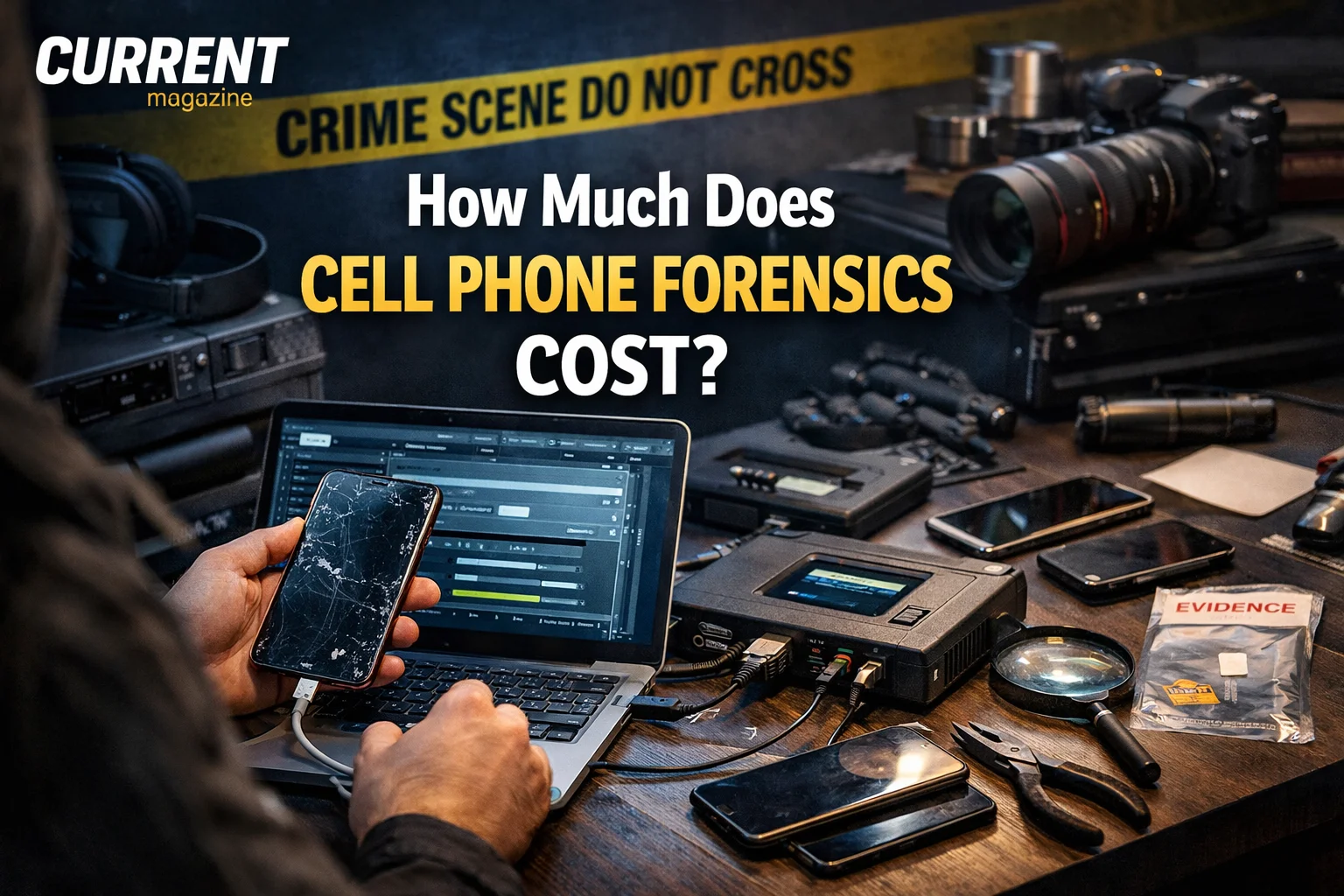
Need to know how much does cell phone forensics cost for a legal case, investigation, or data recovery? Cell phone forensic services can range anywhere from $500 to $10,000 or more depending on the complexity of the case, the amount of data to analyze, and the expertise required. Whether you’re an attorney preparing for litigation, a business investigating employee misconduct, or an individual dealing with a personal legal matter, understanding the costs involved in mobile device forensics is crucial for budgeting and planning. This comprehensive guide breaks down all the factors that affect pricing, what you get for your money, how to choose the right forensic examiner, and ways to potentially reduce costs without compromising the quality of the investigation.
What Is Cell Phone Forensics?
Before diving into costs, let’s clarify what cell phone forensics actually involves.
Cell phone forensics is the scientific process of recovering, analyzing, and preserving data from mobile devices for use in legal proceedings or investigations. This goes far beyond simply looking at what’s visible on a phone.
What forensic examiners do:
- Extract deleted text messages, photos, videos, and call logs
- Recover data from damaged or broken phones
- Analyze app data from social media, messaging apps, and other applications
- Extract location data and GPS history
- Retrieve internet browsing history and search records
- Examine phone metadata (when files were created, modified, or deleted)
- Create forensically sound copies of all data that are admissible in court
- Document their findings in detailed reports
- Provide expert witness testimony if needed
Why standard data recovery isn’t enough: Regular tech repair shops or data recovery services don’t follow the legal chain of custody requirements needed for court. Forensic examiners use specialized tools and procedures that ensure evidence is admissible and can withstand legal scrutiny.
Common uses:
- Criminal defense or prosecution cases
- Divorce and child custody proceedings
- Employment disputes and internal investigations
- Civil litigation
- Insurance fraud investigations
- Intellectual property theft cases
- Missing persons investigations
The specialized nature of this work, combined with the legal requirements and expertise needed, is why cell phone forensics costs significantly more than basic phone repair or data recovery.
Average Cost Ranges for Cell Phone Forensics
Cell phone forensic costs vary widely based on several factors, but here are typical price ranges:
Basic Forensic Examination: $500 – $2,000
What this includes:
- Straightforward data extraction from a functioning phone
- Analysis of visible and some deleted data
- Basic report documenting findings
- Single device examination
- Standard timeline (1-2 weeks)
Good for:
- Simple cases with limited data needs
- Functioning phones with no damage
- Cases where you know specifically what you’re looking for
- Personal matters with limited budgets
Standard Forensic Investigation: $2,000 – $5,000
What this includes:
- Complete forensic imaging of the device
- Deep analysis of deleted data, app data, and hidden files
- Detailed timeline reconstruction
- Comprehensive written report suitable for court
- Analysis of 1-2 devices
- Expert consultation and case review
Good for:
- Most legal cases requiring thorough documentation
- Divorce or custody cases
- Employment investigations
- Civil litigation
- Criminal defense where phone data is important evidence
Complex Forensic Analysis: $5,000 – $10,000+
What this includes:
- Multiple device analysis
- Advanced recovery techniques for damaged or encrypted phones
- Extensive data processing and analysis
- Cross-referencing data across multiple sources
- Expert witness testimony preparation and court appearance
- Priority processing
- Detailed technical and summary reports
Good for:
- Major criminal cases
- Corporate investigations involving multiple employees
- Cases with encrypted or deliberately hidden data
- Situations requiring expert witness court testimony
- High-stakes litigation
Ongoing or Hourly Services: $150 – $500 per hour
Some forensic examiners charge hourly rather than flat rates:
- Junior examiners: $150-$250/hour
- Senior examiners: $250-$350/hour
- Expert witnesses with extensive credentials: $350-$500+/hour
When hourly makes sense: Complex cases where the scope is unclear, cases requiring extensive analysis, or when you need ongoing consultation throughout a legal proceeding.
Factors That Affect Cell Phone Forensics Costs
Understanding what drives pricing helps you anticipate costs for your specific situation:
1. Type and Condition of the Phone
Functioning modern smartphones (iPhone, Samsung, Google Pixel): These are straightforward and fall on the lower end of the cost spectrum. Tools and methods are well-established.
Damaged or broken phones: Physical damage, water damage, or phones that won’t turn on require hardware repair before forensic analysis, adding $200-$1,000+ to the cost.
Older or unusual devices: Flip phones, older models, or uncommon brands may require specialized tools or techniques, increasing costs by 20-50%.
Encrypted devices: Phones with strong encryption (especially newer iPhones with disabled passcodes) can be extremely difficult or impossible to access, potentially requiring expensive specialized services that can add $2,000-$5,000 or more.
Factory reset devices: Recovering data from phones that have been reset requires advanced techniques and significantly increases costs.
2. Amount of Data to Process
Storage capacity matters: A phone with 512GB of data takes much longer to image, process, and analyze than one with 32GB.
Years of data: Examining 5 years of messages, photos, and app data costs more than analyzing 6 months of data.
Number of apps: Analyzing data from 50+ apps (social media, messaging, banking, etc.) is more time-intensive than examining basic call logs and texts.
Pricing impact: Extensive data can add $500-$2,000 to base costs.
3. Number of Devices
Most cases involve one phone, but some require multiple:
Per-device pricing: The first device might cost $2,000, but additional devices often have reduced rates ($1,000-$1,500 each) since setup and reporting can be partially shared.
Volume discounts: If analyzing 5+ devices (common in corporate investigations), examiners may offer 20-30% discounts per device.
Related device analysis: Analyzing a phone plus a tablet or computer that synced with it may cost less than analyzing completely unrelated devices.
4. Urgency and Timeline
Standard turnaround (1-2 weeks): Normal pricing
Expedited service (3-5 days): Typically adds 25-50% to the cost
Rush/Emergency service (24-48 hours): Can add 50-100% or more to base pricing
Why rush costs more: Examiners must drop other cases, work overtime, and prioritize your case, which disrupts their normal workflow.
5. Purpose and Complexity
Simple data recovery: Just retrieving deleted messages for personal use is less expensive than a full forensic investigation.
Court-admissible evidence: When findings must withstand legal scrutiny, examiners must follow strict protocols, document everything meticulously, and create defensible reports, which takes more time.
Expert witness testimony: If the examiner needs to testify in court, expect to pay their hourly rate (often $300-$500/hour) for preparation time, travel, and court appearance. A day of court testimony can add $2,000-$4,000 to the total cost.
Pattern analysis: Cases requiring the examiner to analyze patterns of behavior, reconstruct events, or make interpretive conclusions (not just extract data) cost more due to the additional expertise required.
6. Geographic Location
Major metropolitan areas (New York, Los Angeles, San Francisco, Chicago): $200-$400/hour for experts, higher overall costs due to cost of living
Mid-size cities: $150-$300/hour, moderate overall costs
Rural areas: $100-$250/hour, but fewer qualified examiners available
Travel costs: If there are no qualified examiners in your area, you may pay travel expenses for an examiner to come to you or ship the device (with associated risks and insurance costs).
7. Examiner Credentials and Experience
Certified examiners with credentials like:
- EnCE (EnCase Certified Examiner)
- CFCE (Certified Forensic Computer Examiner)
- GIAC certifications
- Law enforcement or FBI background
These professionals command higher rates ($250-$500/hour) but offer greater credibility in court.
Less experienced technicians without extensive certifications may charge $100-$200/hour but may not be suitable for complex or high-stakes cases.
Specialized expertise: Examiners specializing in specific phone types (iOS specialists, Android experts) or specific case types (child exploitation, fraud) may charge premium rates.
What’s Included in the Cost?
Understanding what you get for your money helps evaluate whether a quote is reasonable:
Initial Consultation
Most reputable examiners offer a free or low-cost initial consultation (typically 15-30 minutes) to:
- Understand your case
- Determine if they can help
- Provide a preliminary cost estimate
- Explain their process
If someone charges significant fees just to discuss your case, that’s a red flag.
Evidence Collection and Chain of Custody
Proper evidence handling:
- Documenting device condition upon receipt
- Creating a chain of custody log (who handled the device, when, and why)
- Photographing the device
- Placing the device in a Faraday bag to prevent remote wiping
This is included in the base cost and is essential for court admissibility.
Forensic Imaging
Creating a forensically sound copy:
- Complete bit-by-bit copy of all device data
- Hash values to prove the data hasn’t been altered
- Write-blockers to ensure the original device isn’t modified
- Multiple copies for different parties (prosecution, defense, etc.)
This process alone can take several hours for devices with large storage capacity.
Data Extraction and Recovery
What’s extracted:
- Active (visible) data: current messages, photos, contacts, call logs
- Deleted data: recovered messages, photos, files that were deleted but not overwritten
- App data: Facebook, Instagram, WhatsApp, Snapchat, dating apps, etc.
- System files: logs, metadata, location data
- Hidden data: files in hidden folders or apps
Different levels of service extract different amounts of data.
Analysis and Timeline Reconstruction
Beyond just extraction:
- Organizing data chronologically
- Identifying relevant communications or events
- Cross-referencing data from different sources
- Identifying patterns or anomalies
- Filtering out irrelevant information
This analytical work is where experienced examiners add the most value.
Written Report
What a good report includes:
- Executive summary of findings
- Detailed methodology explaining what was done and why
- List of tools and techniques used
- Complete data findings with relevant screenshots
- Timeline of events
- Technical appendices
- Examiner’s credentials and certifications
Reports can range from 10 pages for simple cases to 100+ pages for complex investigations.
Expert Witness Services (If Needed)
If the case goes to trial, additional services include:
- Deposition preparation
- Testimony preparation
- Court appearance
- Rebuttal of opposing expert testimony
- Explaining technical findings to jury in understandable terms
These are typically charged separately, often at higher hourly rates.
Hidden Costs to Watch For
Be aware of potential additional charges:
Device repair costs: If the phone needs repair before analysis ($100-$1,000+)
Software licensing fees: Some examiners pass along costs for specialized forensic software ($200-$500)
Cloud data subpoenas: Obtaining data directly from service providers like Apple, Google, or Facebook may require separate legal fees
Data storage: Long-term storage of forensic images and evidence may incur monthly fees
Multiple reports: If you need reports in different formats or for different audiences, there may be additional charges
Travel expenses: For court testimony or on-site examinations
Expert consultation beyond initial scope: If the case evolves and requires additional analysis
Rush fees: As mentioned, expedited service adds 25-100%+
Always get a detailed written quote that specifies exactly what’s included and what might cost extra.
How to Choose a Qualified Cell Phone Forensic Examiner
Price shouldn’t be your only consideration. Here’s what to look for:
Certifications and Training
Look for:
- Certified professionals (EnCE, CFCE, ACE, CCME, GIAC certifications)
- Law enforcement or government background
- Ongoing training in latest tools and techniques
- Membership in professional organizations (HTCIA, IACIS)
Red flags:
- No certifications or credentials mentioned
- General “IT expert” rather than forensic specialist
- Unable to explain their methodology clearly
Experience with Your Type of Case
Ask about:
- How many similar cases they’ve handled
- Their success rate with court admissibility
- Whether they’ve testified as expert witnesses
- Specific experience with your phone type and operating system
Specialization matters: An examiner who primarily works on computer forensics may not be the best choice for mobile device forensics.
Court Acceptance
Important questions:
- Have their findings been accepted in court before?
- Have they been qualified as expert witnesses?
- Can they provide references from attorneys they’ve worked with?
- Have their methodologies or reports been challenged? What was the outcome?
Tools and Capabilities
Reputable examiners use industry-standard tools:
- Cellebrite UFED (Universal Forensic Extraction Device)
- Oxygen Forensics
- MSAB XRY
- Magnet AXIOM
- EnCase Mobile Investigator
Be cautious of examiners using only free or consumer-grade tools for legal cases.
Communication and Transparency
Good examiners:
- Explain the process clearly in understandable terms
- Provide detailed written quotes
- Set realistic expectations about what can and can’t be recovered
- Are responsive to questions
- Provide regular updates on case progress
Warning signs:
- Vague about costs or methodology
- Promise results they can’t guarantee
- Poor communication or slow to respond
- Pressure you to commit quickly
Legal and Ethical Standards
Verify:
- They follow legal chain of custody procedures
- They’re willing to work with both sides in litigation (not biased)
- They carry professional liability insurance
- They understand and follow relevant laws (wiretapping laws, privacy regulations, etc.)
- They’re willing to sign confidentiality agreements
Ways to Reduce Cell Phone Forensics Costs
If cost is a concern, consider these strategies:
Be Specific About What You Need
Instead of: “Examine everything on this phone”
Try: “I need text messages and call logs with this specific phone number between January and March 2024”
Being targeted reduces analysis time and costs. However, consult with your attorney first – sometimes you don’t know what might be relevant.
Provide All Relevant Information Upfront
Help the examiner by providing:
- Passcodes and unlock information
- Apple ID or Google account credentials
- Known usernames for apps
- Specific dates or events of interest
- Any previous examinations or reports
This reduces time spent on discovery and troubleshooting.
Consider a Phased Approach
Phase 1: Quick assessment to determine if relevant data exists ($500-$1,000)
Phase 2: If promising data is found, proceed with full forensic examination
This prevents spending $5,000 on a full examination only to find the phone contains no relevant information.
Use a Local Examiner
Avoid travel costs by finding a qualified examiner in your area. However, don’t sacrifice quality for proximity – in high-stakes cases, it’s worth bringing in the best examiner even if they’re remote.
Ask About Payment Plans
Some forensic firms offer:
- Payment plans spread over several months
- Retainer arrangements for ongoing cases
- Reduced rates for individuals vs. corporate clients
- Pro bono or reduced-fee work for certain case types
Work with Your Attorney
Attorneys often:
- Have relationships with trusted examiners who may offer better rates
- Can negotiate fees on your behalf
- Know how to scope the work appropriately
- Can sometimes share costs if working on contingency
Check if Your Insurance Covers It
Some insurance policies cover forensic examination costs:
- Business insurance for employment-related investigations
- Legal expense insurance
- Cyber insurance for data breach investigations
Consider Court-Appointed Experts
In criminal cases, if you can’t afford a forensic examiner, you may petition the court to appoint and pay for one. This varies by jurisdiction and case type.
Get Multiple Quotes
Standard practice:
- Get quotes from 3-5 examiners
- Compare not just price but qualifications and scope
- Ask why prices differ
- Watch for outliers (unusually high or low may be red flags)
DIY vs. Professional Forensic Services
You might wonder if you can do this yourself to save money:
When DIY Might Work
Very limited scope: If you just need to recover your own deleted photos for personal reasons (not legal), consumer software like Dr.Fone or EaseUS might work and costs $50-$100.
No legal implications: If you’re not using the data in court, admissibility doesn’t matter.
Technical expertise: If you have IT background and understand the risks.
Why DIY Usually Doesn’t Work for Legal Cases
Not admissible: Courts typically won’t accept evidence collected without proper chain of custody and forensic procedures.
Data destruction risk: Improper handling can overwrite deleted data you’re trying to recover or alter metadata, destroying evidence.
Incomplete recovery: Consumer tools recover only a fraction of what professional forensic tools can extract.
No expert testimony: You can’t testify as an expert witness about your own DIY examination.
Opposing side will challenge it: Any data you recover yourself will be attacked as unreliable or tampered with.
False confidence: You might miss critical evidence or misinterpret data.
For legal matters, the cost of professional forensics is almost always worth it compared to the risk of losing a case due to inadmissible or incomplete evidence.
Questions to Ask Before Hiring
Before committing, ask potential examiners:
- “What is your experience with [specific phone type] and [type of case]?”
- “What certifications do you hold, and are they current?”
- “What is your exact pricing, and what does it include?”
- “What is not included in your base price that might cost extra?”
- “How long will the examination take?”
- “What is your success rate in recovering deleted data from devices like mine?”
- “Have you testified as an expert witness? How many times?”
- “What tools and methods will you use?”
- “How do you maintain chain of custody?”
- “Can you provide references from attorneys or clients you’ve worked with?”
- “What happens if you can’t recover the data I need – do I still pay the full fee?”
- “Will you provide a preliminary assessment before proceeding with full examination?”
- “How do you protect the confidentiality of the data you examine?”
- “What format will your final report be in, and is it suitable for court?”
- “Are you willing to work with both sides in litigation, or do you only work for one party?”
Their answers will help you assess both their qualifications and whether they’re the right fit for your case.
10 Frequently Asked Questions About Cell Phone Forensics Costs
- What is the cheapest way to get cell phone forensics done?
The most affordable legitimate option is typically a basic forensic examination of a functioning phone with a specific, limited scope, which can cost $500-$1,000. However, for legal cases, cheap isn’t always best – inadequate examination can cost you far more by losing your case. For personal (non-legal) data recovery, consumer software like Dr.Fone costs $50-$100 but won’t provide court-admissible evidence. - Does insurance cover cell phone forensic examination costs?
It depends on your insurance type and policy. Business insurance may cover forensic costs for employment investigations, cyber insurance may cover breach-related forensics, and legal expense insurance sometimes covers litigation-related forensic costs. Personal auto insurance occasionally covers it for accident-related cases. Check your specific policy and speak with your insurance agent to determine coverage. - How long does a typical cell phone forensic examination take?
Standard examinations typically take 1-2 weeks from when the examiner receives the device to when they deliver the final report. Complex cases may take 3-4 weeks or longer. Expedited service can deliver results in 3-5 days for an additional 25-50% fee, and emergency rush service (24-48 hours) can cost 50-100% more. Timeline depends on data volume, case complexity, and examiner workload. - Can cell phone forensics recover data after a factory reset?
Sometimes, but not always. Success depends on several factors: how much new data has been written to the device after the reset, the phone type (Android vs. iPhone), when the reset occurred, and the examiner’s tools. Recent factory resets on newer iPhones are particularly difficult. This type of recovery is complex and expensive, typically adding $1,000-$3,000 to standard costs, with no guarantee of success. - Do I need cell phone forensics for my divorce case?
Not necessarily, but it’s common when infidelity or hidden assets are suspected. If you believe your spouse’s phone contains evidence of an affair, hidden income, or concealed assets, forensics can recover deleted messages, photos, and financial app data. Costs ($2,000-$5,000 typically) should be weighed against the potential value of evidence found. Consult with your divorce attorney about whether it’s worthwhile for your specific situation. - What’s the difference between cell phone forensics and data recovery?
Data recovery focuses simply on retrieving lost files (usually accidentally deleted photos or contacts) and costs $50-$300. Cell phone forensics is a legal process involving proper evidence handling, chain of custody documentation, comprehensive data extraction (including deleted data), analysis, and court-admissible reporting. Forensics costs $500-$10,000+ because it must withstand legal scrutiny. Use data recovery for personal needs, forensics for legal matters. - Can police get cell phone forensics for free that I would have to pay for?
Law enforcement agencies have their own forensic tools and trained examiners, so they don’t typically pay per case. However, as a private citizen in a civil case or as a criminal defendant, you must hire and pay for your own forensic examiner. In some criminal cases, court-appointed experts may be available if you can’t afford one. Police forensic capabilities and private examiner capabilities are often similar, though private examiners may use more current tools. - Is cell phone forensics worth the cost?
It depends entirely on your case stakes. In a criminal case where prison time is possible, or a civil case worth hundreds of thousands of dollars, spending $3,000-$5,000 on forensics is usually worthwhile if the phone likely contains crucial evidence. For smaller disputes or when you’re unsure if relevant data exists, start with a preliminary assessment ($500-$1,000) before committing to full examination. - Can I get a payment plan for cell phone forensic services?
Many forensic examiners and firms offer payment plans, especially for individual clients (as opposed to attorneys or corporations). Common arrangements include: 50% deposit with balance due upon delivery of report, monthly payment plans over 3-6 months, or retainer arrangements for ongoing cases. Always ask about payment options when getting quotes – many examiners are willing to work with clients who have budget constraints. - What happens if the forensic examiner can’t find what I’m looking for?
This depends on your agreement with the examiner. Some charge full price regardless of findings because they performed the work. Others offer partial refunds if no relevant data is recovered. Some do a preliminary scan at reduced cost to determine if recoverable data exists before committing to full examination. Always clarify the payment terms before starting, especially regarding scenarios where the data you seek isn’t found or doesn’t exist on the device.