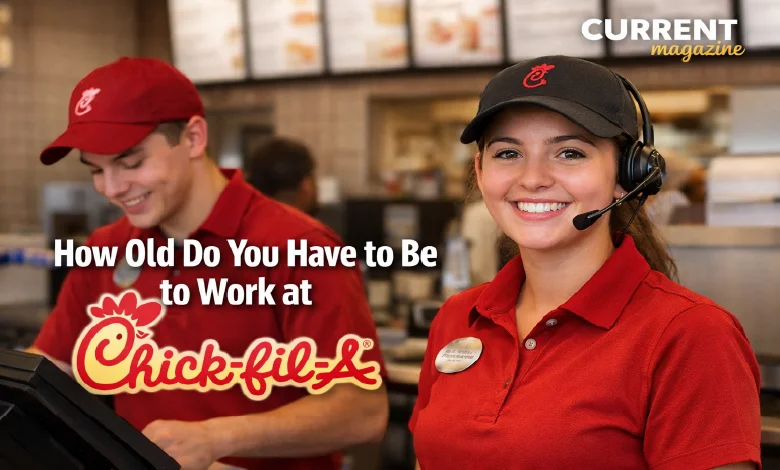
If you’re wondering how old do you have to be to work at Chick-Fil-A, you’re not alone. This is one of the most common questions asked by teens looking for their first job. Chick-fil-A is a popular choice for young workers due to its reputation for treating employees well, offering flexible schedules, and providing valuable work experience.
The minimum age to work at Chick-fil-A is typically 14 or 16 years old, depending on your location and the position you’re applying for. However, age requirements can vary by state laws, local labor regulations, and individual franchise owner policies. This guide will cover everything you need to know about age requirements, available positions, the application process, what to expect during your interview, and tips for getting hired at Chick-fil-A.
General Age Requirements at Chick-fil-A
Chick-fil-A’s age requirements depend on several factors:
- Minimum Age: 14-16 Years Old
- The most common minimum age is 14 years old.
- Many Chick-fil-A locations hire team members starting at age 14. This is especially common in states where labor laws allow it.
- 14 and 15-year-olds typically work in entry-level positions with restricted hours.
- Some locations require workers to be 16 years old.
- Certain franchises set their minimum age at 16.
- Urban locations or busier restaurants may prefer older teens.
- Some states have stricter labor laws that require workers to be at least 16 years old.
Why is There a Variation?
Chick-fil-A restaurants are independently owned and operated franchises. Each franchise owner can set their own minimum age (within legal limits). State and local labor laws also vary significantly, and business needs and staffing preferences differ by location.
Age Requirements by Position
Different positions may have different age requirements:
- Entry-level positions (typically 14-16+):
- Front counter team member
- Dining room attendant
- Drive-thru team member
- Kitchen team member (may require 16+ at some locations)
- Leadership and specialized positions (typically 16-18+):
- Shift leader or team leader (usually 16+)
- Trainer (usually 16-18+)
- Kitchen manager or shift supervisor (usually 18+)
- Assistant manager (usually 18+)
State Labor Laws and How They Affect Age Requirements
Federal and state labor laws determine what jobs young workers can do and when they can work.
Federal Labor Laws (Fair Labor Standards Act – FLSA)
The federal government sets baseline rules:
- Ages 14-15:
- Can work in non-hazardous jobs.
- Limited to 3 hours on school days.
- Limited to 18 hours per week during school weeks.
- Can work 8 hours on non-school days.
- Can work 40 hours during non-school weeks (summer and breaks).
- Cannot work before 7 a.m. or after 7 p.m. (except from June 1 to Labor Day, when evening hours extend to 9 p.m.).
- Cannot work in kitchen areas with cooking equipment (though some exceptions apply).
- Ages 16-17:
- Can work unlimited hours (no federal restrictions on hours).
- Can work in more positions, including cooking areas.
- Cannot perform hazardous duties.
- Ages 18+:
- No restrictions on hours or type of work.
- Can work in any position, including management.
State-Specific Variations
Some states have stricter rules than federal law. For example, some states require work permits or school permission for minors, while others require 16 as the minimum age for food service jobs. Always check your state’s labor department website for specific requirements.
Available Positions for Young Workers
Here’s what positions are typically available and at what age:
- Front Counter Team Member (Age 14+)
- Responsibilities: Taking customer orders, operating the cash register, serving food, answering questions, maintaining a clean counter area, providing excellent customer service.
- Why it’s good for young workers: Great experience in customer service, cash handling, and basic math skills. No cooking required.
- Dining Room Attendant (Age 14+)
- Responsibilities: Cleaning tables, refilling drinks and condiments, emptying trash bins, ensuring restrooms are clean, helping customers with special requests.
- Why it’s good for young workers: Learn attention to detail, time management, and build responsibility.
- Drive-Thru Team Member (Age 14-16+)
- Responsibilities: Taking orders through the headset, processing payments, handing food to customers, ensuring order accuracy, maintaining fast, friendly service, and keeping the drive-thru area clean.
- Why it’s good for young workers: Learn multitasking, working under pressure, and communication skills.
- Kitchen Team Member (Age 16+)
- Responsibilities: Preparing food, operating kitchen equipment, following food safety procedures, maintaining a clean kitchen, restocking ingredients.
- Why it typically requires age 16+: Involves operating potentially dangerous equipment, and federal law has restrictions on 14-15-year-olds in kitchen environments.
- Leadership Positions (Age 16-18+)
- Team Leader/Shift Leader: Supervising team members, opening/closing the restaurant, handling customer complaints, training new employees.
- Assistant Manager: Managing shifts, hiring, training, and handling financial responsibilities. Requires significant experience.
Work Permits and Documentation
Depending on your age and state, you may need special documentation such as a work permit. Here’s how to get one:
- Work Permits (Ages 14-15, sometimes 16-17):
- Many states require minors to obtain work permits before starting employment.
- Check with your school guidance counselor or state labor department for specific requirements.
To apply for a job, you’ll need to provide proof of age, a work permit (if required), and other documentation like a Social Security card and direct deposit details.
How to Apply for a Job at Chick-fil-A
The application process is simple:
- Find Open Positions:
- Visit the Chick-fil-A website or visit your local restaurant to ask about job openings.
- Complete the Application:
- Provide your personal information, age, availability, education background, and references.
- Follow Up:
- Wait a few days and then follow up by calling or visiting the restaurant. Be polite and professional.
The Interview Process
If your application is selected, you’ll be contacted for an interview. It’s usually a one-on-one interview with a manager and may last 15-30 minutes.
Pay and Benefits for Young Workers
Starting pay for entry-level positions typically ranges from $10-15 per hour, with many locations starting above minimum wage. Benefits include flexible scheduling, free or discounted meals, leadership development programs, and Sundays off.
Tips for Getting Hired
Chick-fil-A values specific traits like a positive attitude, a willingness to help others, and strong work ethic. Highlight your volunteer work, school activities, and any leadership roles you’ve held.
What It’s Like to Work at Chick-fil-A as a Teen
Chick-fil-A is known for its customer service-focused culture, teamwork, and faith-based values. Employees are trained in leadership and life skills that transfer to future careers.
Final Thoughts
Working at Chick-fil-A can be an excellent first job for teenagers. It offers competitive pay, flexible schedules, and valuable experience. Be sure to check your local restaurant’s age requirements and prepare a strong application. Good luck with your job search!
Frequently Asked Questions About Working at Chick-fil-A
- Can a 13-year-old work at Chick-fil-A?
No, the minimum age to work is 14. - Do 14-year-olds need a work permit?
It depends on your state. Check with your school or state labor department. - How many hours can a 14-year-old work?
Federal law limits 14-year-olds to 3 hours on school days and 40 hours during summer. - Does Chick-fil-A hire at 15?
Yes, many locations hire 15-year-olds for entry-level positions. - How much does Chick-fil-A pay 14-year-olds?
Pay typically ranges from $9-13 per hour, depending on location. - Is it hard to get hired at Chick-fil-A as a teenager?
It can be competitive, but showing enthusiasm and a positive attitude can help you stand out. - Do you have to work Saturdays at Chick-fil-A?
Saturday availability is often required, as it is a busy day. - Can you work at Chick-fil-A during the school year?
Yes, Chick-fil-A offers flexible schedules for students. - What should I wear to a Chick-fil-A interview?
Business casual attire is best—clean, neat clothes, and closed-toe shoes. - How can I stand out as an applicant?
Be enthusiastic, reliable, and show interest in Chick-fil-A’s culture.