
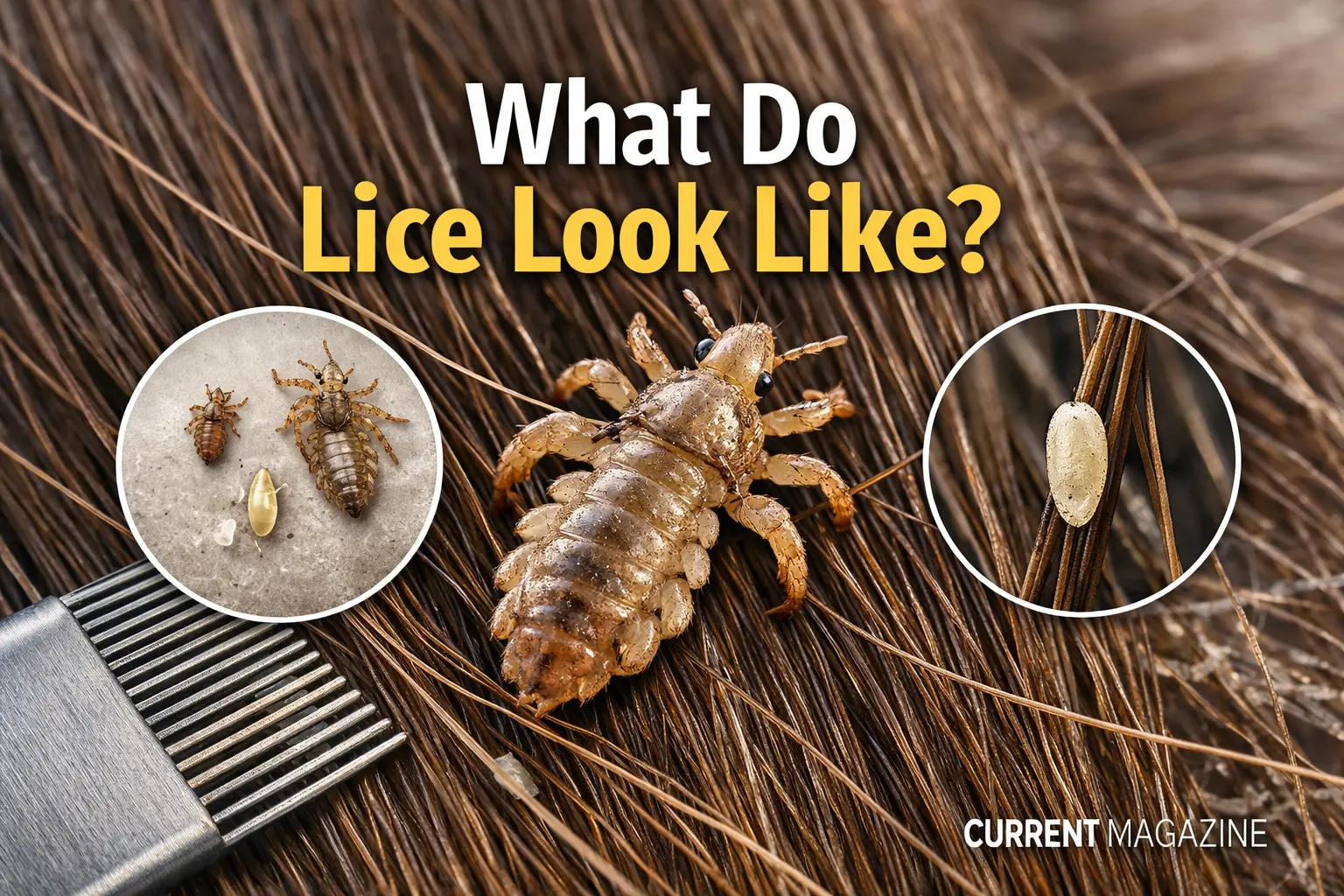
If you’re dealing with an itchy scalp or suspect you or your child might have lice, knowing exactly what to look for can help you identify the problem quickly. Head lice are incredibly common, affecting 6 to 12 million people in the United States each year, mostly children between ages 3 and 11.
This guide will show you exactly What do lice look like at every stage of their life cycle, how to spot them in different hair colors, and how to tell the difference between lice and dandruff.
What Do Adult Lice Look Like?
Adult head lice are tiny insects that are surprisingly hard to spot, even when you know what you’re looking for. Here are the key details:
Size
Adult lice are about the size of a sesame seed, measuring approximately 2 to 3 millimeters long. That’s roughly the same size as the eye on George Washington on a dollar bill or the size of a small strawberry seed.
Color
The color of adult lice can vary depending on several factors:
- Basic color: Tan, grayish-white, or gray
- After feeding: Reddish-brown or completely red (they feed on human blood)
- In different hair: They can appear lighter or darker to blend in with hair color
When lice feed on blood, their stomachs fill up and their entire abdomen turns red. This red color seeps into their whole body shortly after feeding, which is why some lice appear completely red.
Physical Features
- Six legs with hook-like claws at the ends
- Three body parts: head, thorax, and abdomen
- Wingless (they cannot fly or jump)
- Fast-moving creatures that run away from light
Adult lice move very quickly through hair, which makes them difficult to catch or see. They crawl from strand to strand using their six legs with tiny claws that help them grip tightly to hair.
What Do Lice Eggs (Nits) Look Like?
Lice eggs, called “nits,” are actually easier to spot than adult lice. Female lice lay about 6 to 10 nits every day, and they add up quickly in the hair.
Size
Nits are extremely small – just slightly smaller than a poppy seed or about the size of a knot in a thread. They measure roughly 0.03 to 0.08 millimeters.
Shape
Nits have a very distinctive teardrop or oval shape:
- Round on one side
- Pointy on the other end
- A small hair-like antenna sticking out from the pointy end
Think of a nit as looking like a tiny leaf attached to the side of a hair strand, not wrapped around it.
Color
Nits change color depending on whether they’re alive or have already hatched:
- Live nits (before hatching): Light golden to dark brown
- Empty nits (after hatching): Dull yellow or white
- In different hair: They can appear white, clear, brown, or tan
Many people think nits are white, but most live lice eggs are actually golden or brown colored. They only appear white after the louse has hatched and left behind the empty shell.
Location
Nits are found very close to the scalp, usually within one-quarter inch (about 6 millimeters) of the scalp. They’re most commonly found in three “hot spots”:
- Behind both ears
- At the nape of the neck
- On the crown of the head
These spots provide the warmth that lice need to survive and are common areas for head-to-head contact.
Attachment
The most important feature of nits is that they’re firmly glued to individual hair shafts. Unlike dandruff that brushes off easily, nits:
- Cannot be flicked, blown, or brushed off
- Stay stuck even with vigorous brushing
- Must be manually squeezed and dragged down the hair shaft to remove
- Make a small “pop” sound if crushed between fingernails
What Do Baby Lice (Nymphs) Look Like?
Nymphs are baby lice that have just hatched from their eggs. They look like miniature versions of adult lice.
Size
Nymphs are about the size of a pinhead, much smaller than adult lice. They’re so tiny they’re hard to see with the naked eye.
Appearance
- Look similar to adult lice but much smaller
- Usually lighter in color, almost transparent in some cases
- Have the same six legs as adult lice
Growth
Nymphs go through three molting stages and mature into adult lice within 7 to 10 days after hatching. During this time, they feed on blood from the scalp several times a day.
How Lice Look in Different Hair Colors
One reason lice are so hard to spot is that they’re masters of camouflage. They can blend in remarkably well with different hair colors:
Blonde Hair
- Lice appear almost transparent or very light tan
- Easier to spot nits against the light background
- Live bugs are still hard to see because they’re nearly see-through
Brown Hair
- Lice appear darker brown or tan
- Blend in easily with the hair color
- Nits may be slightly easier to spot than bugs
Black Hair
- Lice appear darker to match the hair
- Very difficult to spot live bugs
- White or yellow nits stand out more against dark hair
Red Hair
- Lice can appear reddish-brown
- May look like they’re always “full” of blood
- Similar difficulty spotting as in brown hair
Lice vs. Dandruff: How to Tell the Difference
Many people confuse lice eggs with dandruff, but there are clear differences once you know what to look for. Here are the main ways to tell them apart:
Movement Test
- Dandruff: Falls off easily when you blow on it or jiggle the hair
- Nits: Stay firmly attached no matter what you do
This is the easiest and fastest way to tell the difference. On clean, dry hair, dandruff moves from strand to strand simply by blowing or shaking the hair. Nits won’t budge.
Attachment to Hair
- Dandruff: Sits loosely on top of hair like snow
- Nits: Glued firmly to the side of individual hair strands
Dandruff flakes rest on the hair and scalp without being attached. Nits are cemented to the hair shaft with a glue-like substance made of chitin and protein.
Shape
- Dandruff: Irregular, flaky pieces of different sizes
- Nits: Uniform teardrop shape, all roughly the same size
Under magnification, dandruff appears as irregular skin flakes, while nits have a consistent oval or teardrop shape.
Location
- Dandruff: Scattered throughout the hair and scalp
- Nits: Concentrated near the scalp (within 1/4 inch) in hot spots
Dandruff doesn’t favor any particular area, while nits are always found close to the scalp where it’s warm.
When Removed from Hair
- Dandruff: Crumbles or breaks apart easily
- Nits: Hold their shape and have a hard shell
If you pull something off the hair, nits will maintain their oval shape, while dandruff will break apart or crumble.
Color on White Background
- Dandruff: Stays white or yellowish
- Nits: Appear brownish or tan
If you place what you found on a white paper towel, nits will look brownish against the white background, while dandruff remains white or yellowish.
Three Life Stages of Head Lice
Understanding the complete life cycle helps you know what to look for:
Stage 1: Nit (Egg)
- Laid by adult female lice
- Firmly attached to hair shaft near scalp
- Takes 6 to 9 days to hatch
- Tiny, oval-shaped
Stage 2: Nymph (Baby Louse)
- Hatches from the nit
- Looks like a tiny adult louse
- Matures through three molting stages
- Becomes adult in 7 to 10 days
- Must feed on blood to survive
Stage 3: Adult Louse
- Size of a sesame seed
- Can reproduce (females lay eggs)
- Lives about 30 days on the scalp
- Dies within 1 to 2 days if it falls off
Common Signs You Might Have Lice
Beyond seeing the actual bugs or nits, there are several signs that might indicate a lice infestation:
Itching
- Most common symptom of head lice
- Caused by allergic reaction to lice saliva
- May not appear for 4 to 6 weeks in first-time infestations
- Often worse at night when lice are most active
Tickling Sensation
- Feeling of something moving in the hair
- More noticeable at night
- Not everyone experiences this
Sores on the Scalp
- From scratching the itchy areas
- Can sometimes become infected with bacteria
- Usually found behind ears and at nape of neck
Red Bumps or Rash
- Small bite marks from lice feeding
- Usually on the scalp, neck, and behind ears
- Result of allergic reaction to bites
Difficulty Sleeping
- Itching and discomfort interrupt sleep
- Lice are most active in the dark
Seeing Bugs or Nits
- White or tan specks close to the scalp
- Something crawling in the hair
- Empty eggshells on hair strands
What Lice Don’t Look Like
To avoid confusion, here are some things that people commonly mistake for lice:
Hair Casts
- White, tube-like debris that surrounds the hair shaft
- Usually 2 to 8 millimeters in length
- Slide easily along the hair (unlike nits)
- Often associated with other skin conditions
Dandruff Flakes
- Irregular white or yellow flakes
- Come off easily when touched
- Found throughout the scalp, not just near the roots
Hair Spray Droplets
- Can look similar to nits when dried
- Usually on the hair shaft, not specifically near scalp
- Easier to remove than nits
Dirt or Sand
- Can get caught in hair and look like nits
- Comes off with washing or brushing
- Irregular in size and shape
Scabs or Dead Skin
- Can stick to hair near the scalp
- Irregular shape (not teardrop)
- Different texture than nits
How to Check for Lice
If you suspect lice, here’s how to do a thorough check:
What You Need
- Good lighting (natural daylight is best)
- Fine-toothed lice comb
- Magnifying glass (helpful but not required)
- White paper towel or cloth
- Gloves (optional)
Step-by-Step Process
- Sit in good lighting: Natural daylight near a window works best
- Part the hair in small sections: Work systematically through the entire head
- Look close to the scalp: Check within 1/4 inch of the scalp for nits
- Check the hot spots first: Behind ears, nape of neck, and crown of head
- Look for movement: Adult lice will try to run away from light
- Try the blow test: Blow on suspicious white specks – dandruff will fly away, nits won’t
- Use a comb: Comb through damp hair with a fine-toothed comb, then wipe on white paper to check for bugs or nits
- Check all family members: If one person has lice, check everyone in the household
Important Facts About Head Lice
They Don’t Mean You’re Dirty
Having head lice has nothing to do with cleanliness or hygiene. Clean hair is actually easier for lice to grip than dirty, oily hair. Anyone can get lice.
They Can’t Jump or Fly
Lice don’t have wings and can’t jump. They spread through direct head-to-head contact or by sharing items that touch the hair like hats, combs, or headphones.
They Don’t Spread Disease
Unlike some other parasites, head lice don’t transmit any diseases. They’re annoying and uncomfortable but not a health hazard.
They Die Quickly Off the Head
Adult lice can only survive 1 to 2 days without feeding on blood from a human scalp. They need the warmth and blood supply to live.
They’re Very Common
6 to 12 million people get head lice each year in the United States, mostly children ages 3 to 11. Girls get them more often than boys, possibly because they have more head-to-head contact.
African American Children Get Them Less
For reasons not fully understood, lice seem to have more difficulty attaching to African American hair, making infestations less common.
What to Do If You Find Lice
If you’ve identified lice or nits in the hair:
- Don’t panic – Lice are treatable and very common
- Check all household members – Everyone who lives in the home should be checked
- Treat the infestation – Use over-the-counter or prescription lice treatments
- Remove all nits – Manual nit removal with a fine-toothed comb is essential
- Clean items – Wash bedding, towels, and clothing in hot water (130°F or higher)
- Notify close contacts – Tell your child’s school, daycare, and any close contacts
- Don’t share items – Avoid sharing hats, combs, brushes, or hair accessories
Super Lice: A Growing Problem
You might have heard about “super lice” – this isn’t a different type of lice, but rather head lice that have become resistant to common over-the-counter treatments. Super lice look exactly the same as regular lice but don’t die when treated with traditional lice shampoos.
Today’s head lice have developed resistance to pyrethroid-based treatments (the active ingredient in many OTC lice products). If you’ve tried over-the-counter treatments multiple times without success, you may be dealing with super lice and should consult a healthcare provider for prescription-strength treatments.
When to See a Doctor
While most lice infestations can be treated at home, you should see a doctor if:
- Over-the-counter treatments don’t work after multiple applications
- The scalp is severely irritated, swollen, or showing signs of infection
- You’re not sure whether you’re dealing with lice or another condition
- Sores from scratching become infected (red, warm, oozing pus)
- You’re pregnant or treating a child under 2 years old
Prevention Tips
While it’s hard to prevent lice completely (especially for school-age children), you can reduce the risk:
- Avoid head-to-head contact during play and activities
- Don’t share hats, scarves, hair ribbons, or hair accessories
- Don’t share combs, brushes, or towels
- Teach children to keep their belongings separate at school
- Check your child’s head regularly, especially during lice outbreaks at school
- Tie long hair back in braids or ponytails
- Use preventive hair products or tea tree oil (though effectiveness isn’t proven)
The Bottom Line
Head lice are tiny, sesame seed-sized insects that are tan, gray, or reddish-brown in color. They have six legs and move quickly through hair. Their eggs, called nits, are small, teardrop-shaped, and firmly glued to hair shafts close to the scalp.
The easiest way to identify lice is to look for nits in the hot spots (behind ears and at the nape of the neck) within one-quarter inch of the scalp. Unlike dandruff, nits won’t blow or brush off easily – they’re cemented to the hair.
If you find lice or nits, don’t panic. They’re extremely common, don’t indicate poor hygiene, and can be treated effectively. Check all family members, start treatment promptly, and follow up to make sure all lice and nits are removed.
Remember that early detection makes treatment easier, so regular head checks are important, especially during the school year when lice outbreaks are common.
10 Frequently Asked Questions About What Lice Look Like
1. How big are lice?
Adult head lice are about 2 to 3 millimeters long, roughly the size of a sesame seed. Nits (lice eggs) are even smaller, about the size of a poppy seed or a knot in thread. Baby lice (nymphs) are about the size of a pinhead. Despite being visible to the naked eye, lice are small enough that many people don’t notice them until there’s a significant infestation.
2. What color are lice?
Lice can be tan, grayish-white, gray, or light brown. After feeding on blood, they turn reddish-brown or completely red. Lice also camouflage themselves to match hair color – they appear nearly transparent in blonde hair, darker brown in brown hair, and darker still in black hair. This color-changing ability makes them difficult to spot.
3. Can you see lice with the naked eye?
Yes, you can see adult lice and nits with the naked eye, though a magnifying glass can be helpful. Adult lice are about the size of a sesame seed, which is visible but small. Nits are easier to spot than moving lice because they don’t run away from light. However, lice move very quickly and hide from light, making them harder to see than their eggs.
4. What’s the difference between lice and dandruff?
The main difference is that dandruff flakes come off easily when you blow on them or brush them, while nits (lice eggs) are firmly glued to hair strands and won’t move. Dandruff is irregularly shaped and sits loosely on hair, while nits are teardrop-shaped and attached to individual hair shafts close to the scalp. Dandruff appears throughout the entire scalp, while nits concentrate in specific hot spots.
5. Where are lice most commonly found on the head?
Lice and their eggs are most commonly found in three “hot spots” on the head: behind both ears, at the nape of the neck, and on the crown of the head. These areas provide the warmth lice need to survive and are common places for head-to-head contact. Nits are always found within one-quarter inch of the scalp where the temperature is optimal for incubation.
6. Do lice jump or fly?
No, lice cannot jump or fly. They are wingless insects that can only crawl. Lice spread through direct head-to-head contact or by crawling from one person’s hair to another’s. They can also spread by sharing items that touch the hair, like hats, combs, or headphones. This is why children often get lice at school during close play activities.
7. What do lice eggs (nits) look like in hair?
Nits are tiny, oval-shaped eggs about the size of a knot in thread. They’re teardrop-shaped – round on one side and pointy on the other – with a small hair-like antenna at the pointy end. They’re firmly glued to the side of individual hair strands close to the scalp. Live nits are light golden to dark brown, while empty nits (after hatching) are dull yellow or white.
8. Can lice be black or dark brown?
Yes, lice can appear darker to blend in with dark hair, but they’re not naturally black. In black or very dark brown hair, lice may look darker brown or tan to camouflage themselves. After feeding on blood, they can appear very dark reddish-brown. However, their natural color is typically tan, gray, or grayish-white before they adapt to match their environment.
9. How do you know if you have lice or just an itchy scalp?
The most reliable way is to look for nits within one-quarter inch of the scalp, especially behind the ears and at the nape of the neck. If you see tiny, teardrop-shaped specks firmly attached to hair that won’t blow or brush off, those are likely nits. You might also see adult lice moving quickly through the hair. An itchy scalp alone isn’t enough to diagnose lice – you need to see the bugs or eggs.
10. Are lice visible on a comb?
Yes, if you comb through hair with a fine-toothed lice comb and wipe it on a white paper towel, you should be able to see lice or nits. Adult lice will appear as tiny tan or brown insects about the size of a sesame seed, possibly moving. Nits will appear as small brownish or tan oval specks. This combing method is one of the most reliable ways to check for lice, especially on damp hair.