
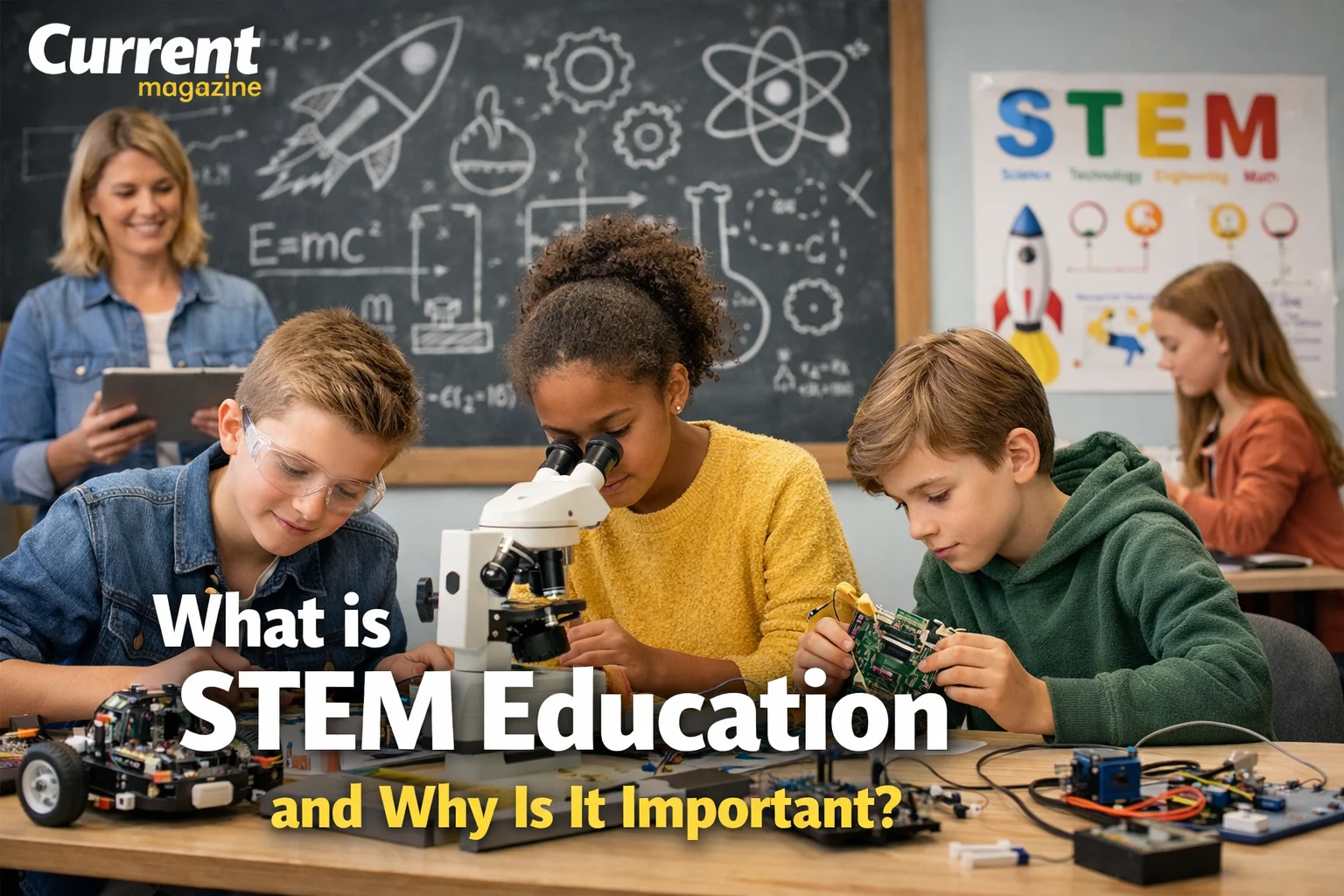
If you’ve been wondering what is STEM education and why is it important, you’re asking questions that impact the future of learning and careers worldwide. STEM education is an integrated approach to learning that combines Science, Technology, Engineering, and Mathematics into a cohesive curriculum based on real-world applications. Understanding what STEM education is and why it’s important helps parents, students, and educators prepare for a future where these skills are increasingly essential. From developing critical thinking to preparing for high-demand careers, STEM education shapes how students learn, solve problems, and innovate.
The emphasis on STEM education has grown dramatically as technology transforms every industry and creates new career paths that didn’t exist a generation ago. Whether you’re a parent deciding on schools, a student choosing courses, or simply curious about this educational movement, understanding STEM’s scope and significance is more relevant than ever. Let’s explore what makes STEM education so vital for today’s learners.
What Does STEM Stand For?
STEM is an acronym representing four interconnected disciplines that form the foundation of modern innovation and technological advancement.
Science
Science involves understanding the natural world through observation, experimentation, and evidence-based conclusions. In STEM education, science isn’t just memorizing facts from textbooks—it’s about asking questions, conducting experiments, analyzing results, and drawing conclusions.
Students explore biology, chemistry, physics, earth science, and environmental science. They learn the scientific method, develop hypotheses, test theories, and understand how scientific knowledge is built and refined over time.
Technology
Technology encompasses the tools, systems, and methods humans create to solve problems and improve life. In education, this includes everything from basic computer literacy to advanced programming, robotics, artificial intelligence, and digital design.
Technology in STEM isn’t just about using devices—it’s about understanding how technology works, creating new technological solutions, and recognizing technology’s role in society. Students learn coding, digital citizenship, data analysis, and how to leverage technology for innovation.
Engineering
Engineering applies scientific and mathematical principles to design solutions for real-world problems. This includes creating products, structures, systems, and processes that meet human needs.
In STEM education, engineering introduces students to design thinking, prototyping, testing, and iteration. They learn that failure is part of the process and that engineering requires creativity alongside technical knowledge. Students might design bridges, build robots, create apps, or engineer solutions to environmental challenges.
Mathematics
Mathematics provides the language and tools for understanding patterns, relationships, and quantities. It’s the foundation that supports science, technology, and engineering.
STEM mathematics goes beyond rote calculation to emphasize problem-solving, logical reasoning, and real-world application. Students see how math connects to tangible challenges and how mathematical thinking helps solve complex problems across all STEM disciplines.
The Integration Principle: What Makes STEM Different
STEM education’s defining characteristic is integration—teaching these subjects not as isolated disciplines but as interconnected fields that work together to solve problems.
Interdisciplinary Learning
Traditional education often teaches subjects separately. You have math class, then science class, then maybe a technology elective. STEM education breaks down these walls, showing students how these fields naturally connect.
For example, a STEM project might require students to research water pollution (science), analyze pollution data (mathematics), design a filtration system (engineering), and build a working prototype using sensors and programming (technology). This mirrors how professionals actually work—rarely does someone use only one discipline in isolation.
Real-World Applications
STEM education emphasizes practical, hands-on learning connected to real-world challenges. Instead of abstract problems from textbooks, students tackle issues they can see and understand—how to reduce energy consumption in schools, design assistive devices for people with disabilities, or analyze local traffic patterns to improve safety.
This relevance makes learning more engaging and helps students understand why they’re learning these subjects beyond “it’ll be on the test.”
Problem-Based Learning
STEM curricula often center on problem-based or project-based learning where students work on extended challenges that require critical thinking, collaboration, and creativity. Rather than teachers simply delivering information, students actively investigate, experiment, and construct knowledge.
This approach develops deeper understanding and better prepares students for careers where problem-solving and innovation are paramount.
Why STEM Education Matters: The Compelling Case
Understanding STEM’s importance requires looking at multiple perspectives—individual student benefits, economic considerations, and societal needs.
Preparing for Future Careers
The job market has transformed dramatically, and this trend continues accelerating. According to various workforce studies, STEM-related occupations are growing faster than other fields, offering higher salaries and greater job security.
High-Demand Fields
Industries desperately need qualified STEM professionals. Fields like healthcare, information technology, data science, engineering, biotechnology, renewable energy, and cybersecurity face significant talent shortages. Students with strong STEM backgrounds have more career options and better employment prospects.
Even careers not explicitly labeled as STEM increasingly require STEM skills. Marketing professionals analyze data, healthcare administrators manage technology systems, and business leaders make decisions based on quantitative analysis. STEM literacy has become essential across virtually all professions.
Higher Earning Potential
STEM careers typically offer higher salaries than non-STEM fields. The median income for STEM occupations significantly exceeds the median for all occupations. This wage premium reflects both the demand for these skills and the complexity of the work.
Investing in STEM education creates economic opportunities for students throughout their lives.
Job Security and Adaptability
STEM skills provide adaptability in a rapidly changing job market. The critical thinking, problem-solving, and technical skills developed through STEM education transfer across roles and industries. When jobs evolve or disappear due to automation and technological change, workers with STEM backgrounds can more easily transition to new opportunities.
Developing Critical Thinking and Problem-Solving Skills
STEM education cultivates thinking skills that benefit students regardless of their eventual career paths.
Analytical Thinking
STEM challenges students to analyze situations, break complex problems into manageable parts, identify patterns and relationships, and draw logical conclusions based on evidence. These analytical skills apply to virtually every aspect of life, from making financial decisions to evaluating news claims.
Creative Problem-Solving
Contrary to stereotypes about STEM being rigid or uncreative, effective STEM education emphasizes creativity. Students learn that there are often multiple valid approaches to problems and that innovation requires imagination alongside technical knowledge.
Engineering design challenges, scientific investigations, and coding projects all demand creative thinking to generate novel solutions.
Resilience and Persistence
STEM projects involve experimentation, failure, and iteration. Students learn that initial attempts often don’t work, and that’s okay—it’s part of the process. This builds resilience, persistence, and a growth mindset that benefits students throughout life.
Learning to view failure as information rather than defeat is one of STEM education’s most valuable lessons.
Fostering Innovation and Entrepreneurship
STEM education nurtures innovative thinking and entrepreneurial mindsets.
Seeing Opportunities
STEM-educated individuals learn to identify problems as opportunities for innovation. They develop the skills to envision solutions, prototype ideas, test and refine concepts, and bring innovations to market.
Many successful entrepreneurs credit STEM education with giving them the technical foundation and problem-solving approach that enabled their ventures.
Understanding Emerging Technologies
As artificial intelligence, biotechnology, renewable energy, and other fields reshape society, STEM-literate individuals can understand these changes, participate in conversations about their implications, and contribute to responsible development and deployment of new technologies.
Addressing Global Challenges
Humanity faces enormous challenges—climate change, disease, resource scarcity, pollution, and inequality. Solving these problems requires STEM knowledge and skills.
Environmental Solutions
Developing clean energy, reducing pollution, protecting ecosystems, and mitigating climate change all require scientific understanding, engineering innovation, and technological advancement. STEM education prepares the next generation to tackle these urgent environmental challenges.
Medical Advances
Curing diseases, improving healthcare access, developing new treatments, and addressing global health crises depend on STEM professionals. From vaccine development to telemedicine to personalized medicine, STEM drives medical progress.
Technological Solutions for Social Good
Technology can address social challenges like poverty, education access, and inequality. STEM-educated individuals create apps that connect people to resources, design affordable products for underserved populations, and develop systems that make essential services more accessible.
Promoting Equity and Inclusion
STEM education, when implemented equitably, can help close achievement gaps and expand opportunities for underrepresented groups.
Economic Mobility
STEM careers offer pathways to economic mobility for students from disadvantaged backgrounds. By ensuring all students receive quality STEM education, schools can help break cycles of poverty and create opportunities regardless of socioeconomic status.
Closing Gender and Racial Gaps
Historically, women and minorities have been underrepresented in STEM fields. Quality STEM education that engages all students and challenges stereotypes helps diversify these fields, bringing varied perspectives that enhance innovation and ensure technology serves everyone.
Developing Informed Citizens
In a technology-driven world, STEM literacy is increasingly essential for civic participation. Citizens need basic STEM understanding to evaluate policies on climate change, healthcare, technology regulation, and other issues. STEM education creates informed voters who can engage meaningfully with complex societal challenges.
Key Components of Effective STEM Education
Not all STEM programs are equally effective. Quality STEM education includes several essential elements.
Hands-On, Experiential Learning
Students learn best by doing. Effective STEM education provides opportunities for laboratory experiments, engineering design challenges, coding projects, field work, and other hands-on experiences.
This experiential approach makes abstract concepts concrete, engages multiple learning styles, and makes learning memorable and meaningful.
Inquiry-Based Instruction
Rather than simply telling students information, effective STEM teachers facilitate inquiry. Students ask questions, investigate topics, design experiments, and construct understanding through guided exploration.
This approach mirrors how scientists and engineers actually work and develops the curiosity and investigative skills essential for lifelong learning.
Collaboration and Communication
STEM work rarely happens in isolation. Effective STEM education includes collaborative projects where students work in teams, share ideas, divide responsibilities, and create collective solutions.
Students also develop communication skills by explaining their thinking, presenting findings, and defending conclusions—essential abilities for any career.
Integration Across Subjects
The most powerful STEM learning happens when subjects are genuinely integrated rather than superficially connected. Projects should naturally require knowledge and skills from multiple disciplines, showing students how science, technology, engineering, and mathematics work together.
Access to Resources and Technology
Quality STEM education requires adequate resources including laboratory equipment, technology tools, maker spaces, and materials for projects. Schools must invest in both physical resources and teacher professional development to implement effective STEM programs.
Real-World Connections
Effective STEM education connects classroom learning to real-world applications through field trips, guest speakers from STEM careers, partnerships with local businesses and universities, and community-based projects that address local challenges.
These connections help students see STEM’s relevance and envision themselves in STEM careers.
Inclusive Practices
Quality STEM education engages all students regardless of gender, race, ethnicity, socioeconomic status, or prior achievement. This requires intentional efforts to combat stereotypes, provide support for struggling students, challenge advanced students, and create classroom cultures where all students feel they belong in STEM.
STEM Education at Different Levels
STEM education looks different at various educational stages, building progressively complex skills and knowledge.
Elementary School STEM
Early STEM education focuses on sparking curiosity, developing basic skills, and building positive attitudes toward STEM subjects.
Foundational Skills
Young students develop observation skills, learn to ask questions, practice basic measurement and data collection, and begin understanding cause and effect relationships. They’re introduced to simple engineering design challenges and basic technology tools.
Playful Exploration
Elementary STEM should feel playful and exploratory. Students might build structures with blocks, observe plant growth, code simple computer programs, or investigate how things work. The emphasis is on engagement and discovery rather than formal instruction.
Building Confidence
Perhaps most importantly, elementary STEM education helps all students see themselves as capable of doing science, technology, engineering, and mathematics. Early positive experiences create foundation attitudes that influence later educational and career choices.
Middle School STEM
Middle school STEM builds on elementary foundations with more sophisticated content and skills while maintaining engagement during a critical developmental period.
Deeper Investigations
Students conduct more complex experiments, work on extended engineering projects, learn advanced technology skills like robotics and programming, and apply mathematics to real-world problems.
Career Exploration
Middle school is ideal for STEM career exploration. Students learn about diverse STEM careers, meet STEM professionals, and begin envisioning potential career paths. This helps them make informed choices about high school coursework.
Critical Period
Middle school is when many students, particularly girls and minorities, lose interest in STEM. Effective middle school programs actively work to maintain engagement through relevant, challenging, and supportive experiences.
High School STEM
High school STEM prepares students for college and careers with rigorous coursework and specialized experiences.
Advanced Content
Students take advanced courses in biology, chemistry, physics, computer science, engineering, and mathematics. Many schools offer AP or IB STEM courses that can earn college credit.
Specialization Opportunities
High schools might offer specialized programs in engineering, biotechnology, computer science, or other STEM areas. Students can pursue deeper interests and develop advanced skills in specific fields.
College and Career Preparation
High school STEM includes career preparation through internships, research experiences, competitions, dual enrollment in college courses, and guidance on STEM college programs and careers.
Higher Education STEM
Colleges and universities provide specialized STEM education preparing students for specific careers and advanced research.
Disciplinary Expertise
Undergraduate programs develop deep knowledge in specific STEM disciplines while maintaining interdisciplinary connections. Students choose majors like biology, computer science, mechanical engineering, or mathematics.
Research Opportunities
Many college students participate in research, working alongside faculty on original investigations. These experiences develop advanced skills and provide pathways to graduate school or research careers.
Graduate Education
Master’s and doctoral programs develop the highest levels of STEM expertise, preparing researchers, university professors, and advanced practitioners who push the boundaries of knowledge in their fields.
STEM vs. STEAM: Understanding the Difference
You might have heard of STEAM—STEM plus Art. Understanding this variation helps clarify educational approaches.
What STEAM Adds
STEAM incorporates the Arts—including visual arts, design, music, and humanities—into STEM education. Advocates argue that creativity, design thinking, and artistic perspectives enhance STEM learning and innovation.
STEAM recognizes that many innovations require both technical knowledge and creative design. Think of architects who combine engineering with aesthetics, or user experience designers who blend technology with understanding of human behavior and visual design.
The Debate
Some educators embrace STEAM enthusiastically, seeing it as more holistic and accessible to diverse learners. Others worry that adding Art dilutes STEM’s focus or that the acronym changes without meaningful instructional changes.
The truth likely depends on implementation. Simply adding an art project to a science lesson doesn’t create meaningful integration. However, genuinely incorporating design thinking, creativity, and aesthetic considerations into problem-solving can enhance STEM education.
Finding Balance
Whether you call it STEM or STEAM, the key is providing rich, integrated, hands-on learning that develops critical thinking, creativity, problem-solving, and technical skills. The acronym matters less than the quality of education.
Common Challenges in STEM Education
Despite its importance, implementing effective STEM education faces several obstacles.
Teacher Preparation
Many teachers, especially at elementary levels, feel underprepared to teach STEM subjects. They may lack content knowledge, experience with inquiry-based instruction, or confidence in facilitating hands-on investigations.
Addressing this requires substantial professional development, ongoing support, and systemic changes in teacher education programs.
Resource Constraints
Quality STEM education requires resources—laboratory equipment, technology, materials for projects, and updated facilities. Many schools, particularly those serving low-income communities, lack adequate resources, creating inequitable access to quality STEM learning.
Time and Curriculum Pressures
With crowded curricula and high-stakes testing, teachers often feel they lack time for extended STEM projects. The pressure to cover content can discourage the deep, exploratory learning that characterizes quality STEM education.
Combating Stereotypes
Persistent stereotypes about who belongs in STEM—often excluding girls, minorities, and students from lower socioeconomic backgrounds—create barriers. Students who don’t see people like themselves in STEM fields may not envision STEM futures for themselves.
Overcoming these stereotypes requires intentional representation, messaging, and support.
Assessment Challenges
Traditional tests struggle to capture the learning that happens through STEM projects. Developing authentic assessments that measure critical thinking, problem-solving, collaboration, and innovation remains challenging.
Supporting STEM Education at Home
Parents and caregivers play crucial roles in supporting children’s STEM development outside school.
Encourage Curiosity and Questions
Welcome children’s endless questions. Instead of always providing answers, encourage them to investigate. “Why do you think that happens?” or “How could we find out?” promotes scientific thinking.
Provide Hands-On Experiences
Simple home activities develop STEM skills: cooking (chemistry and measurement), building with blocks or LEGO (engineering), gardening (biology), puzzles and games (mathematics and logic), and nature walks (observation and ecology).
Embrace Technology Purposefully
While limiting screen time is important, technology can support STEM learning through educational apps, coding programs, virtual tours of museums and laboratories, and documentaries about science and innovation.
Visit STEM-Rich Environments
Take children to science museums, aquariums, planetariums, nature centers, and technology exhibits. These experiences spark interest, expose children to STEM careers, and make learning memorable.
Challenge Gender and Racial Stereotypes
Actively counter messages that some groups don’t belong in STEM. Highlight diverse STEM role models, provide STEM toys and books for all children regardless of gender, and avoid language that reinforces stereotypes like “boys are naturally better at math.”
Model Positive Attitudes
Children pick up on adult attitudes. If you express math anxiety or say “I was never good at science,” children learn these subjects are difficult and some people just can’t do them. Instead, model growth mindset: “This is challenging, but I can figure it out with effort.”
Connect to Interests
Find STEM connections to your child’s existing interests. Sports fans can explore physics of motion or statistics. Music lovers can investigate sound waves and engineering of instruments. Aspiring artists can learn about color chemistry or digital design technology.
STEM Careers: Exploring the Possibilities
Understanding career options helps students see why STEM education matters.
Traditional STEM Careers
These are roles explicitly identified as STEM professions including scientists conducting research, engineers designing products and systems, computer programmers and software developers, mathematicians and statisticians, physicians and healthcare professionals, and architects designing buildings and spaces.
Emerging STEM Fields
New career paths continue emerging at the intersection of STEM disciplines including data scientists analyzing big data, AI and machine learning specialists, renewable energy technicians, biotechnology researchers, cybersecurity experts, and drone operators and technicians.
STEM Skills in Non-STEM Careers
Many careers not traditionally considered STEM increasingly require STEM skills including digital marketers analyzing campaign data, journalists reporting on science and technology, financial analysts, graphic designers using technology tools, environmental policy makers, and agricultural specialists.
Diverse Pathways
STEM careers don’t all require PhDs. Pathways include two-year technical degrees leading to skilled technician roles, four-year bachelor’s degrees for traditional STEM careers, graduate degrees for research and advanced practice, apprenticeships and on-the-job training, and certifications and bootcamps in fields like coding.
The Global Perspective on STEM Education
STEM education is a worldwide priority, though approaches vary across countries.
International Comparisons
International assessments like PISA (Programme for International Student Assessment) compare student achievement across countries. These comparisons have driven increased STEM focus in many nations concerned about their students’ performance relative to global peers.
Countries like Singapore, Finland, Japan, and South Korea often rank highly in mathematics and science, prompting other nations to study their educational approaches.
Global Competition and Collaboration
Nations recognize that STEM competitiveness affects economic prosperity and quality of life. This drives investment in STEM education, research funding, and policies supporting STEM careers.
Simultaneously, global challenges require international collaboration. Scientists, engineers, and technologists worldwide work together on problems like climate change, disease, and space exploration.
STEM for Sustainable Development
The United Nations includes quality education in STEM fields as essential for achieving Sustainable Development Goals. Developing nations increasingly prioritize STEM education as a pathway to economic development, improved health outcomes, and environmental sustainability.
The Future of STEM Education
STEM education continues evolving to meet changing needs and leverage new possibilities.
Artificial Intelligence and Personalized Learning
AI is enabling increasingly personalized STEM education that adapts to individual student needs, providing customized pacing, difficulty, and support. These technologies can help address some equity challenges by giving all students access to high-quality, tailored instruction.
Virtual and Augmented Reality
VR and AR technologies are making previously impossible experiences accessible—virtual dissections, molecular visualization, engineering simulations, and field trips to extreme environments from coral reefs to outer space.
Emphasis on Computational Thinking
As computation becomes central to virtually all STEM fields, computational thinking—the thought processes involved in formulating problems and solutions in ways computers can execute—is becoming a fundamental literacy embedded throughout STEM education.
Interdisciplinary Integration
The trend is toward even greater integration across STEM fields and with non-STEM subjects. Future STEM education will likely further break down disciplinary boundaries, reflecting how real-world innovation occurs.
Lifelong STEM Learning
As technology rapidly evolves, STEM education won’t end with formal schooling. Continuous learning throughout careers will become essential, with educational systems adapting to support adult STEM learning and re-skilling.
Making STEM Education More Inclusive
Ensuring all students benefit from STEM education requires intentional efforts.
Early Intervention
Research shows that early experiences significantly influence long-term STEM participation. Starting STEM education in elementary school or even preschool helps all children develop foundational skills and positive attitudes before stereotypes take hold.
Representation Matters
Students need to see people who look like them succeeding in STEM. This requires highlighting diverse STEM role models, recruiting diverse STEM teachers, and including contributions of women and minorities in STEM history.
Culturally Responsive Teaching
Effective STEM education connects to students’ cultures, communities, and lived experiences. Teachers who understand and value students’ backgrounds can make STEM more relevant and accessible.
Addressing Stereotype Threat
When students fear confirming negative stereotypes about their group, their performance suffers. Creating supportive environments that challenge stereotypes and emphasize growth mindset helps all students reach their potential.
Financial Support
Scholarships, summer programs, and other financial support help students from low-income backgrounds access STEM opportunities including college STEM programs, STEM camps and competitions, advanced coursework, and internships and research experiences.
The Bottom Line: Why STEM Education Matters
STEM education prepares students for a technology-driven world by developing critical thinking, problem-solving, and technical skills essential for future success. It opens doors to high-demand, well-paying careers while cultivating the innovation needed to address global challenges from climate change to healthcare.
Beyond career preparation, STEM education develops thinking skills valuable in all aspects of life. It teaches persistence, creativity, analytical reasoning, and evidence-based decision-making. STEM-literate citizens can engage meaningfully with complex societal issues and make informed choices.
For individual students, quality STEM education expands opportunities and options. For society, it builds the workforce needed for economic competitiveness and creates the problem-solvers who will tackle humanity’s greatest challenges.
Whether students pursue explicitly STEM careers or apply these skills elsewhere, STEM education provides foundations for success in the 21st century. As technology continues transforming every aspect of life, STEM literacy becomes not just advantageous but essential.
The investment in STEM education—from early childhood through higher education and continuing throughout careers—pays dividends for individuals, communities, and society. Understanding what STEM education is and why it’s important is the first step toward ensuring all students have access to these transformative learning experiences.
Frequently Asked Questions
1. At what age should children start STEM education? STEM learning can begin as early as preschool through age-appropriate activities like building blocks, nature observation, counting games, and simple experiments. Even toddlers develop foundational STEM skills through exploring how things work. Formal STEM instruction typically begins in elementary school, but earlier informal experiences build crucial foundations and positive attitudes toward these subjects.
2. Do students need to be “good at math” to succeed in STEM? No. While mathematics is important in STEM, the belief that you’re either naturally good or bad at math is a myth. Mathematical ability develops through effort and practice. Additionally, STEM encompasses diverse skills beyond mathematics—observation, creativity, communication, and design thinking. Students with various strengths can find places in STEM fields.
3. Is STEM education only for students planning STEM careers? Absolutely not. STEM skills like critical thinking, problem-solving, data analysis, and technological literacy benefit everyone regardless of career path. Teachers, artists, business professionals, lawyers, and people in virtually every field increasingly need STEM competencies. STEM education develops versatile skills valuable throughout life, not just in technical careers.
4. How is STEM different from traditional science and math classes? Traditional science and math classes often teach subjects separately with emphasis on learning established facts and procedures. STEM education integrates these subjects, emphasizes hands-on problem-solving and real-world applications, encourages inquiry and experimentation, and develops skills through projects rather than just consuming information. The focus shifts from memorizing content to applying knowledge creatively.
5. What if my child’s school doesn’t have a strong STEM program? Parents can supplement school learning through activities at home, visits to science museums and nature centers, online STEM resources and courses, community programs like 4-H or Scouts with STEM focuses, summer STEM camps, and after-school clubs focused on coding, robotics, or science. Many free and low-cost resources exist for supporting STEM learning outside school.
6. Are girls as capable as boys in STEM subjects? Yes. Research consistently shows no inherent gender differences in STEM abilities. Observed gaps result from socialization, stereotypes, and unequal opportunities—not biology. When given equal encouragement, resources, and representation, girls perform equally well in STEM. In fact, in many countries, girls outperform boys in science and match them in mathematics.
7. How does STEM education address creativity? Contrary to stereotypes, STEM education heavily emphasizes creativity. Engineering design requires imagining novel solutions, scientific research involves creative hypothesis generation, programming is a creative act, and innovation depends on thinking beyond existing solutions. Effective STEM education nurtures creativity alongside technical skills, recognizing that breakthrough innovations require both.
8. What’s the difference between STEM and STEAM education? STEAM adds “Arts” to STEM, incorporating visual arts, design, and creative thinking into the integrated curriculum. Advocates believe arts integration makes STEM more engaging, accessible, and reflective of real-world innovation that requires both technical and creative skills. Critics worry about diluting STEM focus. Quality implementation matters more than the acronym—both approaches should provide hands-on, integrated, problem-based learning.
9. How can I tell if a school has a quality STEM program? Look for hands-on, project-based learning rather than just lectures; integration across science, technology, engineering, and math; real-world connections and applications; adequate resources like labs, technology, and materials; trained teachers with STEM content knowledge; opportunities for all students, not just high achievers; and connections to STEM professionals and careers. Visit classrooms if possible to see students actively engaged in STEM work.
10. What are the highest-paying STEM careers? High-paying STEM careers include physicians and surgeons, computer and information systems managers, petroleum engineers, data scientists, software architects, aerospace engineers, physicists, and financial analysts. However, “highest-paying” shouldn’t be the only consideration—passion, work-life balance, and personal interests matter too. Most STEM careers offer competitive salaries, good benefits, and strong job security compared to many non-STEM fields.