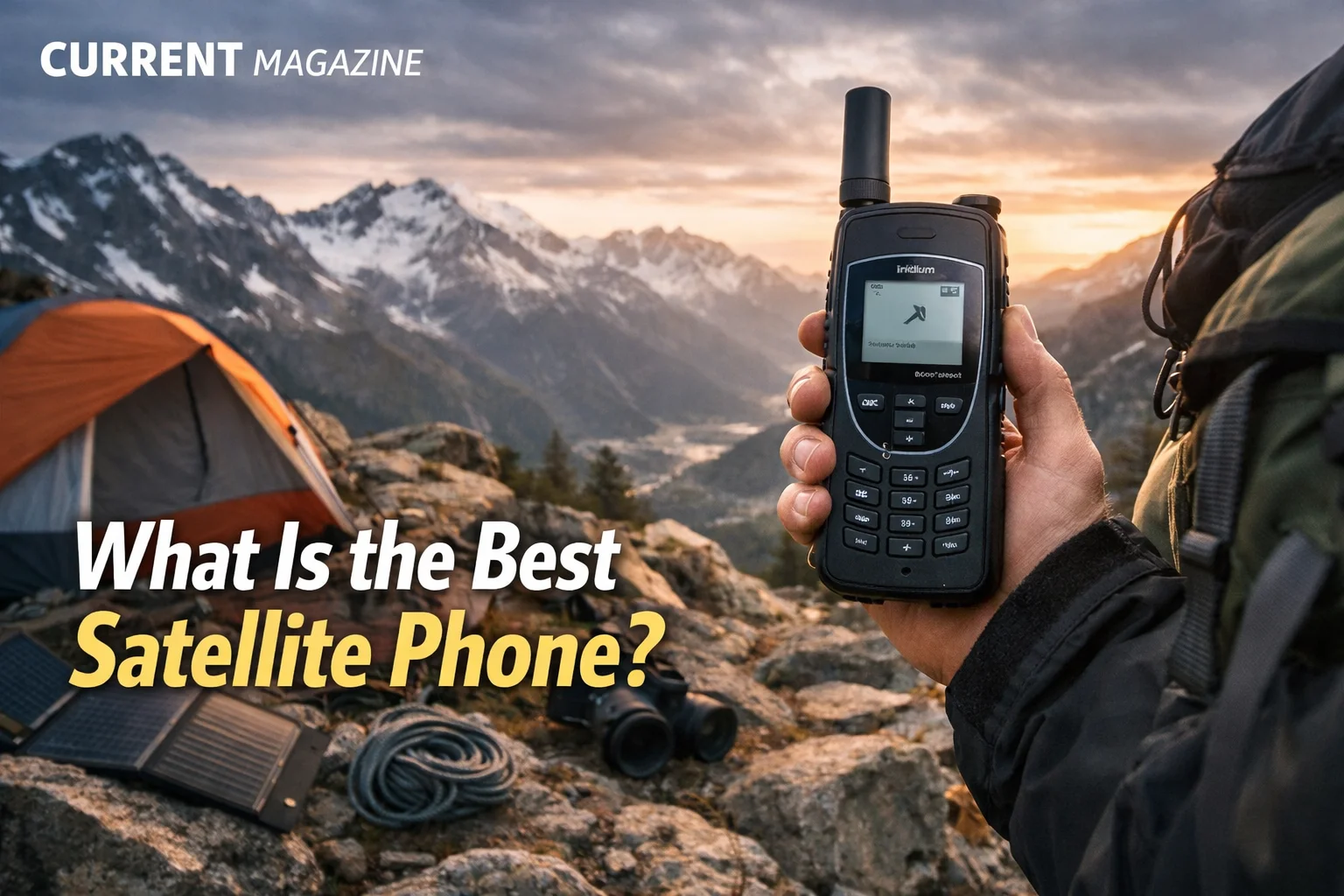
Looking for what is the best satellite phone for your needs? The answer depends on where you’ll be using it, your budget, and what features matter most to you. The top satellite phones in 2026 include the Iridium 9575 Extreme (best global coverage), Garmin inReach Mini 2 (best for hikers and adventurers), Thuraya X5-Touch (best for smartphone-like features), and IsatPhone 2 (best value for regional use). Unlike regular cell phones that rely on ground-based towers, satellite phones connect directly to orbiting satellites, providing communication virtually anywhere on Earth—from remote mountains to open oceans. This comprehensive guide will help you understand how satellite phones work, compare the major satellite networks and phone models, explain what to look for when buying, break down costs and service plans, and help you choose the perfect satellite phone for emergency preparedness, outdoor adventures, maritime use, or working in remote locations.
Understanding Satellite Phones
Before choosing a satellite phone, it’s important to understand how they differ from regular phones.
How Satellite Phones Work
The basic concept: Instead of connecting to cell towers, satellite phones communicate directly with satellites orbiting Earth.
The process:
- You make a call on your satellite phone
- The phone sends a signal to a satellite overhead
- The satellite relays the signal to a ground station
- The ground station connects to regular phone networks
- Your call reaches its destination
- The reverse happens for incoming calls
Why this matters: Satellite phones work where cell phones can’t—in remote wilderness, on oceans, in deserts, or anywhere without cell tower infrastructure.
The catch: Satellite phones require line-of-sight to satellites, so they work poorly or not at all indoors, in dense forests, or in deep canyons.
Satellite Phones vs. Cell Phones
Key differences:
Coverage:
- Cell phones: Work where towers exist (cities, populated areas)
- Satellite phones: Work almost anywhere on Earth (depending on network)
Reliability:
- Cell phones: Can be overwhelmed during emergencies when many people call at once
- Satellite phones: Generally more reliable during disasters
Cost:
- Cell phones: $20-150/month for unlimited plans
- Satellite phones: $25-200+/month, plus per-minute charges ($0.50-$2.50/minute)
Call quality:
- Cell phones: Excellent, HD voice
- Satellite phones: Variable, sometimes with delay or static
Data speeds:
- Cell phones: 5G speeds, streaming video easily
- Satellite phones: Very slow (2-10 Kbps typically), only basic texting and limited data
Size and weight:
- Cell phones: Slim, lightweight
- Satellite phones: Bulkier, heavier (need larger antenna)
Indoor use:
- Cell phones: Work indoors
- Satellite phones: Generally require outdoor use with clear sky view
Who Needs a Satellite Phone?
Ideal users:
Emergency preparedness: People in disaster-prone areas (hurricanes, earthquakes, wildfires) who want guaranteed communication when cell networks fail
Remote workers: Oil rig workers, miners, researchers in Antarctica, forestry workers, etc.
Maritime users: Sailors, commercial fishing crews, yacht owners cruising offshore
Adventurers and explorers: Mountaineers, backcountry hikers, expedition travelers, remote area hunters
Journalists and aid workers: Operating in conflict zones or areas with poor infrastructure
Aviation: Pilots flying over remote regions or oceans
You probably don’t need one if: You stay in developed areas with cell coverage, travel only to tourist destinations with infrastructure, or can’t justify the ongoing costs.
Major Satellite Phone Networks
Different networks have different coverage areas and characteristics.
Iridium Network
Coverage: True global coverage, including poles (North Pole, South Pole)
How it works: 66 satellites in low Earth orbit (LEO) at about 485 miles altitude
Pros:
- Only network with literally global coverage (works everywhere on Earth)
- Reliable connection quality
- Short delay in conversations (LEO satellites closer to Earth)
- Works well at high latitudes (Arctic, Antarctic)
- Most proven network (operating since 1998)
Cons:
- More expensive than some alternatives
- Lower data speeds
- Phones tend to be bulkier
Best for: Global travelers, polar expeditions, maritime use, anyone needing absolute coverage anywhere
Phone options: Iridium 9575 Extreme, Iridium GO! (turns smartphone into satellite device)
Monthly costs: $30-200+ depending on plan
Inmarsat Network
Coverage: Global except extreme polar regions (roughly 75°N to 75°S)
How it works: Geostationary satellites (GEO) at about 22,000 miles altitude
Pros:
- Excellent voice quality
- Better data speeds than Iridium
- More affordable than Iridium in many regions
- Strong maritime presence
- Reliable network
Cons:
- Doesn’t work near poles
- Requires aiming phone toward equator (satellite location)
- Signal delay due to distance to satellites (~0.5 second)
- Limited coverage at very high latitudes
Best for: Maritime users, tropical/temperate region users, those needing better data capabilities
Phone options: IsatPhone 2, IsatPhone Pro
Monthly costs: $25-150+ depending on plan
Thuraya Network
Coverage: Europe, Africa, Middle East, Asia, Australia (roughly 2/3 of the globe)
How it works: Geostationary satellites covering specific regions
Pros:
- Least expensive satellite service
- Smartphone-like features (touchscreen, apps, GPS)
- Good voice quality
- Can also use GSM cell networks where available
- Better data speeds than Iridium
Cons:
- No coverage in Americas (North/South America)
- No coverage in Pacific Ocean
- Regional only, not global
- Requires satellite to be above horizon (directional)
Best for: Users in covered regions (Africa, Middle East, Asia), those wanting smartphone features, budget-conscious buyers
Phone options: Thuraya X5-Touch, Thuraya XT-LITE
Monthly costs: $20-100 depending on plan
Globalstar Network
Coverage: Most land areas but limited ocean coverage, no polar coverage
How it works: LEO satellites, but fewer than Iridium
Pros:
- Lower cost than Iridium
- Good for North America, Europe, Australia
- Decent voice quality
Cons:
- Spotty coverage in some regions
- Limited ocean coverage
- No poles coverage
- Smaller satellite constellation (more coverage gaps)
- Network has had reliability issues historically
Best for: North American users, budget option for specific regions
Phone options: Globalstar GSP-1700
Monthly costs: $25-150 depending on plan
Note: Globalstar is less popular than Iridium or Inmarsat for professional use due to coverage gaps.
Top Satellite Phone Models in 2026
Here are the best satellite phones currently available:
Iridium 9575 Extreme
Network: Iridium (global coverage)
Price: $1,200-1,500
Best for: Professional use, extreme environments, global travelers
Key features:
- Military-grade rugged design (MIL-STD 810F)
- Waterproof and dustproof (IP65 rated)
- Works in extreme temperatures (-10°C to +55°C)
- Built-in GPS
- Emergency SOS button
- Speakerphone
- Color screen
- Up to 30 hours standby, 4 hours talk time
Pros:
- Most reliable global coverage
- Extremely durable
- Proven track record
- Works literally anywhere
- Good battery life
Cons:
- Expensive to buy and operate
- Bulky compared to cell phones
- Basic features (no touchscreen, simple interface)
- Slow data speeds
Verdict: Best overall satellite phone for serious users who need guaranteed global coverage and durability.
Garmin inReach Mini 2
Network: Iridium (global coverage)
Price: $400-450
Best for: Hikers, backpackers, adventure travelers, emergency backup
Key features:
- Extremely compact and lightweight (3.5 oz)
- Two-way satellite messaging
- GPS tracking
- SOS emergency function (connects to 24/7 monitoring center)
- Weather updates
- Pairs with smartphone app
- 14-day battery life (tracking mode)
Pros:
- Very affordable
- Tiny and portable
- Excellent battery life
- Interactive SOS response
- Can send texts to regular phone numbers and email
- No voice calls (which is actually cheaper for many users)
Cons:
- No voice calling capability (messaging only)
- Small screen (harder to read)
- Requires smartphone pairing for full features
- Ongoing subscription required
Verdict: Best for adventurers who primarily need emergency SOS and messaging rather than voice calls. Excellent value and portability.
Thuraya X5-Touch
Network: Thuraya (Europe, Africa, Middle East, Asia, Australia)
Price: $1,000-1,300
Best for: Smartphone features, users in covered regions, dual GSM/satellite use
Key features:
- Android smartphone (touchscreen)
- 5.2-inch display
- Dual-mode: Satellite + GSM cell network
- Front and rear cameras
- GPS and navigation apps
- Runs Android apps
- Rugged and waterproof (IP67)
- Long battery life
Pros:
- Most smartphone-like satellite phone
- Dual-mode saves money (use cell when available)
- Familiar Android interface
- GPS navigation with maps
- Can use apps (though limited by slow data)
- Best screen of any satellite phone
Cons:
- No coverage in Americas
- More expensive than basic satellite phones
- Heavier than single-mode satellite phones
- Battery drains faster with smartphone features
Verdict: Best for users in covered regions who want modern smartphone features with satellite backup.
IsatPhone 2
Network: Inmarsat (global except poles)
Price: $700-1,000
Best for: Maritime use, value-conscious buyers, good balance of features and cost
Key features:
- Reliable global coverage (except polar regions)
- Bluetooth connectivity
- GPS tracking
- Assistance button (programmable emergency contact)
- Long battery life (up to 8 hours talk, 160 hours standby)
- Rugged design
- Reasonably compact
Pros:
- Excellent value (lower cost than Iridium)
- Great battery life
- Bluetooth for hands-free use
- Reliable network
- Good voice quality
- Popular with maritime users
Cons:
- No polar coverage
- Larger than some competitors
- Slower data than newer phones
- Basic feature set
Verdict: Best value satellite phone for users who don’t need polar coverage. Excellent for maritime, tropical, and temperate region use.
Iridium GO! exec
Network: Iridium (global coverage)
Price: $1,100-1,300
Best for: Turning your smartphone into a satellite phone, multiple users sharing one device
Key features:
- Hotspot device (not a phone itself)
- Connects your iPhone/Android via Wi-Fi
- Multiple devices can connect simultaneously
- Voice calls through your smartphone
- Faster data than traditional Iridium phones
- GPS tracking
- Compact portable unit
Pros:
- Use your familiar smartphone interface
- Multiple users can share
- Better data speeds for satellite
- Can update firmware remotely
- More portable than traditional satellite phone
Cons:
- Requires smartphone (won’t work alone)
- More expensive than basic satellite phones
- Drains smartphone battery
- Two devices to manage instead of one
Verdict: Best for groups or users who prefer using their existing smartphone with satellite connectivity.
Bivy Stick
Network: Iridium (global coverage)
Price: $350-400
Best for: Ultra-budget satellite messaging, casual outdoor users
Key features:
- Messaging-only device (no voice)
- Pairs with smartphone via Bluetooth
- Two-way messaging
- SOS emergency function
- GPS tracking
- Very affordable
- Compact and lightweight
Pros:
- Cheapest satellite communication option
- Very portable
- Lower monthly costs than voice-capable devices
- Easy to use with smartphone app
Cons:
- No voice calling
- Requires smartphone to function
- Limited features compared to dedicated devices
- Slower than inReach for messaging
Verdict: Best ultra-budget option for casual users who only need messaging and SOS, not voice calls.
What to Look for When Buying
Consider these factors when choosing a satellite phone:
Coverage Area
Most important factor: Does the network cover where you’ll use it?
Check coverage maps:
- Iridium: Literally global (including poles)
- Inmarsat: Global except poles (75°N to 75°S)
- Thuraya: Only Europe, Africa, Middle East, Asia, Australia
- Globalstar: Spotty—check specific coverage map
Questions to ask yourself:
- Where will I travel? (specific countries/regions)
- Will I go to polar regions?
- Will I be on open ocean? (Iridium or Inmarsat better)
- Will I stay in one region? (Thuraya might be enough)
Pro tip: If you’ll ever travel globally, invest in Iridium even if it’s more expensive. Regional networks limit your flexibility.
Voice vs. Messaging Only
Voice-capable phones: Can make traditional phone calls
- Cost: $700-1,500
- Monthly: $30-200+
- Per-minute: $0.50-2.50
Messaging-only devices: Two-way text communication, SOS, GPS tracking
- Cost: $350-450
- Monthly: $12-50
- More affordable for many users
Consider messaging-only if:
- You mainly need emergency SOS capability
- Texting works for your communication needs
- You’re budget-conscious
- You’re a hiker/adventurer rather than professional
Need voice if:
- You require real-time conversations
- You’re in professional/work environment
- You need to coordinate complex activities
- Family members aren’t comfortable with text-only
Durability and Build Quality
Satellite phones face harsh conditions:
Look for:
- Military-grade rugged standards (MIL-STD 810)
- Waterproof rating (IP67 or IP65 minimum)
- Shock resistance
- Temperature range (works in extreme heat/cold)
- Dustproof design
Construction quality:
- Reinforced housing
- Protected antenna
- Sealed ports
- Quality materials (not cheap plastic)
Why it matters: Satellite phones are often used in extreme environments where failure isn’t an option. Durability is critical.
Best durability: Iridium 9575 Extreme, Thuraya X5-Touch
Battery Life
Satellite phones use more power than cell phones:
Typical battery life:
- Talk time: 3-8 hours
- Standby: 30-160 hours
- Tracking mode (GPS devices): Up to 14 days
Longer battery is better when:
- You’ll be away from power for extended periods
- You’re on multi-day trips
- Charging opportunities are limited
Consider:
- Replaceable vs. built-in battery
- Availability of spare batteries
- Solar charging options
- Battery performance in cold weather (degrades significantly)
Best battery life: IsatPhone 2 (8 hours talk, 160 hours standby)
Size and Weight
Trade-offs:
Larger phones:
- Better antenna (stronger signal)
- Bigger battery (longer life)
- Easier to use (bigger buttons, screen)
- More durable
- But: Heavier, bulkier to carry
Smaller devices:
- More portable
- Lighter for backpacking
- Easier to pack
- But: Smaller screen, shorter battery, sometimes weaker signal
Questions:
- Will you carry it daily or only occasionally?
- Are you backpacking (every ounce matters)?
- Do you have space in a boat, vehicle, or backpack?
Most compact: Garmin inReach Mini 2 (3.5 oz) Bulkiest: Traditional satellite phones (8-12 oz)
Data Capabilities
Most satellite phones have very limited data:
Typical speeds:
- Iridium: 2.4 Kbps (very slow)
- Inmarsat: 2-10 Kbps
- Thuraya: Up to 60 Kbps (still slow by modern standards)
What you can do:
- Send/receive email (text only)
- Basic text messaging
- GPS coordinates sharing
- Weather updates
What you can’t do:
- Stream video or music
- Browse normal websites
- Video calls
- Download large files
Better data options:
- Thuraya X5-Touch (fastest data)
- Inmarsat IsatPhone (better than Iridium)
- For true high-speed, look at satellite internet terminals (not phones)
Reality: If you need good data, satellite phones aren’t the answer. They’re primarily for voice and basic messaging.
Emergency Features
Critical safety features:
SOS button: Dedicated emergency button that sends distress signal with GPS coordinates
- Connects to 24/7 monitoring center (like GEOS or Garmin Response)
- Monitors respond and coordinate rescue
- Available on most modern satellite devices
GPS tracking: Allows others to see your location
- Useful for family peace of mind
- Critical for search and rescue
- Can set automatic check-in intervals
Geo-fencing: Alerts if you leave a predetermined area
Weather alerts: Some devices receive weather forecasts and warnings
Programmable emergency contacts: Quick-dial important numbers
Best emergency features: Garmin inReach devices (professional monitoring, proven rescue record)
Ease of Use
User interface matters:
Simpler is often better for satellite phones:
- Large, clearly labeled buttons
- Intuitive menus
- Quick access to key functions
- Easy to use with gloves
Touchscreen vs. buttons:
- Touchscreen: Familiar, more features (Thuraya X5-Touch)
- Buttons: Work with gloves, more reliable in extreme conditions
Setup complexity:
- Some phones require aiming toward satellite
- Others automatically find satellites
- Consider learning curve
Smartphone integration:
- Some devices pair with phones (inReach, Iridium GO!)
- Uses familiar smartphone interface
- But requires two devices
Best ease of use: Thuraya X5-Touch (Android familiarity), Garmin inReach (simple app interface)
Understanding Costs
Satellite phone costs go beyond the initial purchase price.
Purchase Price
Device costs:
- Basic messaging devices: $350-500 (inReach Mini, Bivy Stick)
- Mid-range satellite phones: $700-1,000 (IsatPhone 2)
- Premium satellite phones: $1,200-1,500 (Iridium 9575 Extreme, Thuraya X5-Touch)
What affects price:
- Network (Iridium most expensive, Thuraya least)
- Features (smartphone capabilities cost more)
- Durability and build quality
- Brand reputation
- Included accessories
Where to buy:
- Authorized dealers (best for support)
- Amazon and online retailers (competitive prices)
- Directly from satellite companies
- Outdoor retailers (REI, etc.)
Used market: Can save 30-50%, but verify activation status and condition
Monthly Service Plans
All satellite phones require monthly service subscriptions:
Typical monthly costs:
- Messaging-only plans: $12-50/month
- Basic voice plans: $30-80/month
- Standard voice plans: $80-150/month
- Unlimited voice plans: $200-400/month
Plan types:
Prepaid: Pay monthly, cancel anytime
- Pros: Flexibility, no contract
- Cons: Higher per-minute rates, less value
Annual contracts: Commit to 12+ months
- Pros: Lower monthly rates, better per-minute pricing
- Cons: Early termination fees, long commitment
Pay-as-you-go: Load money on account, no monthly fee
- Pros: Only pay when you use it
- Cons: Highest per-minute rates, expiration dates on credits
Included minutes:
- Most plans include 10-100 minutes/month
- Additional minutes charged at $0.50-2.50 each
- Messaging plans include set number of messages
Example costs (monthly):
- Garmin inReach Safety plan: $15/month (10 messages)
- Iridium 30-minute plan: $70/month (30 minutes included)
- Thuraya Nova plan: $50/month (20 minutes included)
Per-Minute Charges
After included minutes, you pay per minute:
Typical rates:
- Iridium: $1.00-2.00/minute
- Inmarsat: $0.80-1.50/minute
- Thuraya: $0.50-1.00/minute
What affects rates:
- Your plan level (higher plans have lower overage rates)
- Time of day (some networks charge more for peak hours)
- Incoming vs. outgoing calls (incoming may be free or reduced)
- Calling to landline vs. cell phone
Hidden charges:
- Connection fees ($0.25-0.50 per call)
- Voicemail charges
- Data charges (per KB)
- International charges (calling to/from different countries)
Additional Fees
Watch out for:
Activation fees: $25-75 one-time when starting service
SIM card fees: $15-50 if you need a new SIM
Phone number fees: Some providers charge monthly for keeping your number
Suspension fees: If you pause service, may be $10-25/month to keep number
Equipment insurance: Optional, $5-15/month
Regulatory fees and taxes: Add 10-20% to monthly bill
International rates: Calling to certain countries costs more
Total Cost of Ownership Example
Scenario: Maritime user with IsatPhone 2
Initial costs:
- Phone: $900
- Activation: $50
- Total initial: $950
Monthly costs (1 year):
- Service plan: $60/month
- Average overage (10 extra minutes): $10/month
- Monthly total: $70
- Annual: $840
First-year total: $1,790
Subsequent years: $840/year
Compare to: Cell phone might be $1,000 phone + $1,200/year service = $2,200 first year, but satellite phone only works where needed (not a cell phone replacement for most people).
Best Satellite Phones by Use Case
Different users have different priorities:
Best for Hiking and Backpacking
Winner: Garmin inReach Mini 2
Why:
- Lightweight (3.5 oz—critical for backpacking)
- Affordable ($400 device, $15+/month plans)
- Excellent battery life (14 days in tracking mode)
- Two-way messaging sufficient for most hikers
- Interactive SOS with professional monitoring
- Proven rescue record
Alternative: Bivy Stick (even cheaper, but less features)
Best for Maritime Use
Winner: IsatPhone 2
Why:
- Reliable Inmarsat network (excellent ocean coverage)
- Good value ($700-1,000)
- Long battery life (160 hours standby)
- Bluetooth for hands-free in cabin
- Rugged and waterproof
- Lower operational costs than Iridium
Alternative: Iridium 9575 Extreme (if you sail polar regions)
Best for Global Business Travel
Winner: Iridium 9575 Extreme
Why:
- True global coverage (works everywhere)
- Most reliable network
- Professional-grade reliability
- Proven in business/government use
- Works in any country without limitations
Alternative: Thuraya X5-Touch (if you stay in covered regions and want smartphone features)
Best for Emergency Preparedness
Winner: Garmin inReach Mini 2
Why:
- Affordable to own and operate
- Can pause service and reactivate for emergencies
- Two-way messaging for coordinating with family
- SOS function with professional monitoring
- Small and easy to store in emergency kit
- Long shelf life
Alternative: Iridium 9575 Extreme (if you want voice capability and can afford it)
Best for Expeditions and Extreme Environments
Winner: Iridium 9575 Extreme
Why:
- Works in extreme temperatures (-10°C to +55°C)
- Military-grade durability (MIL-STD 810F)
- True global coverage (including poles)
- Most proven network for professionals
- Emergency SOS button
- Reliable in harshest conditions
No alternative: This is the gold standard for professional expedition use.
Best Budget Option
Winner: Bivy Stick
Why:
- Cheapest device ($350)
- Low monthly plans ($18+/month)
- Covers basic needs (messaging, SOS)
- Global Iridium coverage
- Good for casual outdoor users
Alternative: Garmin inReach Mini 2 (worth the extra $50-100 for better features and reliability)
Best Smartphone-Like Features
Winner: Thuraya X5-Touch
Why:
- Android touchscreen (familiar interface)
- Runs Android apps (though slowly)
- Camera for photos
- GPS navigation with maps
- Dual-mode GSM + satellite
- Largest, best screen
No real alternative: No other satellite phone comes close to smartphone functionality.
Activation and Setup
Getting your satellite phone working involves several steps:
Choosing a Service Provider
Options:
Direct from satellite company:
- Iridium.com, Inmarsat.com, Thuraya.com
- Official service, but often more expensive
Authorized dealers:
- Outfitter Satellite, Satphone Store, BlueCosmo
- Often better prices and customer service
- May offer package deals
- Better plan flexibility
Outdoor retailers:
- REI, Cabela’s, etc.
- Good for Garmin inReach devices
- In-person support
Best approach: Compare prices from 2-3 dealers, read reviews, check what’s included (activation, support, etc.)
Plan Selection
Consider:
Usage patterns: How many minutes/messages per month?
- Light use (emergency backup): 10-30 minutes or messaging-only
- Moderate use (occasional calls): 50-100 minutes
- Regular use (business): 150+ minutes or unlimited
Contract length:
- Month-to-month: Most flexible, higher cost
- 1-year: Better rates, reasonable commitment
- 2-year: Best rates, long commitment
Seasonal use:
- Some providers allow suspension during off-season (keeping your number)
- Useful for boaters, seasonal workers
- Typically $10-25/month to suspend
Plan features:
- Voicemail included?
- Data allowance (if any)
- Incoming call charges
- Text message costs
Activation Process
Typical steps:
- Purchase phone and select plan from dealer
- Receive SIM card (either pre-installed or shipped separately)
- Insert SIM if not pre-installed
- Register phone: Call provider or complete online activation
- Provide personal information
- Activate service plan
- Set up billing
- Wait for activation: Usually 15 minutes to 2 hours
- Test phone:
- Power on in open area with clear sky view
- Wait for satellite signal acquisition (may take 1-5 minutes)
- Make test call to verify service
- Check that billing/account is correct
- Program emergency contacts (if applicable)
- Register emergency monitoring (for devices with SOS features)
Initial Setup Tips
Before your first trip:
Practice using it:
- Make several test calls
- Learn the menu system
- Understand how to check signal strength
- Practice sending messages (if applicable)
- Test emergency SOS button (in test mode—don’t activate real emergency!)
Understand satellite acquisition:
- Need clear view of sky
- May take 1-5 minutes to find satellites initially
- Faster in open areas, slower in forests or canyons
- Move to different spot if no signal after 5 minutes
Save important numbers:
- Program frequently called contacts
- Save emergency contacts
- Note down your satellite phone number for sharing
Charge fully and test battery:
- Full charge before storage
- Test actual battery life
- Consider buying spare battery
Download manuals:
- Save PDF manuals to phone/computer
- Some phones have limited physical manuals
- Know troubleshooting steps
Maintenance and Best Practices
Proper care ensures reliability when you need it:
Storage
When not in use:
Battery care:
- Charge to 50-70% before long-term storage
- Recharge every 3-6 months even if not using
- Don’t store fully drained or fully charged
- Remove battery if storing over 6 months
Physical storage:
- Keep in protective case or pouch
- Store in dry location (moisture damages electronics)
- Moderate temperature (not hot attic or freezing garage)
- Away from magnetic sources
Keep service active or properly suspended:
- Don’t let account lapse if you want to keep your number
- Use suspension feature for off-season (small monthly fee)
- Reactivation can take time—plan ahead
Usage Best Practices
For best signal:
Location matters:
- Open areas (fields, beaches, hilltops)
- Away from tall buildings, cliffs, dense trees
- Clear view of sky (at least 180° of open sky)
Phone positioning:
- Hold antenna vertically (pointing up to sky)
- Don’t block antenna with hand
- Extend antenna fully (if retractable)
- For Inmarsat/Thuraya: Point toward equator
Making calls:
- Wait for signal acquisition before dialing
- Check signal strength indicator
- Speak clearly (delay may occur)
- Expect some background noise or static
- Keep calls concise (expensive!)
In challenging environments:
- Move to highest nearby point
- Try different spots if no signal
- Be patient—acquisition can take 5 minutes
- Dense forest may require clearing
Firmware Updates
Keep software current:
Why update:
- Improves performance
- Fixes bugs
- Enhances features
- Updates satellite network information
How to update:
- Check manufacturer website for updates
- Some phones update automatically when powered on
- Others require computer connection
- Follow instructions carefully (don’t interrupt updates)
Frequency: Check quarterly for important updates
Troubleshooting Common Issues
No signal / Can’t acquire satellites:
- Ensure antenna is extended and vertical
- Move to more open area
- Wait longer (up to 5 minutes initially)
- Power cycle phone (turn off, wait 30 seconds, turn on)
- Check if service is active (call provider)
Poor call quality:
- Verify strong signal strength
- Move to better location
- Reduce interference (away from metal structures)
- Speak directly into microphone
- Ask other party to speak louder
Battery drains quickly:
- Reduce screen brightness
- Turn off GPS when not needed
- Disable Bluetooth if not using
- Check for apps running in background (smartphones)
- Battery may need replacement (typical life 2-3 years)
Can’t send messages:
- Verify signal strength
- Check if message center number is correct
- Ensure sufficient account balance
- Try sending shorter message
- Wait and retry (satellite network congestion)
10 Frequently Asked Questions About Satellite Phones
- How much does a satellite phone cost per month?
Monthly satellite phone costs vary widely: messaging-only plans start at $12-15/month (Garmin inReach basic plan), basic voice plans run $30-80/month, standard plans cost $80-150/month, and unlimited plans can be $200-400+/month. Most plans include a set number of minutes (10-100) with overage charges of $0.50-2.50 per additional minute. Total monthly costs depend on usage—light users might pay $30-50/month, while heavy users could pay $100-300+/month including overages. - Can I use a satellite phone anywhere in the world?
It depends on the satellite network. Iridium provides true global coverage including polar regions and all oceans—it works literally anywhere on Earth. Inmarsat covers globally except extreme polar regions (roughly 75°N to 75°S latitude). Thuraya only covers Europe, Africa, Middle East, Asia, and Australia—no coverage in the Americas or Pacific Ocean. Globalstar has spotty regional coverage with significant gaps. However, all satellite phones require clear line-of-sight to the sky and won’t work reliably indoors, in dense forests, or in deep canyons. - Do satellite phones work without cell service?
Yes, that’s exactly what they’re designed for. Satellite phones communicate directly with orbiting satellites, not cell towers, so they work completely independently of cellular networks. They function in remote wilderness, on oceans, in deserts, and anywhere else without cell coverage. However, they require a clear view of the sky to connect to satellites. Some phones (like Thuraya X5-Touch) have dual-mode capability, using either satellite or regular cell networks depending on availability and cost. - What is the best satellite phone for emergencies?
The Garmin inReach Mini 2 is best for most people’s emergency needs. It costs only $400, has low monthly plans ($15+), provides two-way messaging and interactive SOS with 24/7 professional monitoring (GEOS/Garmin Response), has excellent battery life, and is small enough to keep in any emergency kit. For voice communication in emergencies, the Iridium 9575 Extreme is best with true global coverage, extreme durability, and proven reliability, though it costs $1,200+ and has higher monthly fees. The inReach offers better value for typical emergency preparedness. - Can you text on a satellite phone?
Yes, virtually all modern satellite phones support text messaging (SMS), though capabilities vary. Traditional voice satellite phones (Iridium 9575, IsatPhone 2) send basic SMS texts. Smartphone-style satellites phones (Thuraya X5-Touch) offer full messaging apps. Dedicated messaging devices (Garmin inReach, Bivy Stick) are designed specifically for two-way satellite messaging and can send texts to regular phone numbers and emails. Texting is generally cheaper than voice calls and uses less power, making it a practical primary communication method for many satellite phone users. - How long do satellite phone batteries last?
Battery life varies significantly by device and usage. Traditional satellite phones typically provide 4-8 hours of talk time and 30-160 hours (1-7 days) of standby time. The IsatPhone 2 has the best battery among voice phones at 8 hours talk/160 hours standby. Dedicated messaging devices last much longer—the Garmin inReach Mini 2 can run up to 14 days in tracking mode or 28 days in power-save mode. Battery life decreases in cold weather (can drop 50% or more in freezing temperatures), so carry spare batteries for cold-weather expeditions or extended trips. - Why are satellite phones so expensive?
Satellite phones cost more than cell phones because: 1) The satellite network infrastructure is extremely expensive to build and maintain (launching and operating satellites costs billions), 2) Much smaller market means economies of scale don’t apply like mass-market cell phones, 3) Specialized components (larger antennas, more powerful transmitters) needed to reach satellites 500-22,000 miles away, 4) Rugged construction for extreme environments, 5) Lower production volumes, and 6) Professional/critical use cases justify higher prices. The ongoing service costs are high because satellite network operators must recoup infrastructure costs from a relatively small subscriber base. - Do satellite phones work indoors?
No, satellite phones generally do not work indoors. They require direct line-of-sight to satellites orbiting overhead, and building roofs, walls, and ceilings block satellite signals. Satellite phones work best outdoors with a clear view of the sky (at least 180° of open sky). They may work near large windows in some cases, but this is unreliable. In emergencies, you must go outside or to a roof/balcony to use a satellite phone. This is a significant limitation compared to cell phones, which work fine indoors. - Can I use my regular phone number with a satellite phone?
No, satellite phones use different phone numbers assigned by the satellite network (they start with different country codes—Iridium uses +8816, Inmarsat uses +870, etc.). You cannot port your regular cell phone number to a satellite phone. Some dual-mode phones (like Thuraya X5-Touch) can use both a satellite number and a regular GSM SIM card, allowing you to receive calls on your normal number when in cell coverage areas. Devices like Iridium GO! let you use your smartphone with satellite connectivity, but you’re still calling from a satellite number. - Are satellite phone calls private and secure?
Satellite phone calls have varying levels of security. Standard calls on most satellite networks are encrypted during transmission to prevent casual eavesdropping, but they’re not as secure as military-grade encrypted communications. Government agencies with proper equipment can potentially intercept satellite calls. Satellite networks themselves can monitor calls. For casual privacy (preventing neighbors from listening), satellite phones are secure. For true privacy against sophisticated adversaries (governments, intelligence agencies), satellite phones are not sufficiently secure—you’d need additional encryption devices. For most users’ purposes, satellite phones provide adequate privacy for normal conversations.