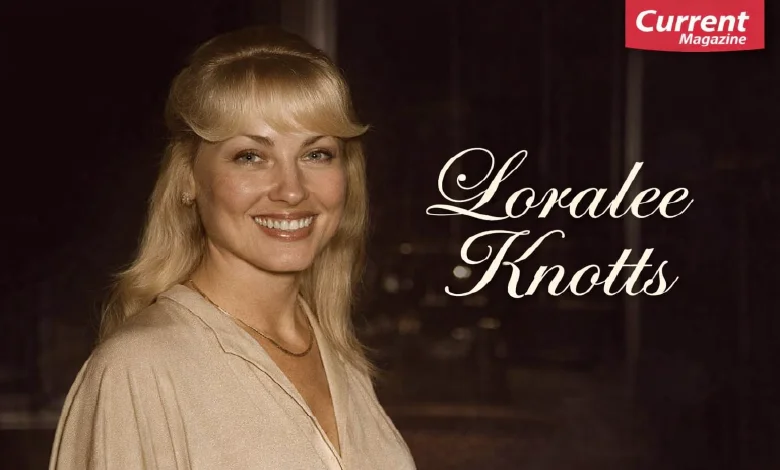
If you’ve been searching for Loralee Knotts, you’ve probably wondered who this woman is, what her real story looks like, and what happened to her after her famous marriage to one of America’s most beloved comedians. Loralee Knotts — whose full maiden name is Loralee Czuchna — is the woman who was married to legendary TV star Don Knotts from 1974 to 1983. While Don Knotts made the world laugh for decades as Deputy Barney Fife on The Andy Griffith Show, Loralee quietly lived a life defined by grace, personal strength, and a deep preference for privacy that persists to this day. This blog post covers everything you need to know about her — from her Midwestern roots and her USC education to her marriage to Don Knotts, the heartbreak of divorce, and the peaceful new life she built with Dr. Howard Murad in Marina del Rey, California.
Who Is Loralee Knotts? Setting the Record Straight
First, let’s clear up a common point of confusion. Many people search for “Loralee Knotts” expecting to find information about a daughter or a relative of Don Knotts. But Loralee Knotts is not Don Knotts’ daughter — that is Karen Knotts, his daughter from his first marriage. Loralee Knotts is the name that came to be associated with Loralee Czuchna simply because she was married to Don Knotts and people began referring to her by his famous surname.
Her full birth name is Loralee Czuchna. She was born in the mid-1940s in Flint, Michigan, to parents Roman Munroe Czuchna and Iva Miller. She grew up alongside her sister Phyllis in a working-class Midwestern household where hard work, education, and family values were the cornerstones of daily life. As of 2025, she is believed to be in her late 70s — alive and living quietly in Marina del Rey, California.
She is a woman who never sought fame, never chased attention, and never used her connection to a Hollywood icon to build a public persona of her own. In a world where celebrity connections are often exploited for personal gain, Loralee’s consistent choice of privacy makes her story all the more remarkable.
Early Life: A Midwestern Girl with Big Dreams
Growing up in Flint, Michigan in the 1940s and 1950s meant growing up in a city defined by its strong working-class spirit and tight-knit community bonds. The automotive industry was booming, and the neighborhoods were filled with families who valued honest work, close relationships, and simple pleasures. It was exactly this kind of environment that shaped young Loralee Czuchna into the grounded, dignified woman she would become.
Her father, Roman Munroe Czuchna, and her mother, Iva Miller, raised Loralee and her sister Phyllis with clear values — respect for others, the importance of education, and the understanding that character matters far more than celebrity. These values stayed with Loralee for her entire life and guided every major decision she made, even when her circumstances placed her directly in the middle of the Hollywood spotlight.
After completing her early schooling in Michigan, Loralee made a bold and ambitious decision — she moved to California to pursue higher education at the University of Southern California (USC) in Los Angeles. This was a significant move for a young woman from a modest Midwestern background. USC is one of the most prestigious universities in the country, and moving to Los Angeles exposed Loralee to an entirely different world. The city’s energy, diversity, and proximity to the entertainment industry represented a massive cultural shift from the streets of Flint.
At USC, she is believed to have studied liberal arts or communications — fields that matched her intellectual curiosity and creative sensibility. Her time at USC not only developed her academically but placed her geographically and socially in a position where crossing paths with someone from Hollywood became entirely possible. And that is exactly what happened.
Meeting Don Knotts: A Blind Date That Changed Everything
In 1971, Loralee Czuchna’s life took a turn she never could have predicted. She was introduced to Don Knotts — already one of the most famous faces in American television — through a blind date. At the time, Don Knotts was already a household name, beloved by millions for his iconic role as Deputy Barney Fife on The Andy Griffith Show. He had won multiple Emmy Awards, appeared in a string of successful films, and was widely regarded as one of the funniest men in the entertainment industry.
The two were separated by an age gap of 23 years — Don was born in 1924 while Loralee was born in the mid-1940s — but that gap didn’t prevent a genuine and meaningful connection from forming between them. Those who knew the couple described their early relationship as warm, genuine, and built on mutual respect and real affection rather than any kind of Hollywood superficiality.
They dated for approximately three years. During that time, Loralee saw a side of Don Knotts that the public rarely glimpsed. Behind the slapstick, behind the bug-eyed expressions and the perfectly timed comic delivery, Don was a thoughtful, often serious man who wrestled with anxiety, depression, and deep personal insecurities. He had struggled with hypochondria for much of his adult life and frequently battled the kind of internal darkness that comedians often mask with their humor.
For Loralee, knowing this side of him did not push her away. Instead, it deepened her commitment to him. She was not in love with “Barney Fife” — she was in love with Jesse Donald Knotts, the complex, sometimes fragile human being beneath the persona. That kind of love takes real emotional courage.
The Wedding in Hawaii: October 1974
After three years of dating, Don Knotts and Loralee Czuchna made it official in one of the most romantic settings imaginable. On October 19, 1974, they married in a beautiful ceremony in Hawaii — far away from the cameras, the tabloids, and the constant chatter of Hollywood. The choice of Hawaii was deeply intentional. Both Don and Loralee wanted a beginning that felt real and private, not performative or staged for public consumption.
It was Don Knotts’ second marriage. His first marriage was to Kathryn Metz, a college sweetheart from West Virginia, with whom he had two children — son Thomas Knotts and daughter Karen Knotts (born April 2, 1954). That marriage had ended in divorce in 1964, a decade before Don and Loralee walked down the aisle together.
When Loralee married Don, she became stepmother to Karen and Thomas — a role she embraced quietly and with care. She understood that joining a family with children from a previous marriage required sensitivity, patience, and genuine love for children who were not her own. By all accounts, she handled this responsibility with characteristic grace.
The newlyweds settled into married life in Los Angeles, where Don’s career continued to thrive. He went on to join the cast of Three’s Company in 1979, playing the lovable and bumbling landlord Ralph Furley — a role that brought him back to the top of the television ratings and introduced him to an entirely new generation of fans.
Life During the Marriage: Support Behind the Scenes
The years Loralee and Don spent together as a married couple were filled with both joy and considerable challenge. On the surface, they were a Hollywood success story — a famous comedian and his devoted wife living in one of the world’s most glamorous cities. But beneath the surface, the reality was more complicated and more human.
Don Knotts continued to struggle with serious mental health challenges throughout their marriage. His battles with depression and anxiety were ongoing, and according to people close to the couple, he also developed a troubling jealousy that created significant tension in the relationship. His daughter Karen Knotts has spoken publicly about her father’s volatile moods and his tendency to spiral into cycles of negative thinking. Living with someone who experiences these kinds of mental health difficulties — no matter how much you love them — is genuinely hard.
Loralee responded to these challenges the way she responded to everything in her life — with quiet steadiness. She supported Don emotionally, attended events with him, maintained their home life, and provided the kind of stable, grounding presence that someone wrestling with anxiety desperately needs. Those who observed them together noted that her calm, private nature served as a meaningful counterbalance to his more turbulent internal world.
She also worked during this period. While specific details about her career remain scarce, sources suggest that Loralee worked in the fields of marketing and public relations — professional areas that require strong communication skills, creativity, and the ability to manage relationships effectively. These were not high-profile positions and she never sought recognition for her work, but the fact that she maintained her own professional identity during her marriage to one of the most famous men in America speaks to her independence and self-respect.
Loralee never tried to ride Don’s fame into a career of her own. She wasn’t interested in being photographed, interviewed, or celebrated for being “Don Knotts’ wife.” Her identity was always her own.
The Divorce: 1983 and What Came After
Despite Loralee’s best efforts and genuine commitment, the strains in their marriage eventually became too much to overcome. After nearly nine years together, Don Knotts and Loralee Czuchna divorced in 1983. The specific reasons for their separation have never been publicly disclosed — both parties chose to handle the end of their marriage with the same discretion and dignity that had characterized their entire time together.
What is known is that Don’s health struggles, his battles with jealousy, his anxiety and depression, and the accumulated pressures of nearly a decade of marriage all contributed to a situation that became unsustainable. The divorce was described by those close to the couple as relatively amicable — they did not engage in a bitter public battle or air grievances through the press.
For Loralee, the divorce marked the beginning of a significant personal rebuilding. She had given nine years of her life to supporting a complex and sometimes difficult man, and now she needed to rediscover herself on her own terms. She stepped away from Hollywood’s orbit entirely and focused on healing, growing, and building a life that was authentically hers.
She did not look for attention, did not speak to the press about her marriage, and did not attempt to capitalize on her connection to Don Knotts in any way. She simply moved forward — privately, steadily, and with remarkable grace.
Don Knotts went on to marry his third and final wife, Frances Yarborough, an actress he had met during his work on the sitcom What a Country! in the 1980s. They married in 2002 and remained together until Don’s death from pulmonary and respiratory complications of pneumonia related to lung cancer on February 24, 2006, at Cedars-Sinai Medical Center in Los Angeles. He was 81 years old.
Finding Love Again: Marriage to Dr. Howard Murad
After her divorce from Don Knotts, Loralee eventually found love again — and in finding it, she found a relationship that seemed to suit her quiet, private nature perfectly.
She married Dr. Howard Murad, a prominent dermatologist and entrepreneur, in a private ceremony at the prestigious Beverly Hills Hotel. Their wedding reportedly took place on October 14, 2007, marking the beginning of a new chapter filled with stability, mutual respect, and the kind of peaceful domestic life Loralee had always preferred.
Dr. Howard Murad is no ordinary dermatologist. He is the founder of Murad Inc., a highly successful skincare company that became one of the most recognizable names in the beauty and wellness industry. He also served as a clinical professor at the Geffen School of Medicine at UCLA and worked as a General Medical Officer for the Army earlier in his career. His estimated net worth is around $3 million, and his professional accomplishments reflect a lifetime of genuine dedication to his field.
The pairing makes beautiful sense when you think about it. Dr. Murad — like Loralee — values science, substance, and quietly making a meaningful contribution to the lives of others. Neither of them is drawn to fame for its own sake. Together, they built a life in Marina del Rey, California — a serene coastal community that feels a world away from the glitter and noise of Hollywood, even though it sits just miles away.
Loralee and Dr. Murad do not have children together. Don Knotts’ children, Karen and Thomas, were from his first marriage to Kathryn Metz.
What Is Loralee Knotts Doing Now?
As of 2025, Loralee Czuchna Murad — also known to many as Loralee Knotts — is believed to be living quietly in Marina del Rey, California with her husband Dr. Howard Murad. She maintains no verified public social media presence and gives no interviews. She has not made any notable public appearances in recent years.
She is reportedly in her late 70s, in good health, and living exactly the kind of life she has always preferred — private, peaceful, and free from the scrutiny that comes with celebrity connections. Those who have known her describe her as still possessing the same quiet grace, warmth, and strong personal values that defined her throughout her life.
Her story — in its own understated way — is a genuinely inspiring one. She was never defined by her proximity to fame. She never lost herself in someone else’s story. And when that story ended, she had the strength and the character to write a beautiful new chapter of her own.
Don Knotts: The Man She Loved
No story about Loralee Knotts is complete without properly honoring the man she was married to. Don Knotts — born Jesse Donald Knotts on July 21, 1924, in Morgantown, West Virginia — was one of the greatest comedic talents American television has ever produced.
He grew up in poverty, raised by his mother after his alcoholic father became unable to care for the family. He developed a love of performing as a teenager, honed his craft through a ventriloquism act, served in the U.S. Army during World War II as an entertainer, and earned a bachelor’s degree from West Virginia University before heading to New York to pursue his dream.
His career included seven television series, more than 25 films, and five Emmy Awards for his work on The Andy Griffith Show. He was genuinely beloved by virtually everyone who worked with him. TV writer Mark Evanier famously described him as “the most beloved person in all of show business.”
When he died in 2006, the entertainment world mourned deeply. His legacy — as Barney Fife, as Ralph Furley, as the star of The Incredible Mr. Limpet and countless other beloved projects — remains completely intact nearly two decades later. And Loralee Knotts was the woman who stood by his side through some of the most personally difficult years of that remarkable life.
Quick Bio Table
| Detail | Info |
| Full Name | Loralee Czuchna (known as Loralee Knotts) |
| Born | Mid-1940s |
| Birthplace | Flint, Michigan |
| Age (2025) | Late 70s |
| Parents | Roman Munroe Czuchna and Iva Miller |
| Sister | Phyllis |
| Education | University of Southern California (USC) |
| First Famous Marriage | Don Knotts (1974–1983) |
| Second Marriage | Dr. Howard Murad (2007) |
| Current Residence | Marina del Rey, California |
| Hair/Eyes | Blonde hair, hazel eyes |
| Children | None of her own |
| Net Worth | Not publicly disclosed |
| Social Media | No verified public presence |
10 FAQs About Loralee Knotts
- Who is Loralee Knotts?
Loralee Knotts is the name commonly used to refer to Loralee Czuchna, who was the second wife of legendary TV comedian Don Knotts. She was married to him from 1974 to 1983. She is not his daughter — that is Karen Knotts. Loralee is a private individual who became known to the public primarily through her marriage to one of America’s most beloved entertainers. - What is Loralee Knotts’ real name?
Her real name is Loralee Czuchna. She was never legally known as “Loralee Knotts,” but the public and many online sources began referring to her by Don Knotts’ surname, and the name stuck. After her marriage to Don ended in 1983, she later married Dr. Howard Murad and is now Loralee Murad. - When did Loralee Knotts marry Don Knotts?
Loralee Czuchna married Don Knotts on October 19, 1974, in a private ceremony held in Hawaii. They had dated for approximately three years before marrying. Their marriage lasted nearly nine years before ending in divorce in 1983. - Why did Loralee Knotts and Don Knotts divorce?
The specific reasons for their divorce were never publicly disclosed. However, it is widely understood that Don Knotts’ ongoing health struggles — including depression, anxiety, and jealousy — created significant strain in the marriage. The couple cited irreconcilable differences and handled their separation privately and amicably. - Did Loralee Knotts and Don Knotts have children together?
No. Loralee and Don did not have children together. Don Knotts had two children — son Thomas Knotts and daughter Karen Knotts — from his first marriage to Kathryn Metz. Loralee did not have biological children of her own. - Who did Loralee Knotts marry after Don Knotts?
After her divorce from Don Knotts, Loralee married Dr. Howard Murad, a renowned dermatologist, entrepreneur, and founder of the Murad skincare brand. Their wedding reportedly took place at the Beverly Hills Hotel on October 14, 2007. They currently live together in Marina del Rey, California. - Is Loralee Knotts still alive?
Yes. As of 2025, Loralee Czuchna Murad is believed to be still alive and living quietly in Marina del Rey, California with her husband Dr. Howard Murad. She maintains no public social media presence and rarely if ever makes public appearances. - How old is Loralee Knotts?
Loralee was born in the mid-1940s, which places her in her late 70s as of 2025. Her exact birthdate has never been publicly confirmed, as she has always kept personal details private. - Where is Loralee Knotts now?
Loralee currently lives in Marina del Rey, California — a peaceful, seaside community near Los Angeles. She lives there with her husband Dr. Howard Murad and leads a very private, low-profile life far removed from the entertainment industry spotlight. - What was Loralee Knotts’ role in Don Knotts’ life?
Loralee played a deeply important but largely unrecognized role in Don Knotts’ life. During their nine-year marriage, she provided emotional stability, companionship, and unwavering support to a man who privately battled depression, anxiety, and other personal struggles. Those close to the couple recognized her as a grounding, calming force in Don’s often turbulent personal world. Her contribution to his wellbeing — though never celebrated publicly — was genuinely meaningful.
Final Thoughts
Loralee Knotts — the woman the world knows by the surname of her most famous relationship — is so much more than a footnote in a comedian’s biography. She is a woman of deep character, quiet strength, and real personal courage. She stood by a complicated man through years of emotional difficulty. She rebuilt her life with dignity after divorce. She found genuine love again and built a peaceful existence far from the lights that once surrounded her.